Human mobility

In a world where human development opportunities differ greatly, mobility is an important option for people in search of better living conditions.

If managed well, mobility is a catalyst for inclusive economic and social development, both for people in mobility situations and for communities and countries of destination and of origin.

Whether driven by economic opportunity, environmental change, conflict or social factors, human mobility is fundamental to human societies, influencing where people live and how goods and services move and ideas and cultures merge. Mobility is also linked to major challenges such as increasing urbanisation, climate change and equitable access to rights and services.

300
million people

In 2024, the UN estimated there were over 300 million people in mobility situations outside their country – 48% of whom are women – and over 200 million internally displaced people and refugees. 


Priorities


In order to maximise the positive effects of human mobility on development, Enabel’s strategy has three objectives:

1) strengthening the skills of people in mobility situations to make them more autonomous;
2) resilience of territories and communities so that they can offer services and opportunities adapted to people in mobility situations and displaced persons;
3) inclusive systems, which ensure that planning, governance and policy dialogue take account of the impact of human mobility on development.

Our action is developed around four themes:

Sustainable approaches to (re)integration: We support national and local players in implementing strategies that promote the (re)integration of returning people in mobility situations. This means improving access to basic services and socio-economic opportunities, tailoring services to their specific needs, and strengthening social cohesion.

Skills mobility: Enabel supports public and private players (ministries, public employment services, training centres, companies, etc.) in designing circular and temporary – short, medium or long-term – mobility schemes so that they are sustainable, inclusive and beneficial for all stakeholders: people on the move, countries of origin and countries of destination.
Enabel uses the Global Skill Partnerships approach, which links international mobility and skills development: employment and entrepreneurship services are adapted to facilitate truly inclusive mobility, while enhancing the employability of talent through experience gained abroad. This dynamic opens the way to innovation, particularly in developing solutions linked to climate resilience.

Engagement of diasporas: We support the role of diasporas as catalysts for transnational development. This involves supporting the organisations working with them, mobilising their investments and skills, and accompanying members of the diasporas who support entrepreneurial, social or structuring initiatives in the countries where Enabel operates.

Social cohesion: Enabel supports local authorities in fragile areas in taking account of mobility issues – including those linked to climate change – in local governance and planning. We are strengthening their capacity to coordinate between humanitarian aid and development, to support social cohesion and to include displaced people in conflict prevention mechanisms and opportunities for civic participation.
We improve access to essential rights and services and strengthen the socio-economic resilience of people on the move, by facilitating the transition from emergency responses to inclusion in national systems and social assistance schemes.
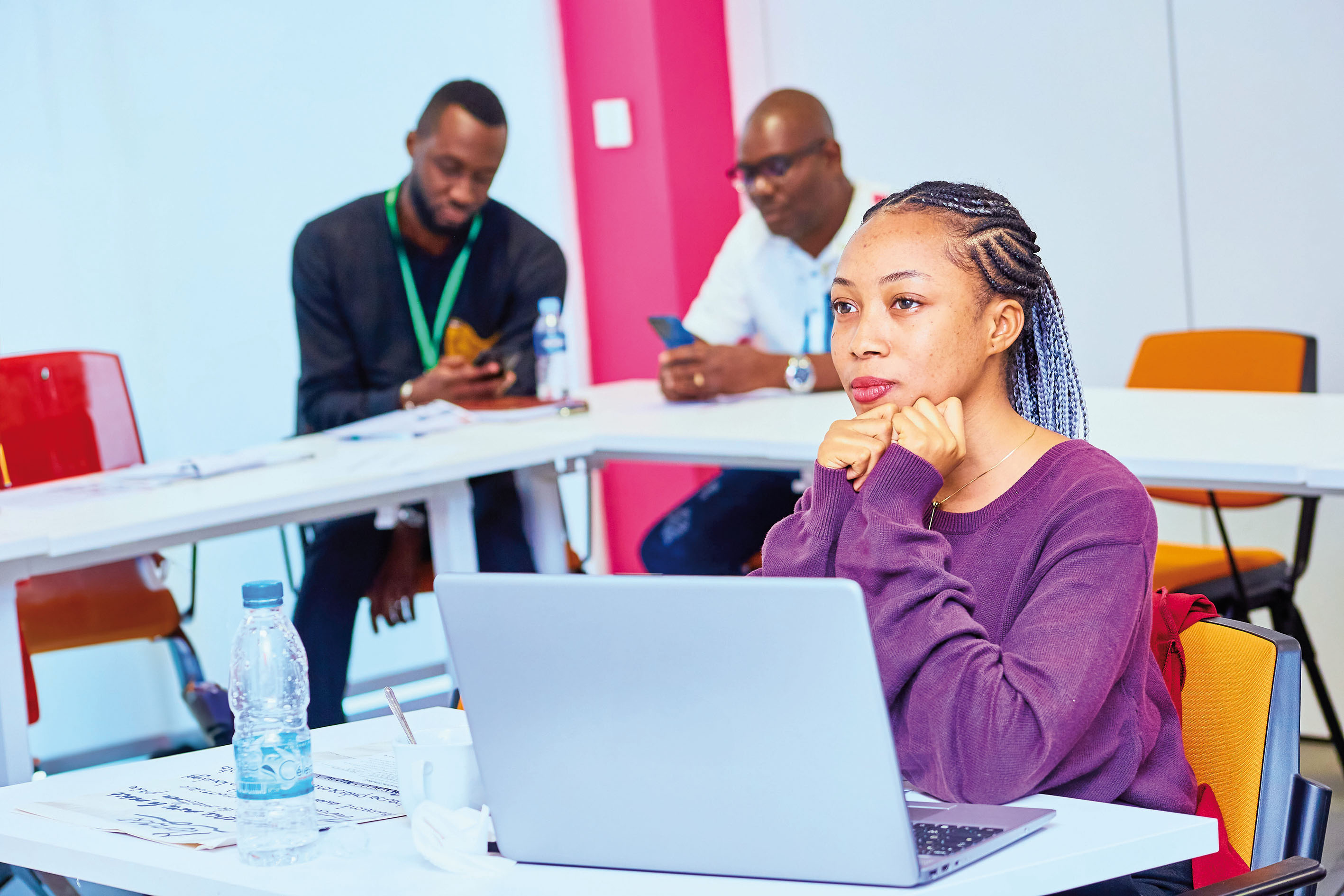
senegalese entrepreneurs in a meeting


Services


We work at various levels with our partners, offering them comprehensive, customised solutions:

Support for governance and public policy: building institutional capacity to develop and implement mobility governance strategies.

Technical support for sectoral services to adapt their offer to the specific needs of people on the move: strengthening institutions’ inclusive approaches; mobility impact assessments; creation of specific services for entrepreneurial mobility within business support organisations; incentive measures for recruiting people on the move.

Support for international, entrepreneurial or skills mobility schemes between various partner countries and Belgium: cross-analyses of foreign labour needs and training programmes; capacity-building for international placement services within employment agencies; support for diversity within companies.

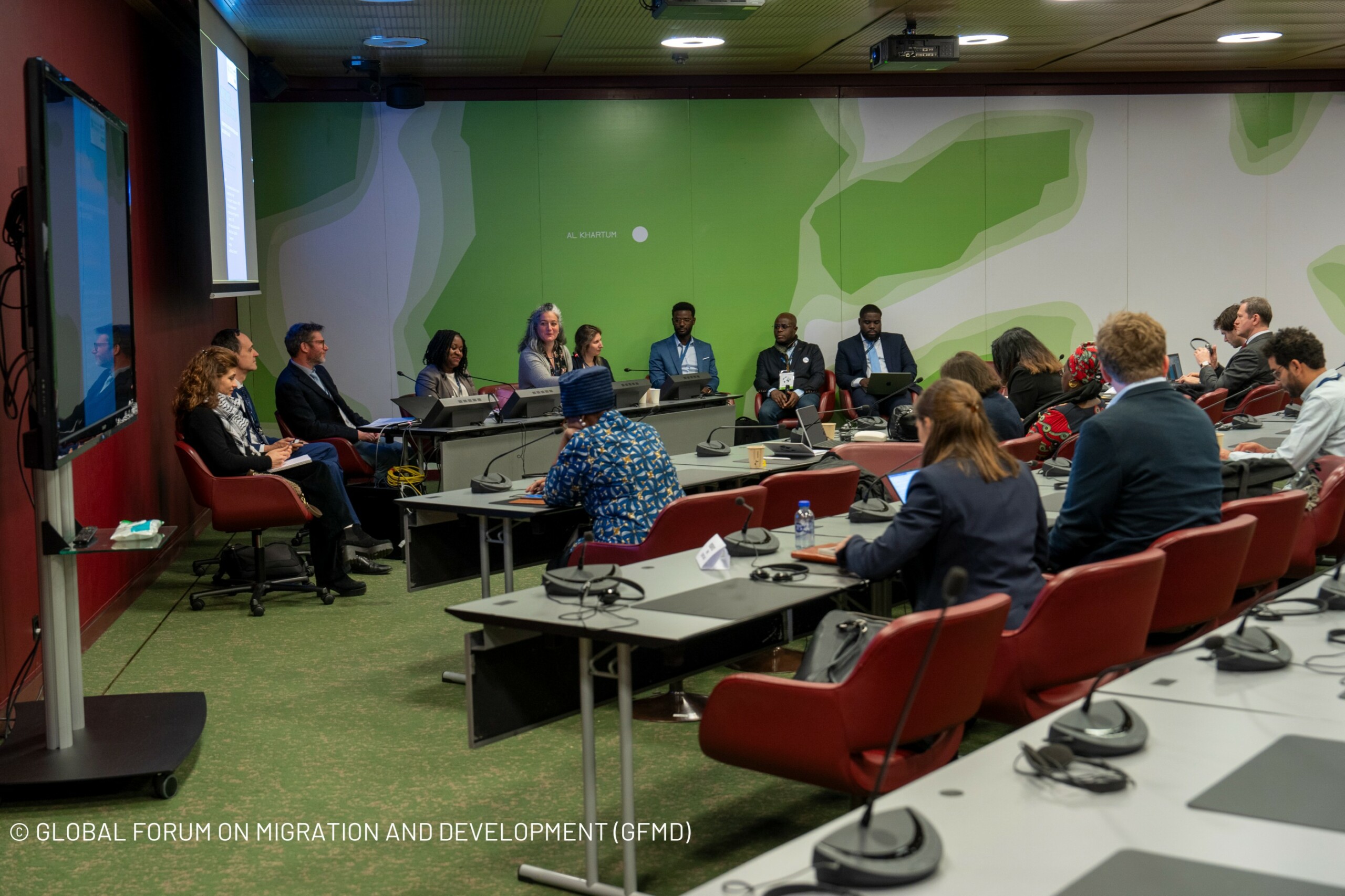
Support for diaspora organisations and networks: assessment of diaspora skills and initiatives; strengthening diaspora organisation structuring projects; networking with local players (local authorities, associations, diaspora organisations) and local investment opportunities.

Support for diaspora entrepreneurship: creation of support mechanisms for diaspora entrepreneurs; mentoring programmes putting entrepreneurs in contact with mentors from the diaspora (or people in mobility situations and members of host communities); facilitation of financial and technical contributions from members of the diaspora to young entrepreneurs; acceleration of MSMEs through entrepreneurial mobility.

Cooperation between peers: mobilising Belgian and European players in the field of mobility to encourage exchanges between peers and a better understanding of the issues involved in migration and mobility, including in relation to climate change, between the countries of the European Union and the African Union.

Generating knowledge on the matter: contributing to research projects conducted by Belgian and partner universities; strengthening legal clinics and associative networks that facilitate access to rights for people in mobility situations; action research on approaches to the inclusion of people on the move and on entrepreneurial and skills mobility models, in collaboration with Belgian, European and African universities.

Experience

Mobility governance in Guinea

The Accompagnement, Mobilité, Insertion & Sensibilisation (AMIS) project supports Guinean mobility policies and promotes the reintegration of returning people in mobility situations.

We support the management capabilities of local and institutional players, by improving guidance and support systems for returning people in mobility situations. Enabel and its partners are also strengthening access to information on socio-economic opportunities and regular mobility, and supporting sustainable reintegration through a referral system and individualised support.

The project is led by Enabel and Expertise France and funded by the European Union and France.

Find out more

Sustainable reintegration of returnees to Côte d’Ivoire and the fight against trafficking

MIGRET is a project implemented by Expertise France, the International Organisation for Migration (IOM) and Enabel, and funded by the European Union and the French development agency.

Through its component, Enabel promotes sustainable reintegration approaches tailored to local realities and the needs of returning people in mobility situations. The project is active in Abobo, Bouaké and Daloa, where it supports local players and decentralised services to improve guidance systems for people seeking socio-economic opportunities, as well as coordination between players to provide care for returning people in mobility situations.

At a strategic level, MIGRET also supports the integration of migration matters into territorial planning and management, by improving local governance tools.

Find out more

Strengthening Belgian-Moroccan partnerships in the healthcare sector

The Healthcare Global Skill Partnerships project, co-funded by the European Union and Belgium, is fostering skills mobility partnerships between Belgium and Morocco in the care and pharmacy sectors.

It responds to two realities: the shortage of nurses in Belgium on the one hand and the saturation of the Moroccan market for young nurses on the other. The project is testing the Global Skill Partnerships approach within the framework of the EU Talent Partnerships and is based on three components: strengthening public international placement services, mobilising employers, and harmonising training programmes between the two countries.

Find out more

Stimulating entrepreneurial mobility between Belgium and Senegal

The PEM WECCO project (Project for Entrepreneurial Mobility – WECCO, i.e. “exchange” in Wolof) aimed to strengthen economic partnerships between Senegalese and Belgian SMEs through circular mobility.

Implemented by Enabel and co-funded by the European Union, its activities included the selection and coaching of entrepreneurs, boostcamps, business trips and matchmaking. To date, 29 partnerships have been signed.

The PEM also supported the West African diaspora in supporting Senegalese entrepreneurs and in investments in Senegal, covering a wide range of sectors. The PEM approach has also been implemented in Côte d’Ivoire through the PEM N’Zassa project and in Gambia through the Boosting Gambian Talents project.

Find out more

Related content

Stay informed

Keep up-to-date with our latest activities and international development trends from a Belgian perspective.

Newsletter

"*" indicates required fields

This field is for validation purposes and should be left unchanged.