News
1 July 2025
‘The Junior Programme really gave my career a boost.’
Interview with Anouk, former Junior Expert in Benin
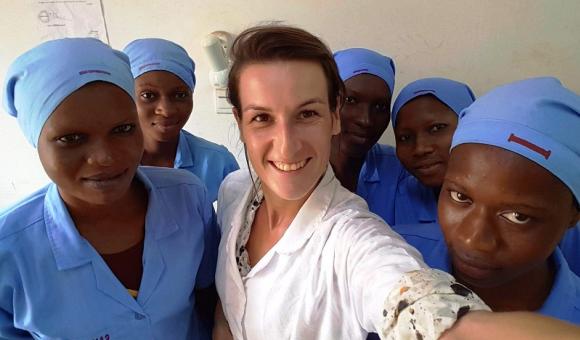
At the age of 28, Anouk Bonte left for Benin as a Junior Expert. That experience marked a turning point in her career: after her return, she worked for Plan International and in the office of former Minister for Development Cooperation Caroline Gennez. Today, she is deputy director of the Klein Kasteeltje at Fedasil.
Anouk dreamed of a job in international cooperation, but without experience, that was not easy to find. The Junior Programme opened that door. ‘The programme has a good reputation, and you really gain expertise. When you apply for a job afterwards, people can see that you have grown,’ she says.
After her assignment in Benin, she was able to start working at Plan International almost immediately. ‘There were several former juniors there. You notice that Belgian NGOs value junior experience.’ This was followed by an opportunity at the office of Minister for Development Cooperation Caroline Gennez, where she worked on gender, non-governmental cooperation, youth participation and sustainable chain care. ‘My time in Benin was really valuable. If you’ve worked on an international cooperation project yourself, you can imagine certain things better. That helps enormously when developing policy recommendations.’
Learning what real cooperation means
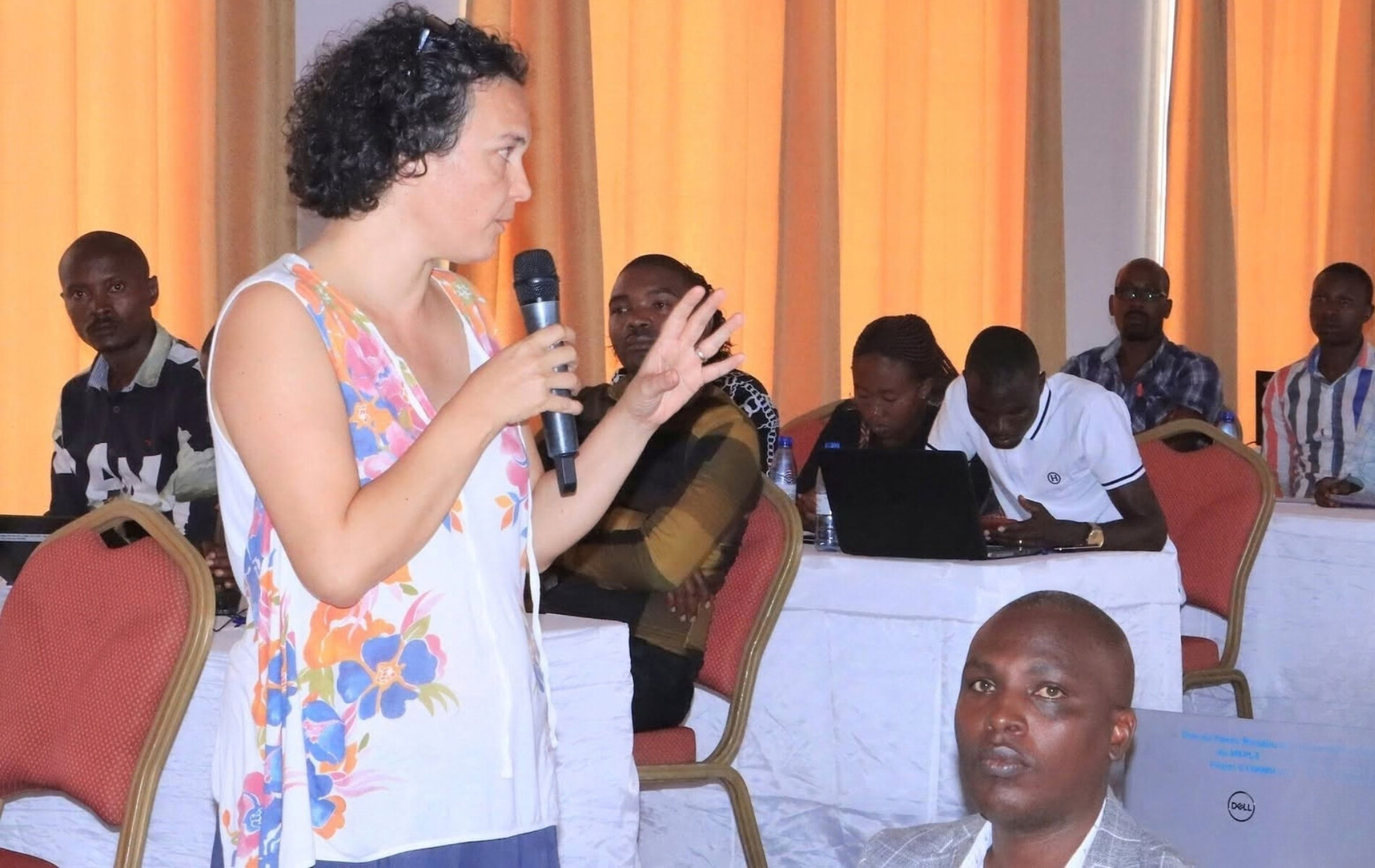
Anouk worked as a junior at APEFE, the international cooperation agency of the Wallonia-Brussels Federation, at a medical training institute and the university in Parakou, a city in central Benin. Her assignment focused on pedagogy and digitisation, but the latter proved unfeasible without additional resources. ‘Digitisation was not high on the list of priorities for local colleagues. What really mattered only came to light by listening carefully and being present.’
These conversations led to a different path, where the focus shifted to gender and gender-based violence: together with a nurse, she set up a Student Counselling Centre, where students could go with questions and problems, including questions around sexual violence during internships.
Together with the students, they also developed an information brochure on contraception in Benin and drew up a code of ethics with internship supervisors. She learned an important lesson during her time as a junior. ‘You can’t impose anything. What you do must be based on real needs and, above all, on real collaboration.’ The same applies to policy: ‘I could write as many policy documents as I wanted, but if the sector doesn’t support it, what’s the point?’
Back in Belgium: searching for balance
Returning from Benin took some getting used to. “I felt a bit lost. Everything in Belgium suddenly seemed so tightly organised. Making appointments requires diaries, schedules… Whereas at the beginning of my journey, I was looking for structure in Benin. But I began to see the value of a less rigid system, of flexibility.‘
This experience also gave her a sense of perspective. ’I struggled with my health and fell seriously ill a few times. That makes you realise how vulnerable you are. In Parakou, good healthcare was not a given; we were a seven-hour drive from the capital, Cotonou. I was able to get further treatment in Belgium. People from Parakou don’t have that option.”
Today, Anouk works as deputy director at Klein Kasteeltje, where 800 people are cared for and 400 people in emergency shelter are given further assistance. She combines management with operational tasks. ‘I missed human contact when I worked at the cabinet. There, I suddenly became “Mrs Bonte”, but here, colleagues and residents just come up to me.’
A wonderful network and a healthy dose of self-reflection
Anouk emphasises the strong network that the Junior Programme offers. ‘You share the same vision and background. You often click with other juniors right away. At Plan, in my current job… you quickly recognise former juniors. It’s also more than just professional: I’ve made some close friends.’
Although she now works in Brussels, she still feels the urge to work abroad again. ‘Maybe not for two years, but a shorter assignment would definitely appeal to me.’
What continues to preoccupy her is the need to make the system more equitable. ‘The programme offered me a lot, but at the time it was mainly aimed at Europeans. Yet it is just as valuable to offer young professionals from partner countries the same opportunities. I am therefore delighted that some space has been made for this in the new junior programme.’
She also questions her own position. ‘How collaborative was the cooperation in Benin really? You leave with unconscious ideas, and vice versa. How open do people dare to be when you are the outsider? I think it’s healthy to dare to question your own position.’
Her advice to future juniors? Just do it
‘Go for it! It’s intense, you come up against yourself, but that’s what makes it so valuable. You learn to be flexible, to work together and, above all, to get to know yourself better. And that network of juniors? Whether you remain active in the sector or not, it stays with you.’