News
18 September 2025
“Our global crisis needs a new deal between people and government”
An opinion by Rakesh Rajani, JustSystems
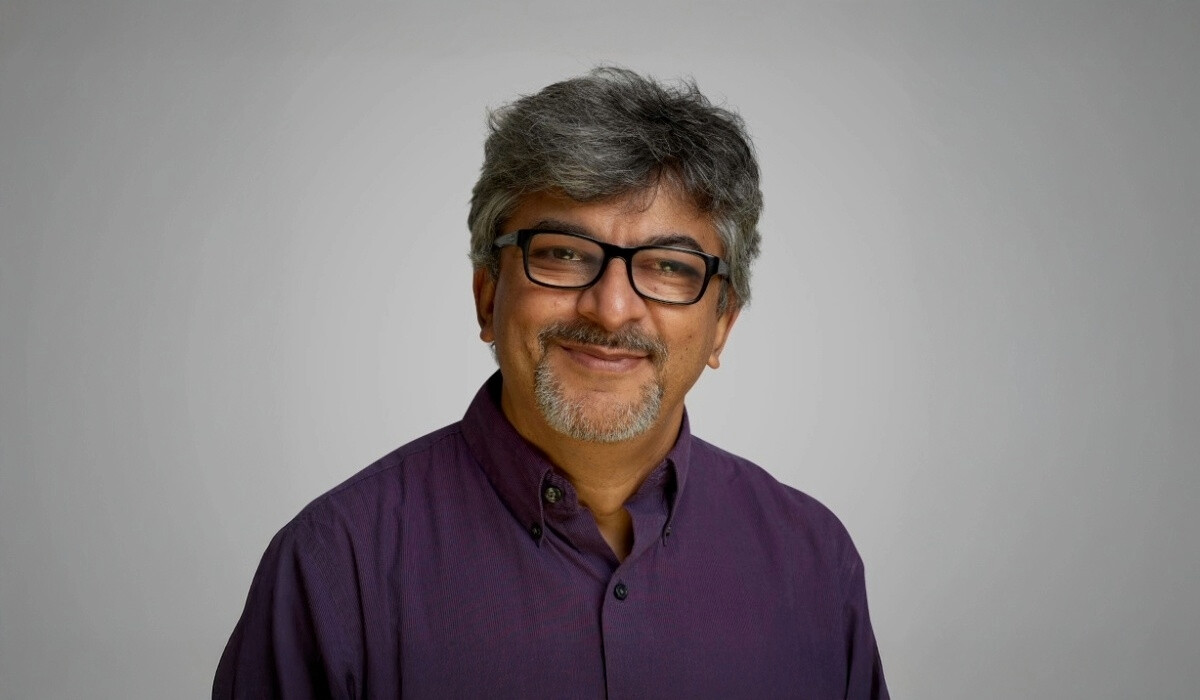
Delivered at Enabel’s annual Global Leaders Week, 23 June 2025
My father, a modest man who died 8 years ago, only gave me one piece of advice. “Son,” he said, “be careful of three things and you will be all right – fire, water, and the government”.
I imagine that you are struggling at this time of huge geopolitical turmoil – where the rules and principles of global cooperation, decency and justice seem to be thrown out, where aid agencies are dismantled and aid levels falling sharply, where progress on human and planetary wellbeing is under threat. I have followed some of your work in these grim times, and I have deep admiration and respect for what you do.
How does one make sense of this mess, and how does one respond?
Wishing for the seemingly kinder global consensus we had 5 or 10 years ago or to remake a case for 0.7% is understandable, but unlikely to be helpful.
We probably need something more basic, more human, more strategic, more imaginative.
I suspect that my father’s fear of government, his lack of trust in the social compact between people and the state, may be at the core of our challenge.
Throughout history, societies have advanced when governments have been strategic and done the right set of things. One can plausibly argue that the only way to make lasting progress, at scale, is through and with government. Even when market action drives progress, one needs the state to provide the right sets of regulations, safeguards and rule of law.
Government is the way large numbers of people come together to secure a good life, for the present and the future. So, I put to you that the most important goal of development cooperation is to contribute to: 1) government becoming better at working for people, and 2) people becoming better able to be heard by, trust and shape their government.
But this precisely is our greatest deficit. People across much of the world – in the Global North and Global South – do not believe that their governments are up to the task. When we feel that government is bureaucratic and slow, that it does not listen, that it does not really understand and does not care, and that it is not there for me and my people, we lose trust and confidence. This feeling is even more acute where people are hurting, feeling economically and culturally insecure, increasingly unable to achieve their aspirations.
And when we stop trusting our government, we get suspicious and angry and parochial. We start perceiving that government is captured or corrupt or wildly out of touch, and we start the blame game, demanding that government stop doing things for “other” people, demanding cuts to global development and clampdowns on immigration, demanding that government get out of the way. The sense that we are all in this together is undermined.
At core, this is not an argument for better advocacy for aid effectiveness or the value of international cooperation. No quantum of facts about progress on reducing maternal mortality or increasing literacy helps alleviate the alienation and loss of confidence that people feel about their lives and their government. In fact, it may make things worse by reinforcing the notion that the government cares more for others than for us.
People’s sense of self-worth is a function of material wellbeing and emotional security, and so how people see and experience government matters.
People in government are people too. True state capability and confidence include how politicians and public servants see and experience themselves, as well as the level of trust and confidence that people have in their state. It goes both ways. This dual confidence, or lack thereof, may lie at the heart of our global crisis today
I would like to share 4 ideas to kickstart your reflections. These are meant to be provocations rather than affirmations, so I lean on the side of what may help you think and do differently rather than what you are already doing well.
Could the aid cuts be an opportunity to create something better?
The sudden dismantling of US aid agencies is damaging in so many ways, with real life and death consequences for people who are dependent on the agency for ARVs and contraceptives and malaria care and food. The somewhat less dramatic reductions in global development in the UK, Netherlands, Belgium and others are also real and concerning.
But this still raises the question that the Kenyan political scientist Ken Opalo (do read his blog) and others have asked: ‘why do so many African countries, decades after independence, still depend on foreign donors to pay for our most basic needs? Moreover, what does it mean to experience the humiliation that governments far away can play roulette with the lives of our people?’ What does this do to a people’s sense of their own capacity, and about their confidence in their government?
The Uganda government budget is about $20b and SA is over $120b, in comparison aid support to these countries is tiny. Surely the important question is what would it take for these countries to pay for these core costs themselves? And if they were to do so, might that be worth more in self-pride and confidence than the value of the aid that has been cut? This debate, which can only be healthy, is live in substacks, social media, radio shows and cabinet meetings across many African countries.
Turning to Enabel, the writeup on my country Tanzania on your website states that you are working on water and sanitation, education skills, access to justice, gender equality, beekeeping value chain… and more… a wide range of work! When you started working in Tanzania in 1982, our GDP was about $14b, today it is over $83b, or six times as much. It makes me wonder – is support for 4000 beekeepers among the more strategic things Tanzania needs in 2025? To be fair, I have not looked closely at these projects, and I imagine that they probably do a lot of good. But the question is different: does your portfolio of work across Tanzania and Africa truly contribute to the governments being able to own and drive their development priorities and ownership and execution, and in a manner that strengthens the belief and confidence of its people in the social compact? If not, might a different approach be more powerful?
The erosion of support for international development cooperation norms is deeply sad, a reflection that all lives are not equal, that too many lives just do not matter and that we are not in this together. But if we can use this crisis to enable people and their own governments to reorganize and prioritize people’s wellbeing and security in their own plans and budgets, we may end up with a better post-colonial, more democratic and more dignified compact.
Might your legacy still constrain you from the impact you seek?
You state that you are moving beyond aid projects – beyond stuff like building water wells and supplying medicines to the poor – to mutual cooperation. To quote your CEO and Board Chair: “It is now about fully fledged partnerships with the countries of Africa and the Middle East, about collaboration among equals, about shared ideas and innovation that by no means comes only from ‘our side’.” Elsewhere I have read that development cooperation is strategic interest not charity, with Africa’s dynamic youth bulge, critical minerals, and so forth. I appreciate the move beyond neo colonial paternalism, to concepts of solidarity and cooperation based on mutual interest.
But I wonder whether the core templates of Enabel’s work, and more importantly how they are experienced by the actors across Africa, are that much different today than they were 20 years ago. I spend a lot of my time living and working across East and Southern Africa, and to a lesser extent West Africa, and what I hear commonly is that these are still donor funded projects. (This is quite different from what one sees in India, Malaysia, Vietnam, Indonesia, and while you do not work in these countries, it may be instructive to learn from their choices).
Projects can be managed – objectives, budgets, input and outputs delineated and accounted for. But projects, even when formally requested and blessed by governments, tend to cause two harms. First, they distract government and government staff from their core work, often through warped incentives such as allowances for workshops and travel, resulting in fragmentation and lack of strategic coherence. Second, they express a vote of no confidence on government staff and systems to be able to do a good job without external technical assistance. At a practical level this may get some things done, but at a psychic and political level they can reinforce the idea that we and our governments cannot get our act together.
An important indicator in this regard may be the number of people employed by Enabel. It’s terrific, if I understand it right, that 90% or so are in the countries of the Global South, proximate to the work, not Brussels, often from the countries where you seek to make the change. Compared to USAID’s reliance on Washington DC contractors or the old idea of the European expert teaching locals, this is obviously much better. At the same time, what long-term message does having 2,000 staff managing and helping deliver a budget of 500m Euros send? Are the staff of your government partners and civil society partners not able to do the work themselves? If technical assistance is needed, why is that capability not in the partners themselves? If it needs to be procured, might it be better for your partners to have the cash to procure it rather than the tied aid of needing to get advice from Enabel staff? Indeed, how would you know whether the cooperation you have is not an enactment of what Lant Pritchett calls isomorphic mimicry, where each side has gotten so good at pretending to do and say what’s right that they too have lost sight of purpose.
Put simply, I wonder whether the historical BTC legacy of your work, of doing projects and having Enabel staff provide technical and managerial expertise, keeps your work squarely in the charity template, despite your efforts? The intention is solidarity and mutual cooperation, but the experience or perception of it in Mwanza and Brussels may still be BTC foreign aid that is unable to rise to today’s deep challenges. A useful exercise may be to ask, if you were starting from scratch, and your goal was state confidence, capability and people’s trust, confidence in their state, would you do the projects you do today and employ 2,000 people?
Do we really understand who and what drives change?
Much of global development is driven by the idea that the world needs evidence-based solutions, and if we only got them to be reflected in policies and projects, life would be better. While evidence informed technical designs certainly matter, the lack of these is usually not the core constraint to progress. And no level of offering technically sound advice to what are at core political, institutional and cultural challenges will work.
So why is it that some countries do well and others, with similar resources and circumstances, do not?
Here I find the work of Belgian economist Stefan Dercon to be particularly persuasive. He argues that countries develop when their elites make a “development bargain”, a shift from protecting status quo and pursuing short-term gains towards betting on a future of economic growth and rising living standards. Dercon argues that developing such a bargain, rather than a specific set of policies, programs or institutional blueprints, is critical to achieving development. This perspective is usefully strengthened by feminist scholars like Ghanaian economist Abena Oduro who emphasizes that development requires institutions and policies grounded in local power structures, gender dynamics, and social norms.
Similarly, China scholar Yuen‑Yuen Ang argues that successful development isn’t about transplanting blueprints or great governance institutions – but “directed improvisation,” a coevolutionary process where the state and markets adapt together. The central government sets broad goals and clear incentive structures, then empowers and motivates local actors to innovate within boundaries. What people expect from government, Ang argues, is a state that guides, listens, rewards innovation, and continually evolves with society’s needs.
These perspectives challenge us to reflect on what it takes to make change happen beyond identifying and deploying evidence-based solutions. Importantly, international development agencies are at best minor players in these narratives. The core drivers of change are country-based actors, such as politicians and innovators in public service and organized social movements and influential elites across society. Without their active involvement and leadership (not just tickboxing a donor funded project), little will happen, and the questions for agencies like Enabel are how strategically useful do strategic local leaders see you to be? Here, in my experience, the quantum of support you bring to the table matters less than levels of trust and the flexibility of your funds.
What about the people? What do they want from the state?
Much of the state capability literature focuses on deliverology (can the state effectively deliver goods and services to its people?) and good governance (is the state accountable and corruption free?). There is good evidence that public confidence rises when a government is seen as clean and good at getting things done. People definitely value a system that reliably provides medical tests and supplies, chalk and textbooks, water in the taps, roads without potholes and trains that run on time. But it would be a mistake to think that citizens care only about these material things, as if what they crave most from government is to be Amazon or bol.com
In a precarious and uncertain world, people also care about being seen, heard and understood by their government. The American sociologist Arlie Hochschild, through her deep interviews in conservative, largely white Trump supporting communities, shows that people want a government that sees them, honors their work and identities, delivers fairness, eases their economic and cultural wounds, and fosters dignity and belonging. Similarly, progressive scholars Hahrie Han and Marshall Ganz emphasize that people want more than services from their government – they want agency, dignity, and meaningful inclusion in shaping collective life. Han argues that people expect government not just to deliver outcomes but to create pathways for participation, voice, and power, especially for those historically excluded. Ganz, rooted in social movement organizing, asserts that people want a government that is not just for them but with them – one that listens, enables collective action, and embodies moral purpose.
For all three, democracy is not transactional but relational: people expect government to enable belonging, shared purpose, and the ability to act together to shape their futures.
While these references are from the US, my experience at Twaweza East Africa and the Open Government Partnership shows that it is applicable across many countries. Building this sort of state and civic capability is about continual deep listening and trust building. This is deeply cultural and political – not technical and managerial – work. As a Belgian entity, Enabel is very unlikely to be able to play a direct role in its work across Africa and the Middle East – because you lack the mandate, standing and legitimacy that are essential.
At the same time, since this work matters, you cannot afford to ignore it. Instead, Enabel could adjust its own mindsets and antennas to identify the organizations and actors in these countries – both inside and outside the governments – who have the integrity, legitimacy and capacity to do this well, and support them over the long term. Here your role is on the sidelines. You understand that the leaders who will drive this sort of transformative development in Benin or Mozambique are not the staff of Enabel, and that your role is not to co-lead or co create, but instead to listen, build trusted relationships with leaders and be in service to them.
This includes leaders in government, business and civil society – the sorts of people JustSystems works with – who are trying to make public systems deliver outcomes for people at scale, to foster inclusion in who benefits and who decides, and to try to ensure that people experience government as respectful, dignity affirming and enabling of their agency. It includes support for trusted country-based convenors who can bring together key actors, people and leaders to create a development bargain and winning coalition that works across difference for a shared and ambitious purpose. And it includes skilled guides and coaches with strategic mindsets, empathy, integrity and legitimacy who can provide long term and trusted accompaniment to leaders to be their best selves.
The world is in a hot mess and Enabel is small. But if you figure out how to get beyond hundreds of scattered projects to support the strategic leaders who can restore faith between people and their governments, your work could help them roll justice like a mighty river.
And, hopefully, one day soon, fathers and mothers will say to their sons and daughters, “The world is a hard place. But you are not alone. Government cares, it is your friend. It listens. It brings diverse people and nations together to create a better life. Work with it to shape the more just world we all deserve”.
Learn more about Rakesh Rajani and his journey on LinkedIn.