News
27 March 2026
The role of cooperation in a room of investors
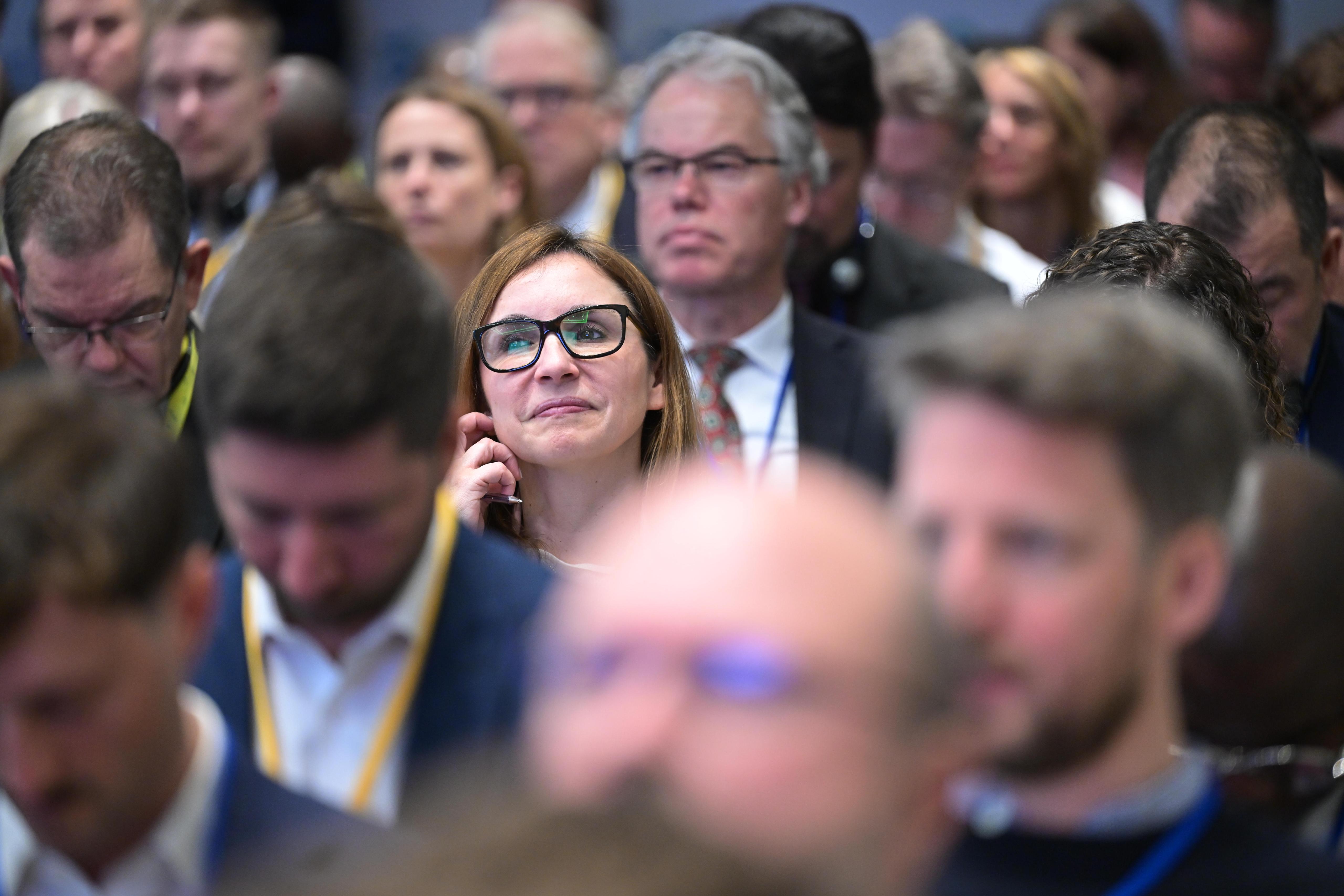
This month in Brussels, nearly 200 participants including Mozambican energy institutions and European private sector companies gathered in the same room, with one shared question on the table: how do we turn Mozambique’s energy potential into concrete investment?
One speaker offered the clearest diagnosis of the challenge: “capital is not scarce, it is scared”. The pipeline exists. The regulatory framework is in place. The political commitment is real. What the market needs is confidence that the rules will hold, that the structures will deliver, that the path from interest to commitment is walkable.
Building that confidence is not the work of a single forum. It is the work of many hands over the years. And it is precisely the work Enabel has been doing alongside Mozambique’s energy institutions, long before this week, and well beyond it.
The work behind the pipeline
Accompanying an energy transition means different things at different stages. In the early years, it started with the groundwork: contributing to the elaboration of Mozambique’s Energy Transition Strategy. This was not a planning exercise. It was the moment Mozambique defined, on its own terms, what a just, modern and renewable energy future looks like – and committed to building it. From there, it meant policy dialogue – sitting alongside the Ministry of Energy and Mineral Resources (MIREME) as the electricity law was updated, as off-grid regulations were designed, as the institutional architecture for a mixed public-private energy sector was debated and refined.
It meant working with the National Energy Fund (FUNAE) through a fundamental strategic shift. FUNAE was historically an institution that built and operated mini-grids directly. It is now repositioning itself as a market enabler, creating the conditions for private developers to enter, invest, and operate. It requires new skills, new processes, and new relationships with developers and financiers who operate on a different logic than government planners.
It meant helping design blended finance mechanisms that make projects viable in contexts where commercial returns alone are not sufficient. Where the social imperative of energy access and the economic logic of private investment need to be held together without one undermining the other.
None of this is visible at a business forum. But it is precisely what makes the forum credible.
What this week revealed
The signal that opened the week was significant. President Daniel Chapo sat at a table with Belgian authorities and private sector representatives to send a clear message of openness and readiness.
The next two days reinforced it. When a country’s most senior energy decision-makers make that journey together, it communicates something that no document can: that this is a national priority, backed by political will at the highest level.
The presentations that followed gave that signal substance. FUNAE laid out a pipeline of 100 identified mini-grid sites, clustered and pre-assessed, representing over 70 million USD in investment. The national electricity utility EDM presented its transmission backbone development and a project pipeline structured across clear stages from concept to implementation. MIREME outlined an enabling legal and regulatory environment, including updated off-grid regulation, and concession frameworks designed to welcome private participation.
The role of a cooperation agency in a room full of investors
The question sometimes arises: what is a cooperation agency doing at an investment forum?
The answer is that international cooperation operates in the space between political commitment and investable opportunity, a space that markets cannot fill on their own, at least not in the early stages of a transition.
In practice, that means mobilising climate finance to make tariffs viable in communities where full cost recovery is not commercially possible. It means bridging the gap between a public institution with a pipeline and a private developer who needs a bankable feasibility study before committing capital. It means working across the Global Gateway architecture to connect European financing instruments to Mozambican priorities in practice, not just in policy documents.
It also means being present consistently, across governments, across funding cycles, across the moments of progress and the moments of difficulty. That continuity is itself a form of value that markets struggle to provide.
What comes next
We leave Brussels with real momentum and a clear sense of what the next chapter requires. The pipeline is structured. The institutions are aligned. The private sector is engaged.
What converts engagement into commitment is execution. The first concession tenders going out and coming back. The first mini-grids financed and built under the new model. The first proof points that the regulatory framework performs as designed, and that the blended finance architecture delivers what it promises.
Mozambique’s energy potential is not a future story. It is a present opportunity, for European companies ready to engage, for investors willing to move on, and for a partnership between two continents that is increasingly built on investment and shared interest rather than dependency.
© Photo credit: ALER / AMER