News
30 January 2021
“Drone imaging will help develop new export opportunities for the pineapple sector of Benin.”
Why turn to such a complex technological solution like drones to strengthen an agricultural value chain?
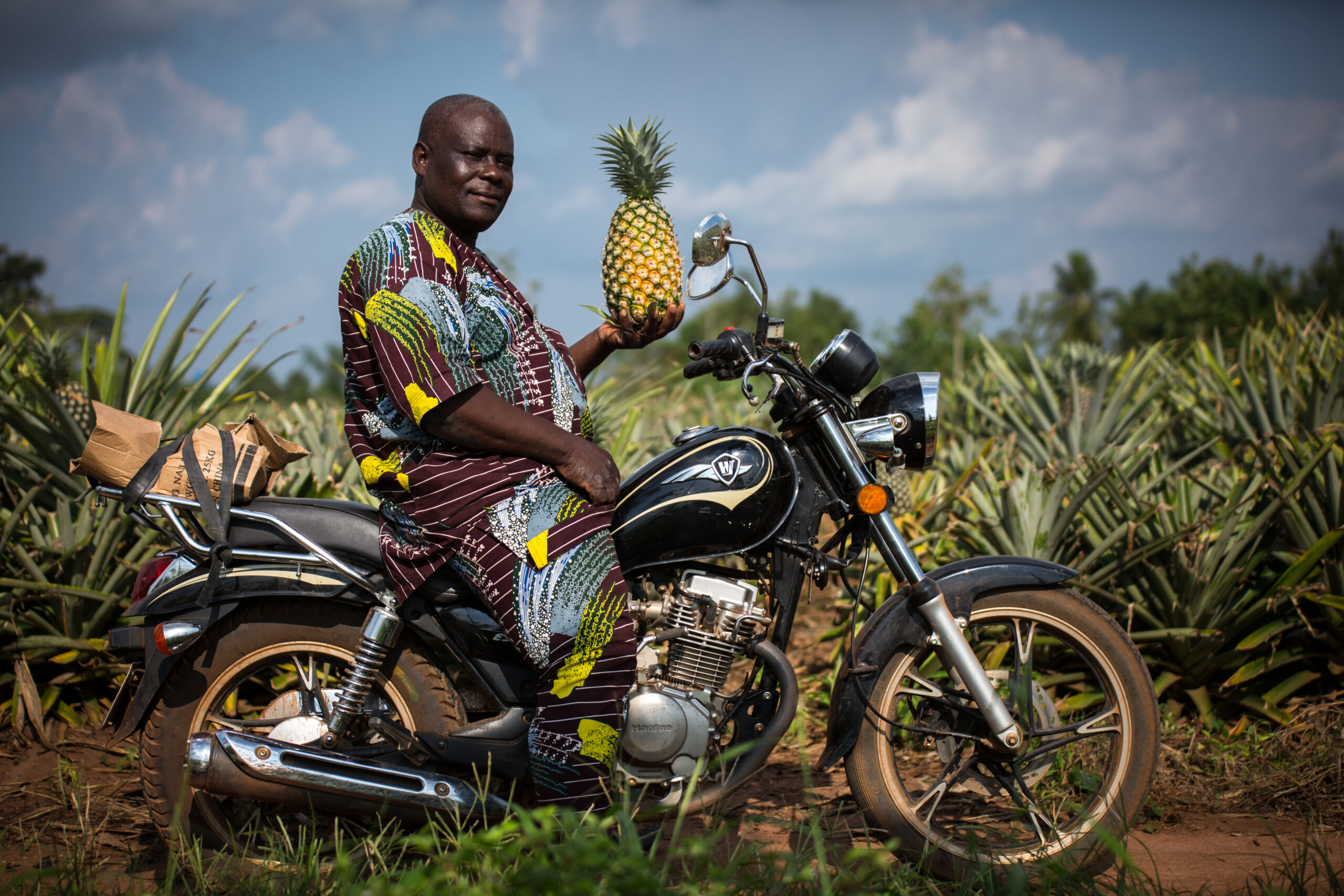
Our Benin pineapple sector development programme pursues two main goals. First, we aim to improve the sector’s value chains and their positioning in the markets. Second, we aim to create an environment conducive to the development of agricultural enterprises. We do so through the dissemination of technological innovations in order to increase farm yields and improve the productivity of fresh, juice and dried pineapple processing and export companies.
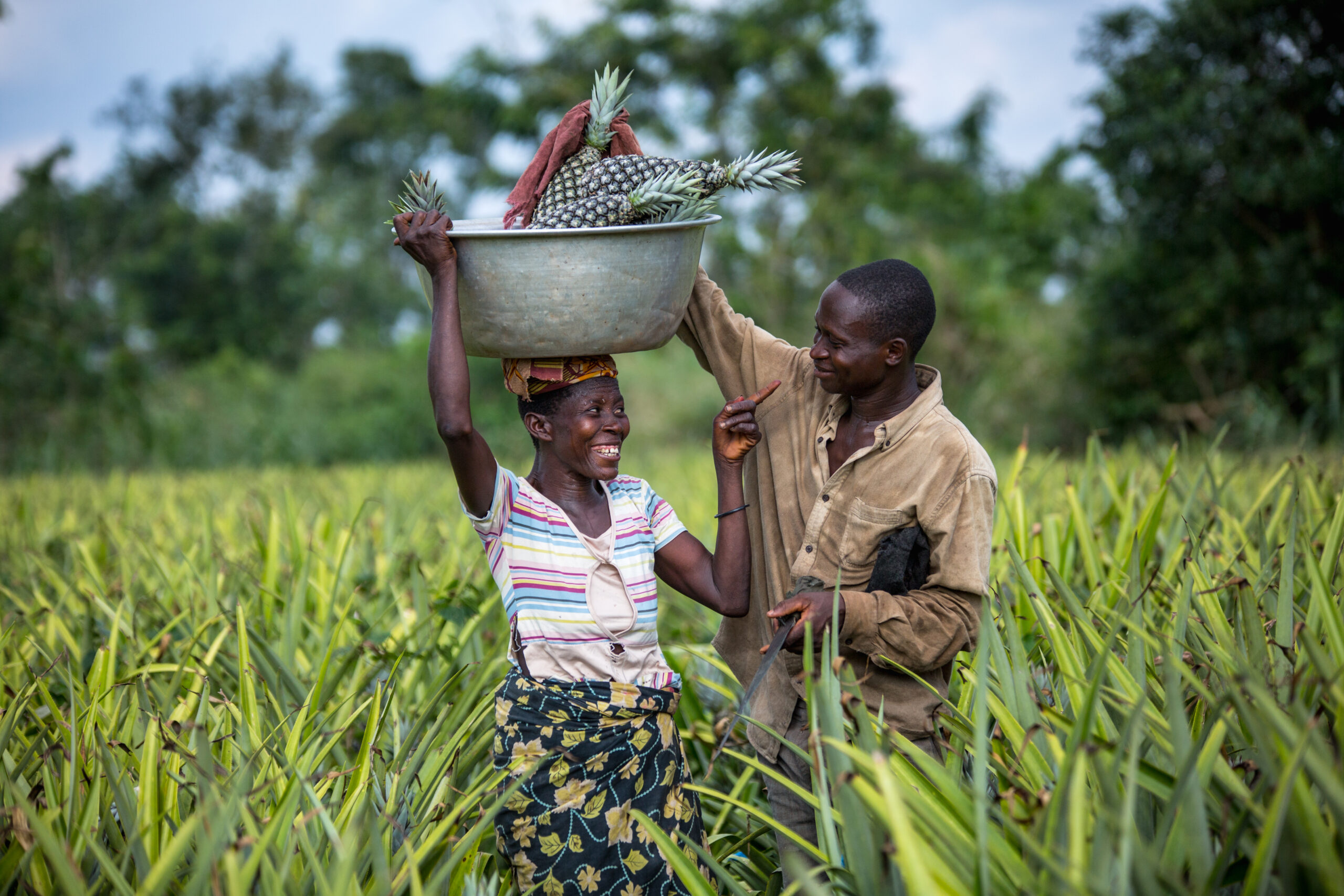
Indeed, pineapple yields depend, among other things, on the control of irrigation reducing water stress and nutrient deficiencies. To achieve this, you have to work at the individual plant level. The current solution is to have an expert walk through the plantation and check the plants one by one. The Ministry of Agriculture has advisors who do so for producers; however, walking these plantations takes much time and is not without risks, as the leaves are very sharp. The use of drones and algorithms to interpret images captured during flight will speed up the process and give experts a more precise basis for their advice. It will also provide additional information to calculate yields, such as an accurate count of the number of plants, flowers, fruits.
‘If profitability is at the rendezvous, the question of sustainability is quickly resolved.’
In addition, with these aerial overflights the boundaries between exploitations can be better determined. These improvements will create the necessary conditions to professionalise the operations of some 5,000 pineapple growers as well as improve the quality of production and ensure good planning and monitoring.
Is such quality improvement really necessary?
Such improvement is closely linked to one of the pillars of our intervention, namely the search for new markets for the sector. Take, for example, access to European markets, which offer huge business potential. To access European markets production must meet the standards of European retailers, which, unlike West-African markets, impose weight, size and colour requirements on the fruit.
To produce fresh pineapples that meet these requirements, growers need to better master production techniques and ensure good pineapple growth. This particularly requires precise control of irrigation over the entire 18-month growing cycle and control of the crop’s health. This can be done at a lower cost by means of drones, which not only offers farmers new opportunities at a lower price, but also the opportunity to improve their profit margins.

There are many actors involved in this initiative. Who are they and how do you ensure harmonious collaboration?
Many public and private actors are indeed participating in the initiative, in Belgium and in Benin. Without listing them all, I’ll point out the most important ones. On the one hand, two private technology companies are involved. Here, in Benin, Global Partners, a start-up, is putting in place technological tools to interpret the images collected by drones. It is supported by VITO, a Belgian research centre specialised in developing solutions based on aerial imaging. It also takes care of quality assurance of the solutions developed. Enabel funds the implementation of the solution, including the development of the algorithms needed to interpret the images.
A steering group comprises the DEFIA programme, the Benin Interprofessional Pineapple Association and the Benin Ministry of Agriculture’s Land and Agriculture Development Agency and Information Systems Directorate. This involvement is crucial for us, as it is an essential condition for the sustainability of the system. Finally, we are also working with TechnoServe, an NGO that is running a similar project in the cashew nut sector in Benin with the Wehubit programme. The Wehubit programme is implemented by Enabel. It invests in digital high-impact projects.
Enabel also is a facilitator. We want to avoid double work and to ensure that the work of each actor complements that of others. When our intervention is over, the responsibility for this solution will be in the hands of the Agriculture Development Agency, who will go to the pineapple growers and provide them with the advice.
You stress the need to come up with a cost-effective solution for all parties involved. Why does it matter?
‘The affordability of the solution is the main guarantee that it will last.’
The fact that the grower can benefit from this service at an affordable cost, especially in view of productivity gains and access to new markets, removes a first obstacle to sustainability. If the solution is self-financing, it does not depend on external financing. Ditto for private sector players: if profitability is at the rendezvous, the question of sustainability is quickly resolved!
With the coverage of the cost of developing the algorithm, the experimental aspect inherent in any innovation activity, profitability was ensured for all parties. Moreover, the solutions put in place for the pineapple sector can probably be applied to other sectors or be used in other countries, which ensures the Benin start-up new opportunities for growth and, of course, business. Everyone’s a winner!
Where is the project today and what are the next steps?