“One is not born but becomes a woman”*
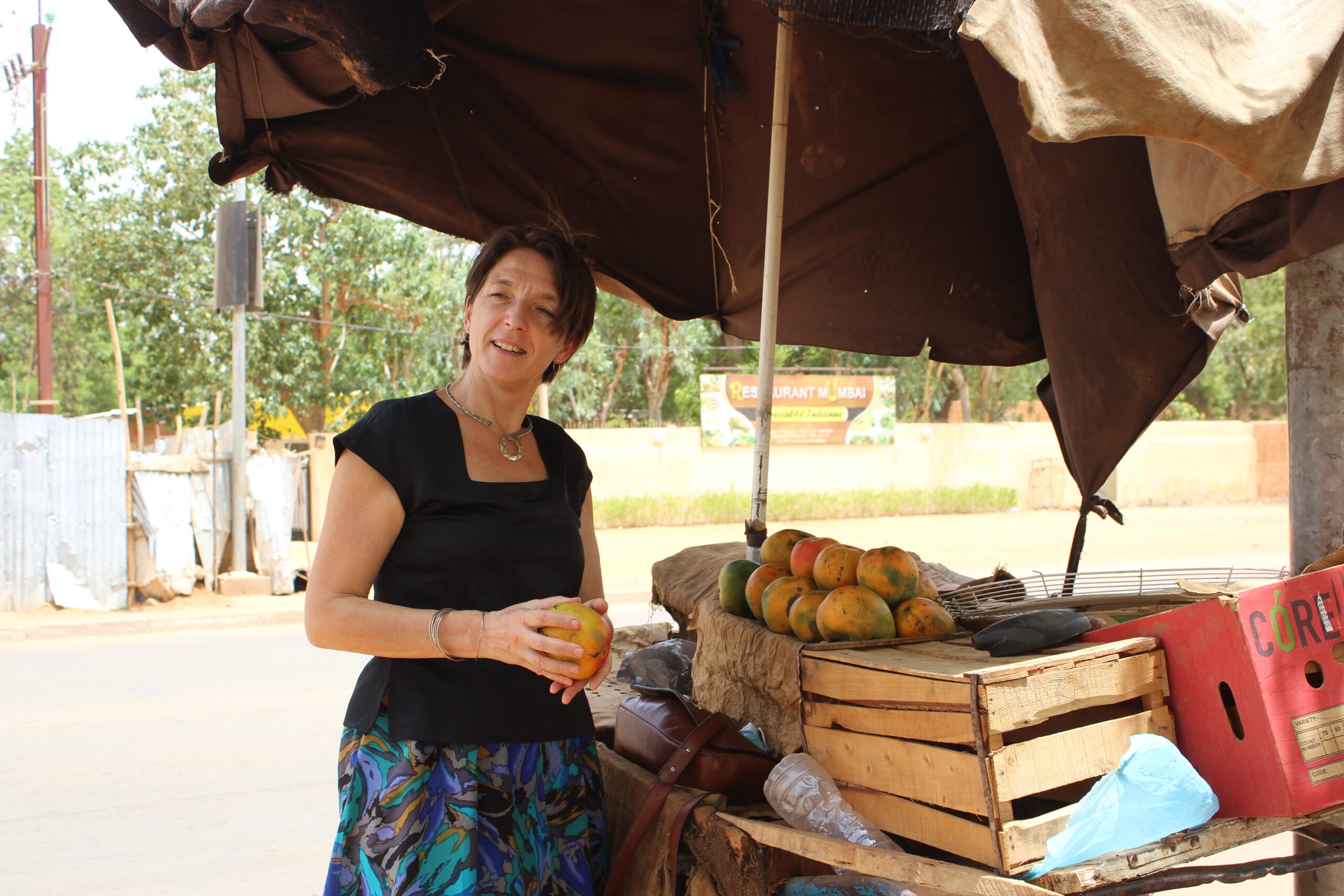
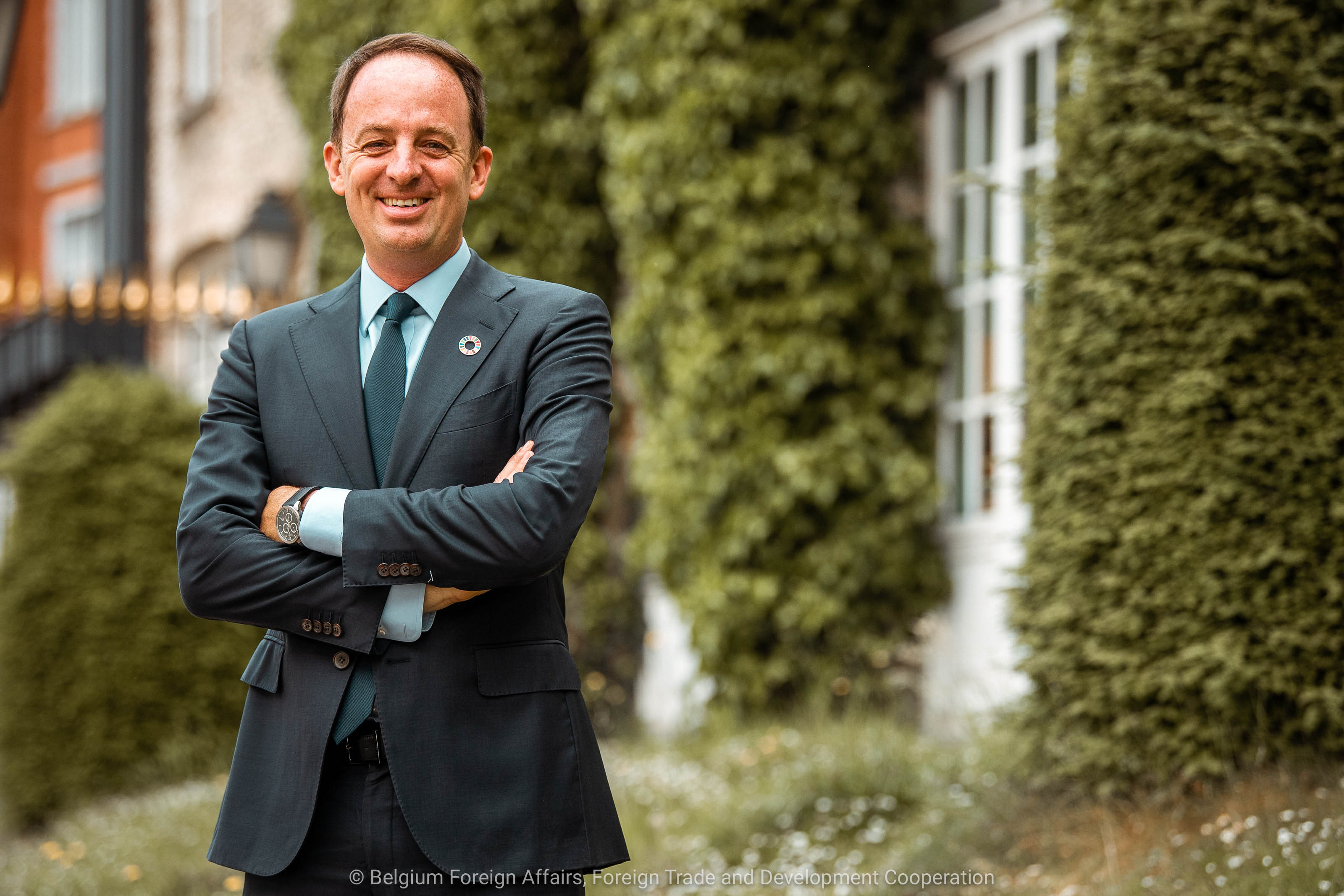
Sandra Galbusera is Enabel’s Resident Representative in Niger. Her role is to manage the programmes and ensure that they are carried out well. Behind this representative is a person who listens to people around her and to her team members. Today, she talks about equal opportunities, feminism and social justice.
“What drives me the most in my job are human relations, the contact with partners and colleagues and especially with the beneficiaries. When a woman in a project says to me, ‘Enabel has changed my life,’ it really encourages me to keep going and move to the next stage. Working here is very different from working in Brussels, because here we see things every day that motivate us to move forward. I am also surrounded by a competent team. It reassures me because I can rely on them and I know they will guide me if needed.”
What has been a turning point in your career?
A turning point in my life was the meeting of Fati (a pseudonym), a young adolescent who was 13 when she visited Belgium at the request of a charity and testified of her life experience.
From an early age, Fati had been promised by her father to a much older man, whom she did not know. When she was 13, she had to go to the man’s house. One night, the man made advances at her, but she refused and escaped the compound. As she fled, Fati remembered an NGO that had helped a relative of hers who had wanted to escape early marriage. This is how she too was taken care of by that organisation and how she came to Belgium to testify before Parliament and even got to meet Queen Mathilde.
What touched me was that this girl was exactly the age of my daughter. They met at my house afterwards. That’s when I got involved in the fight against early marriage and that’s one of the reasons I’m currently working in Niger.
Have you ever been made aware that you are a woman at work?
Yes, I have experienced resistance just because of the fact I was a woman. Being a female leader sometimes generates resistance, not only among men, but also among women who are not used to having a female supervisor. Such resistance may be triggered by one’s leadership style, but it is also a matter of habit: Some sectors are still unfamiliar with female leadership and so women in positions of power are rather rare. However, I also feel some ease with female colleagues: They feel safer faster and this quickly creates solidarity.
As a woman, I believe I also am more sensitive both from an organisational and programmatic point of view to taking into account the gender and strategic interests of women when developing new activities.
Who are your female leadership models?
I immediately think of my maternal grandmother. She became a widow at 40 and had 8 children. She has always been very open and was able to adapt to modern times. For her, for instance, divorce was not necessarily a failure. She believed people should get a second chance. For her, having a boyfriend was a way to discover yourself, to get to know each other better. She was able to adapt to the changing world around her. She inspires me because she was able to change with the times. She taught me not to judge others with one’s own reference framework, which may be dated or traditional. Her life was certainly not easy, but she is a woman who fought with a smile and kindly despite the difficulties.
Another woman who inspired me is an Ethiopian peasant who lives in a small, very modest village. I lived with her in her house which lacked water and electricity. I was there to do anthropological research; she really was a great host. She too was a widow; a mother of five boys. She was so brave. I was thinking about all the luxury I would have had at home and I saw her fighting every day. I could only be admiring and respectful of her.
How do you want to promote gender equality, diversity and inclusion?
I hope that, for instance, the human rights and equal opportunities, which we advocate in our programmes and projects, lead to changes in the personal lives of our partners and colleagues too and not just at the project level. I would like to see a debate among ourselves about the discriminatory aspects that still exist, that persist and that are sometimes very difficult to eliminate. I would like to see sufficient transparency, trust and will to be able to talk about it among ourselves without taboos and that in the medium and long term it will have a positive impact on our colleagues’ private lives. I would be really proud if we could generate this kind of lasting change.
When we talk about diversity and inclusion, I am thinking, for example, of homosexuals. It is a difficult subject to address, but homosexuals still have a hard time getting integrated, here in Niger, but also in Belgium and elsewhere in the world. However, they should be included and treated equally.
How can we improve gender equality at Enabel‘s?
I always try to take equal opportunities and gender equality into account. For me, honesty and justice always take precedence. I would never take a measure that would discriminate one group or another. This means, for example, that everyone is entitled to training, regardless of their function, whether they are project managers, drivers or Technical Assistants. The same goes for recruitment: We encourage applications from women, but there is no positive discrimination; we do not select a woman just because she is a woman.
Do you have any advice for your female colleagues?
My message to my female colleagues is very simple: Fight for empowerment! Empowerment, to me is something sacred, that should be preserved and respected as much as possible. For my women colleagues it means being authentic, staying themselves, daring to say what they think, daring to do what they want as equal partners, with respect for our male colleagues, but above all with the ambition to fight for gender equality. I hope that they will have the opportunity to freely choose how they behave and what they think without any external pressure.
What struck me, here in Niger, was that I am often the only woman attending meetings. Much remains to be done to break the ‘glass ceiling’ that hinders women. Even though more and more women are working, they still have to double the effort to get into higher positions. And yet, they should have the same opportunities and working conditions as men.
* Sandra Galbusera likes the quote ‘one is not born but becomes a woman’ from the French writer Simone de Beauvoir. It illustrates how important equal opportunities, feminism and social justice are to her.