Ruminant livestock in Mali: Nana Sangaré Dembélé’s story
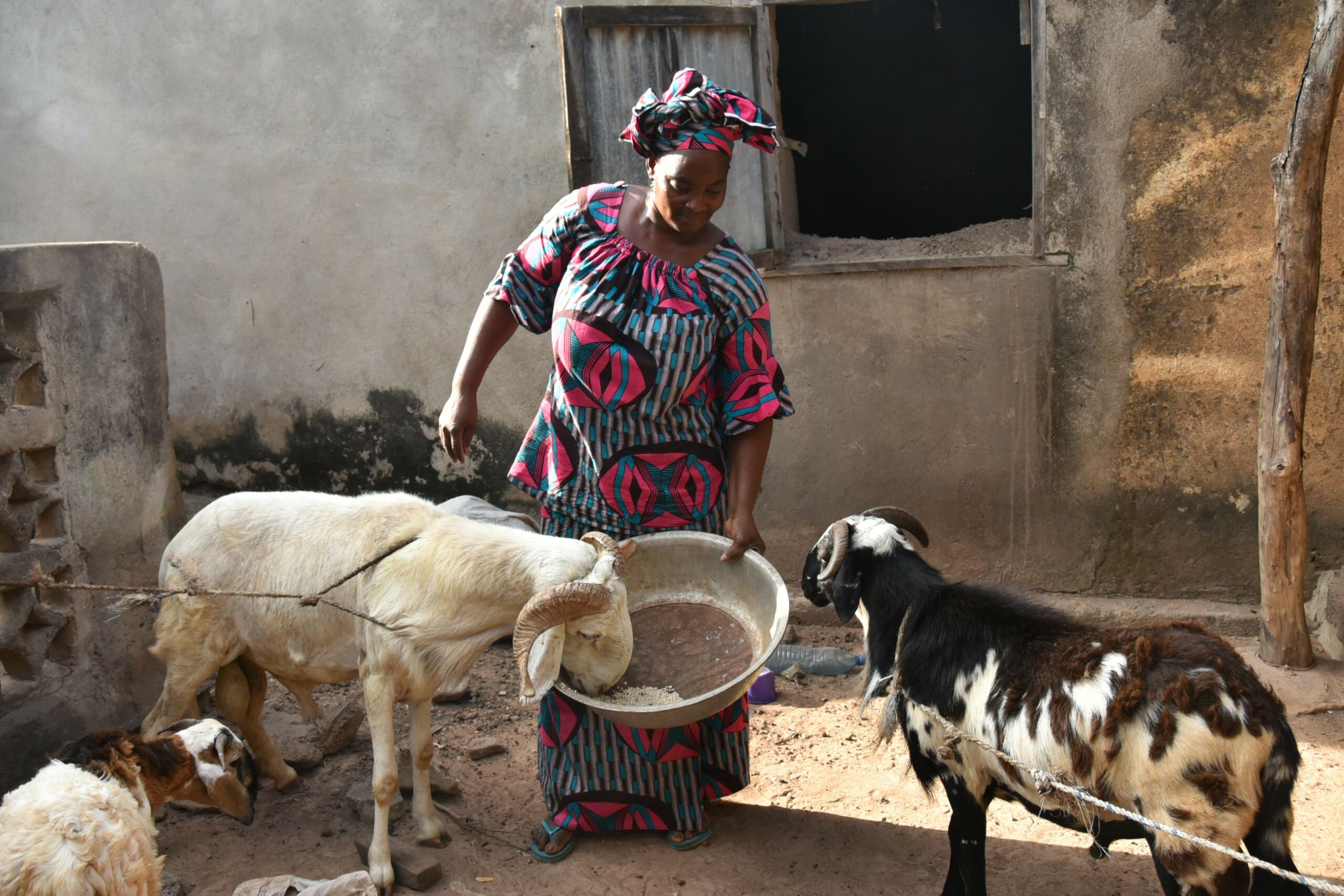
In Mali, professionalising the fattening of small ruminants by women, serves a double purpose: on the one hand, household incomes are increased, and on the other hand, the resilience of family farms to climate change is improved. Nana Sangaré Dembélé was trained in these techniques and became a trainer herself.
“In two years, I acquired four oxen and it is thanks to this activity that I was able to enrol two of my children in a private school and secure a better future for them,” explains Nana Sangaré Dembélé, a farmer from Mali‘s Koulikoro region.
“My training in animal husbandry and farm management techniques has enabled me to diversify my sources of income. In addition to cattle rearing, I was able to generate new income through the production and sale of lickstones, which I learned to make during this training. ”
In Mali, an agricultural country, 30% of the population earns its income from livestock or crops. The sector represents 14% of GDP. For more than three decades, however, the country has faced frequent crop failures.
To alleviate this problem and make the population more resilient to the changed situation, Mali and its partner countries have looked for techniques that can be adopted by agro-pastoralists. Fattening is one of the techniques favoured by the interested parties. This is a form of fattening of sheep, goats and cattle that increases the income of farmers.
It can be practised both around large cities and in rural areas. As the activity requires far less travel than nomadic livestock rearing, more and more women like Nana want to get trained to diversify their household income and become more independent.
Knowledge-sharing
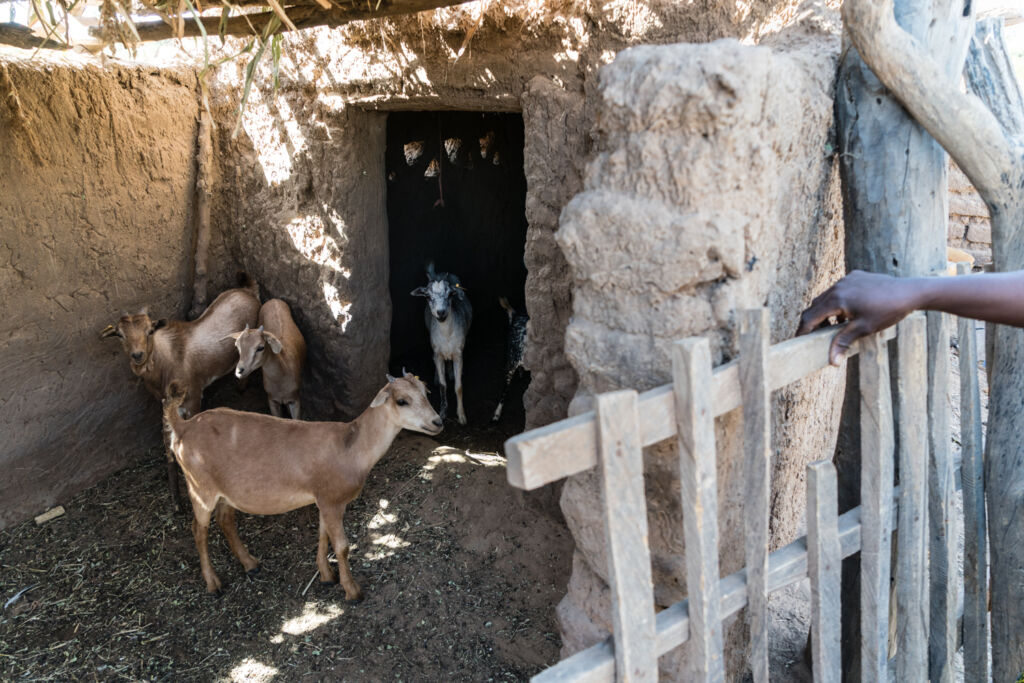
In the Koulikoro region, Enabel supports the development of fattening and facilitates knowledge sharing among peers through farmer field schools. That way, Nana took part in training courses to develop her skills in this area.
“Before the courses, I didn’t work professionally enough because I didn’t keep any business accounts,” says Nana. “I was able to learn about animal health, the use of straw – which is a very rich food for the animals – and techniques for making lickstones, as well as the financial management of my business. ”
Back home, Nana created her own field school. She in turn trained twenty women in the practices acquired during training. Together they managed to open a joint bank account which allowed them to buy animals – on average three sheep per woman -, fatten them and sell them at a premium during the Tabaski festival. They were also able to obtain a loan, which was facilitated by the project.
Since then, Nana’s activities have evolved: a veterinarian comes to examine her animals in the fattening pen every fortnight. This allows her to market better-fattened and healthier animals.
With her experience in feeding and animal health, she now sells a minimum of three rams per quarter, instead of three per year in the past. This means progress for farmers and consumers alike, as the meat produced using these techniques is of better quality.
In addition to her rewarding experience as a trainer, Nana wants to diversify her activities further in the near future, including by marketing cattle feed and lickstones and by providing fodder storage.
Fattening in Mali in figures
In 2020, 60,315 head of cattle, 119,145 sheep, 19,505 goats and 911 pigs were slaughtered in Mali. The share of women in this added up to 2,752 head of cattle (4.56%), 21,774 sheep (18.27%), 5,793 goats (29.7%) and 294 pigs (33.10%) respectively.
Despite the enthusiasm of women for fattening, their share in this sector is still limited, in particular because of the difficulty for them to access available sources of financing.