News
11 August 2021
Solar panels for drinking water
Renewable energy as an innovative solution
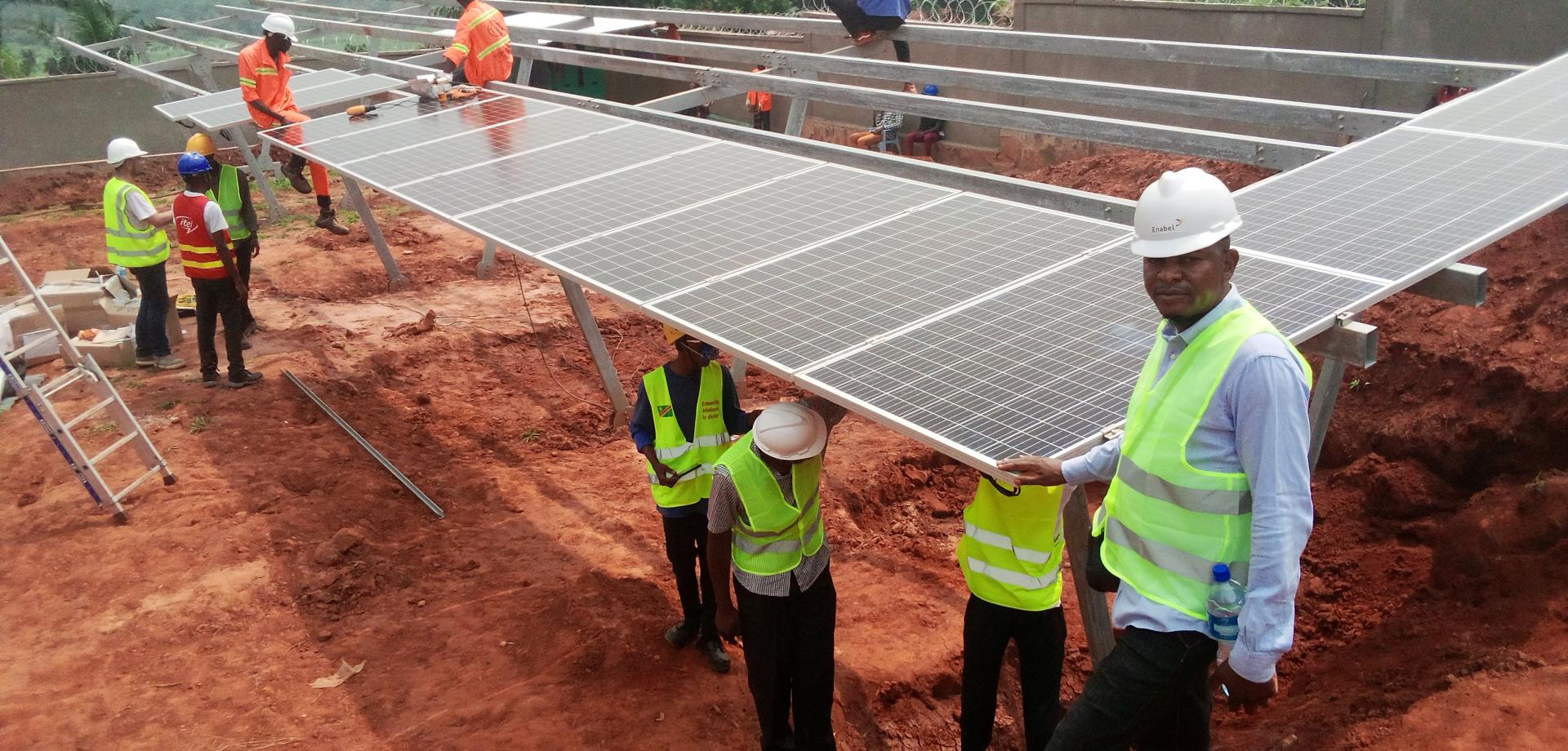
In the Democratic Republic of Congo, most households struggle to access a correct source of drinking water. But how do you solve this when there is no electricity either? Enabel tackles the problem together with local partners.
Congo is a huge country with tremendous logistical challenges. Large parts of the country lack basic infrastructure such as roads, water supply or electricity. The difficult accessibility of some areas makes it even more challenging to set up such infrastructure. Only two per cent of the rural population has access to electricity, and that is not going to improve quickly because the electrification of the country is proceeding extremely slowly.
Furthermore, 75% of the population has no access to safe drinking water, and this in a country with enormous water potential. The country ranks 46th out of 54 countries in Africa in terms of access to drinking water.
In a country plagued by epidemics such as Ebola, cholera and Covid-19, it is essential to improve the distribution of clean water.
It is in this context that the Belgian development agency, through its water programme, aims to ensure access to drinking water for 600,000 people in three different provinces.
But without electricity, there is no drinking water…
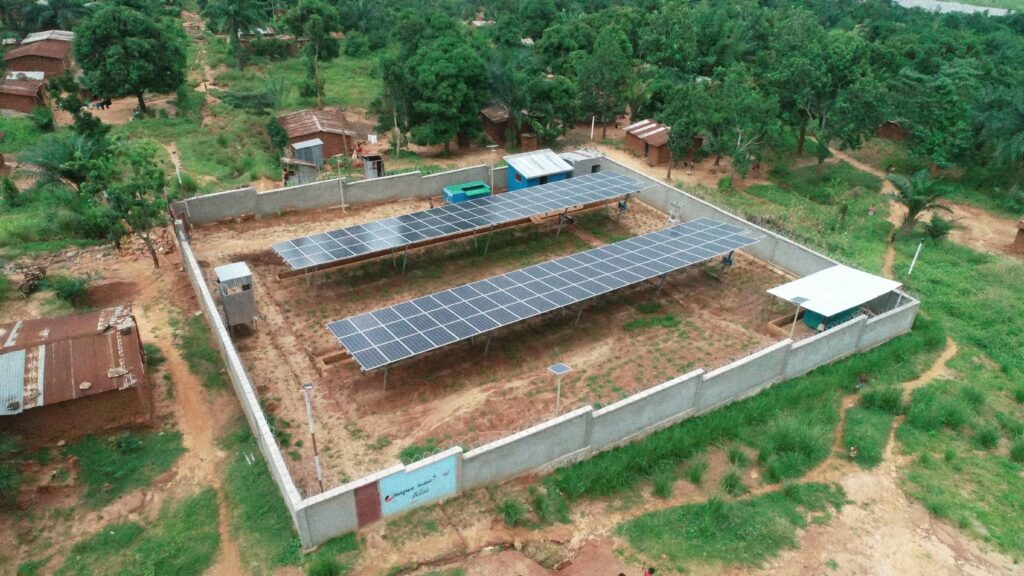
A photovoltaic park to generate water
In the provinces of Kasaï-Oriental and Maniema, where electricity supply is also problematic, Enabel is working with the local authorities to provide some 480,000 people with drinking water through solar energy.
Energy is needed to pump the water from underground to the water towers. Since electricity networks are virtually non-existent and generators involve high fuel costs, the agency decided to rely on off-grid solar energy.
Solar fields with a powers reaching 44 kWp provide the necessary energy during the day to pump the water to the water towers. The system does not require a battery, as the tank acts as an energy storage mechanism, but it remains a hybrid system with a back-up generator for periods of high consumption and/or a lack of sunlight.
The renewable energy-based system aims to reduce costs and make drinking water more affordable for everyone. Lucas Cornet – Engineer Project Manager
On average, between 100 m³ and 250 m³ of water are pumped by each water system every day.
The pump starts as soon as the sun is high enough, usually around 9 or 10 am, and works until 3 or 4 pm, depending on the season. The pumping is progressive, in accordance with the available energy. In the end, the water flow is proportional to the solar radiation.
Thanks to this system, the water towers placed at a sufficient altitude ensure gravity distribution to the tapstands and the few private connections. To ensure quality control, the water is purified with chlorine produced locally by the associations of users of drinking water networks (ASUREP). They use small devices ensuring the hydrolysis of the salt bought in bulk at the market. These kits are also powered by solar energy. The chlorine concentration is adjusted in real time by a dosing pump, proportionally to the incoming water flow. The small dosing pumps are also powered by the photovoltaic system.
The price of water
Drinking water remains expensive for households with an average purchasing power of less than two dollars a day. But by investing in well-designed renewable energy systems, the price of water can be reduced by about 25 to 40% compared to pumping by generators. This will gradually make water more accessible and affordable for everyone!
More updates and resources
 News
News
11 March 2026
Enabel celebrates 20 years of Junior Programme
Since 2006, Enabel’s Junior Programme has helped nearly 700 young professionals start careers in international development cooperation.
Read more
 News
News
09 March 2026
How fair and flexible procurement procedures make a difference for international cooperation
Brenda worked as a Junior Expert Contractualisation for Enabel in Dakar. “Applying procedures too rigidly can undermine project objectives.”
Read more
 News
News
09 March 2026
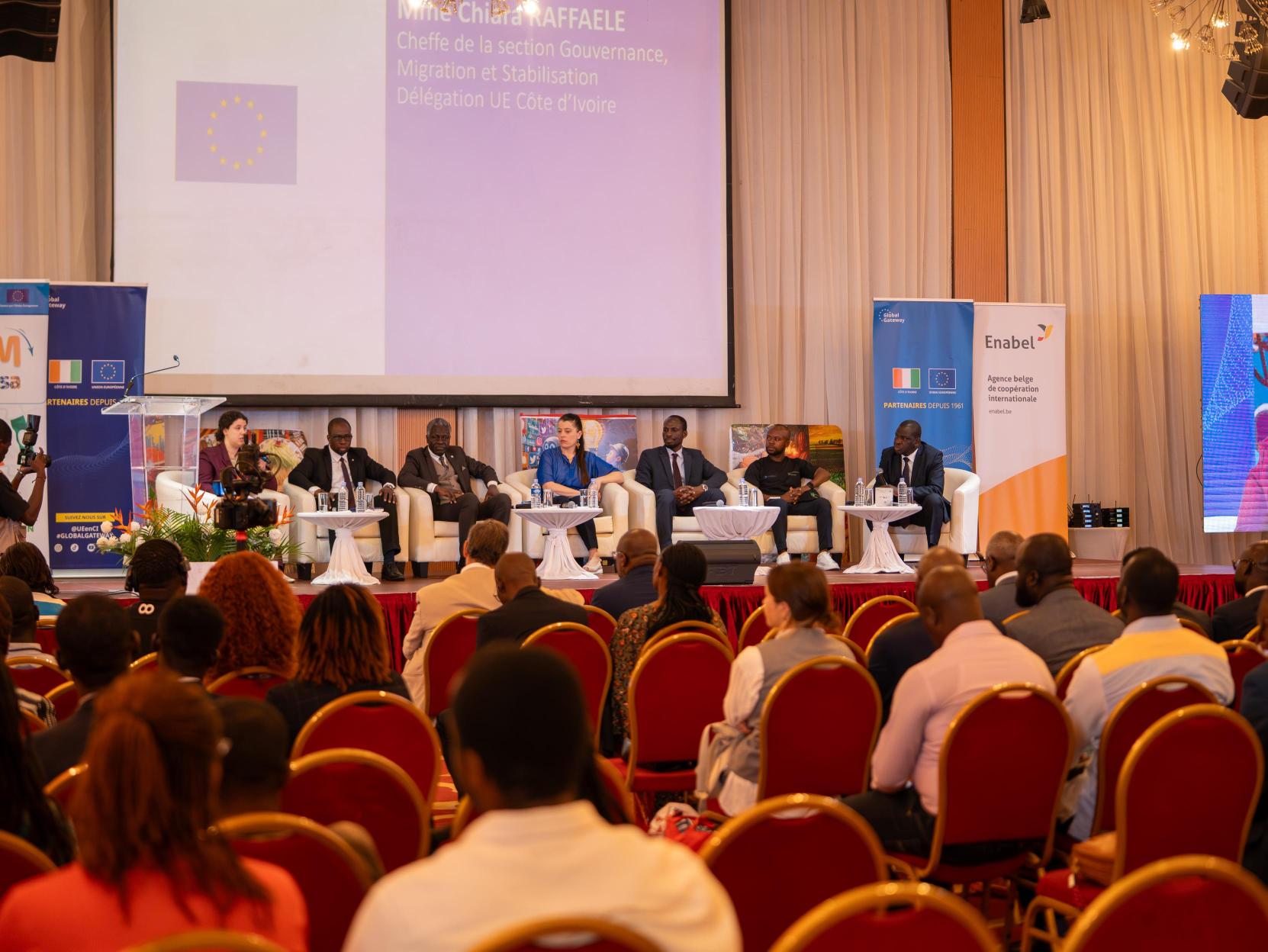
Côte d’Ivoire and Belgium strengthen cooperation on entrepreneurial mobility and diaspora engagement
In Brussels, Ivorian, Belgian and EU stakeholders exchange on entrepreneurship, diaspora engagement and reintegration through Enabel-supported projects.
Read more
 News
News
05 March 2026
Business models, value and evidence: key ingredients to take innovations to impact at scale
At Dakar’s Innovation Hub Days, experts shared strategies to finance and embed social initiatives sustainably.
Read more
 Resources
23 February 2026
Turning health rights into reality: why it is crucial to strengthen health systems
Read our key insights and recommendations to build and strengthen resilient, nationally owned health systems.
Read more
 News
News
19 February 2026
“Choosing the Junior Programme means choosing the unknown”
Apolline is working for Trias in Kindia, Guinea, as a Junior Expert in Communication: "it's not your CV that matter most, but your ability to listen.”
Read more