25 February 2026
The Courage to adapt: a story of Global Citizenship
Interview with Cynthia and Magali former young professionals in Rwanda
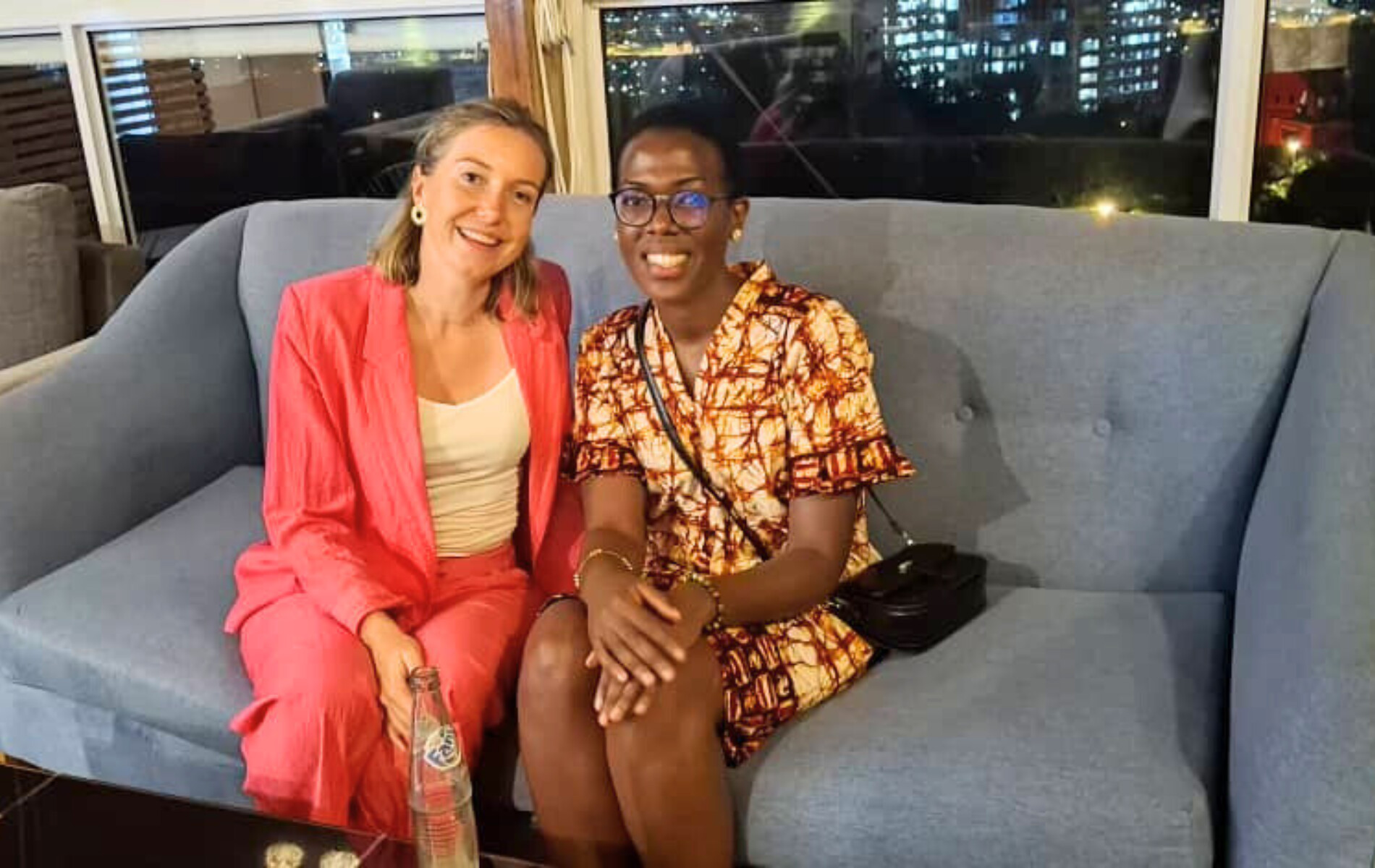
Cynthia Umwizerwa (Rwandan) and Magali Hoefkens (Belgian) worked side-by-side for Enabel in Kigali. One of the objectives in their job description was to dedicate 5% of their time to world citizenship education, a theme that initially felt vague yet gradually intertwined with their daily collaboration.
Magali had barely heard of the term before: “I lived for 10 years in a white, Flemish bubble. I was 30, educated, but sheltered. I never really thought of myself as a global citizen or of how interconnected our lives are.”
Cynthia, by contrast, recognized traces of Pan-Africanism in it. Having studied at a pan-African university in Ghana, she believed strongly in African nations working together: “I really like the philosophy behind Pan-Africanism. That African nations, and we as citizens of those nations, need to work together, be united. But I didn’t look much beyond my own continent. Global citizenship showed me we’re part of an even broader community.”
Crossing comfort zones
Both quickly realised that being connected globally doesn’t mean being the same.
Magali entered a completely new environment: a different culture, language, and working style. Her direct communication, shaped by working for the Flemish police, suddenly felt misplaced “In Rwanda, that didn’t work. It sometimes came across as rude. People seemed to understand each other in more subtle ways. I worried about being misunderstood.” Because of this, she felt a sense of discomfort during her first months working in Rwanda as if she didn’t really ‘get’ something..
Cynthia, meanwhile, faced the opposite challenge: learning to voice her opinion more openly in a professional setting that combined Rwandan and Belgian work cultures: “When you stay too much in your shell, you don’t learn. But I also didn’t want to cross any lines when I voiced my opinion.” Digital tools helped her find her voice: “On Teams, I could say things without feeling like I was outsmarting anyone.”
A difficult but necessary conversation
Those differences in communication styles led to friction early on. Magali began doubting herself: “I felt like I wasn’t handling my job well. I moved to Kigali for work, so feeling like this part of my life wasn’t going well made it difficult to make me feel at home.”
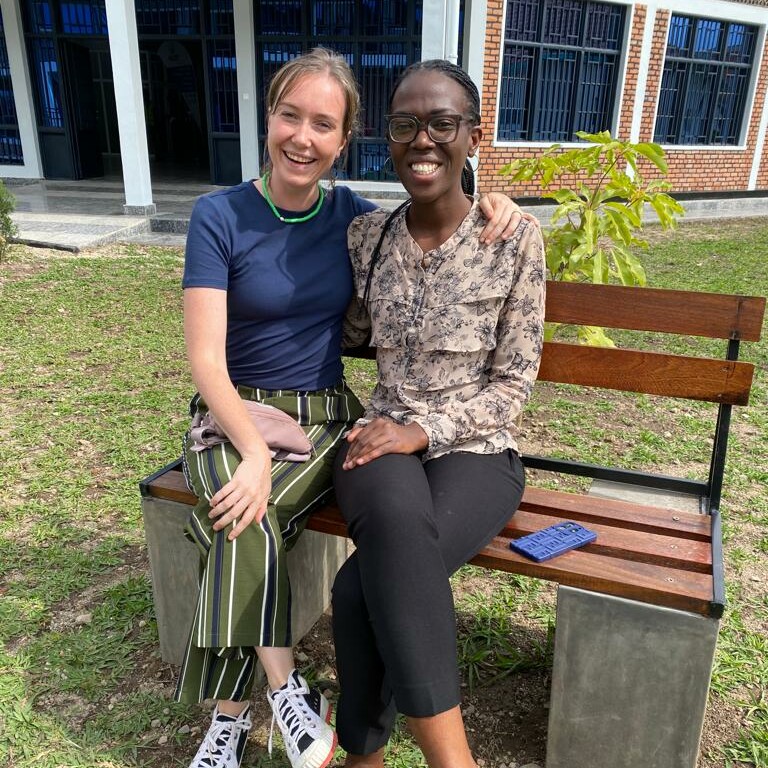
Seeing her struggle, Cynthia invited her for a one-on-one talk. “It hurt to see someone trying yet not knowing what’s wrong. That’s where empathy, tolerance and for me also the concept of global citizenship comes in.”
Magali calls that moment an eye-opener: “Cynthia was brave to address it. She helped me understand how to integrate respectfully.” Cynthia also learned from it: “Sometimes we think we are the ones hosting, so it’s totally up to the others who come here from other countries to adapt. But they may be struggling too. How do we help them integrate?”
That way of perceiving people’s integration struggles feels really beautiful to Magali, especially comparing with what too often seems to be the case in Belgium, that people look at newcomers with distrust: “Now when I walk on the street in Antwerp where I live, when I see people from other countries I think, ‘they must go through similar struggles, but with fewer privileges’. I get very angry when people say others don’t adapt. Did you ever move to a country and try to completely adapt yourself?”
Seeing privilege from the other side
Magali also noticed that sometimes she was treated differently as a white expat. “In some cases, people assumed I was the expert just because of my skin colour. It made me uncomfortable, but it forced me to face the privilege I have. In Belgium, you’re never confronted with it so clearly.”
Even language learning suddenly looked different: “In two years in Kigali, I barely learned any Kinyarwanda; it was honestly just really hard alongside all the other adaptations.”
“It’s so easy to say you don’t ‘want’ to learn a language enough, you’re not trying hard enough… in the two years I lived in Kigali, I never acquired any skills in it. How can we judge people for not learning a language in six months?”
Climate change: everyone’s problem?
Their contribution to global citizenship education was to organise a Climate Fresk workshop for Enabel staff. It uses participatory exercises to explain climate science.
Cynthia at first was hesitant, but curiosity won: “I wasn’t part of the project at first. Then I saw how motivated the others were, so I joined. I used to think climate issues weren’t our problem. Kigali feels safe, I’ve never experienced big floods. But taking part in this exercise made me realise: just because you are not experiencing something doesn’t mean it’s not posing serious threats to others.”
For Magali, it served as a powerful refresher: “It had a shock effect. I felt like the world was burning. Many colleagues were surprised.” But she also wondered about the next step: “There’s this shock, but then what? We kept concluding it’s mostly up to higher powers to act.”
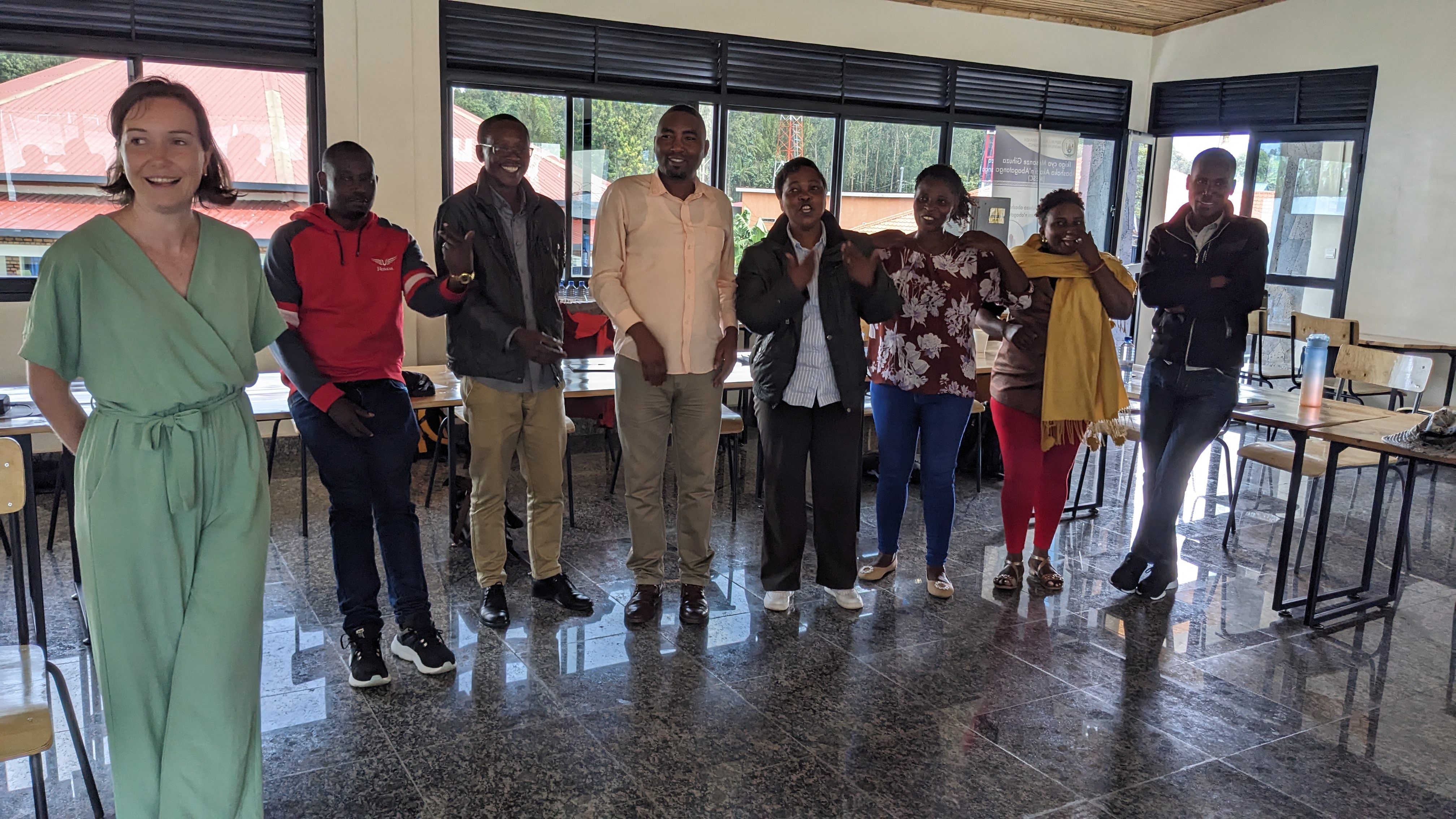
Together with other junior experts, they tried to translate the Climate Fresk into Kinyarwanda to reach schools and youth centres. Together with the Climate Fresk organisation they are still looking into ways to achieve this goal.Rethinking identity and belonging
Interconnectedness
Global citizenship also made both reflect inward. Cynthia carries Pan-African pride, while embracing a wider idea of interconnectedness: “I always see myself as not an island. If you want to achieve something, or make an impact, collaboration is essential, without feeling superior or inferior.”
She links this mindset to her new role as a project lead for an education programme focussing on teachers on the Rwandan countryside: “Equality isn’t enough. Equity is what matters to me. What are the things we need to put in place so teachers and students in rural districts reach the same level as students in Kigali?”
Magali questioned what being Belgian means to her now: “I think I feel global because, in the end, we all need the same basics. But after this experience of working in Rwanda, it also somehow brought me closer to the feeling of being European, more so than being Flemish or Belgian.”
The courage to adapt
One theme kept resurfacing throughout the conversation. Both women stress that adapting is not weakness.
“ Why is trying to influence the other to adapt always perceived as winning and the one who adapts is the loser? That’s a wrong idea, says Magali. “You can also be very powerful if you’re willing to adapt to something new.”
Cynthia adds: “It’s always good to question yourself and your habits. We should remain open to unlearn a few things.”
Their shared philosophy? An important part of being a global citizen is the courage to adapt, the humility to listen, and the empathy to build bridges: not by erasing differences, but by learning from them and appreciating them.