News
10 October 2025
Using digital tools to strengthen teaching
Interview with Walter John and Margot Debois – Young professionals in Tanzania
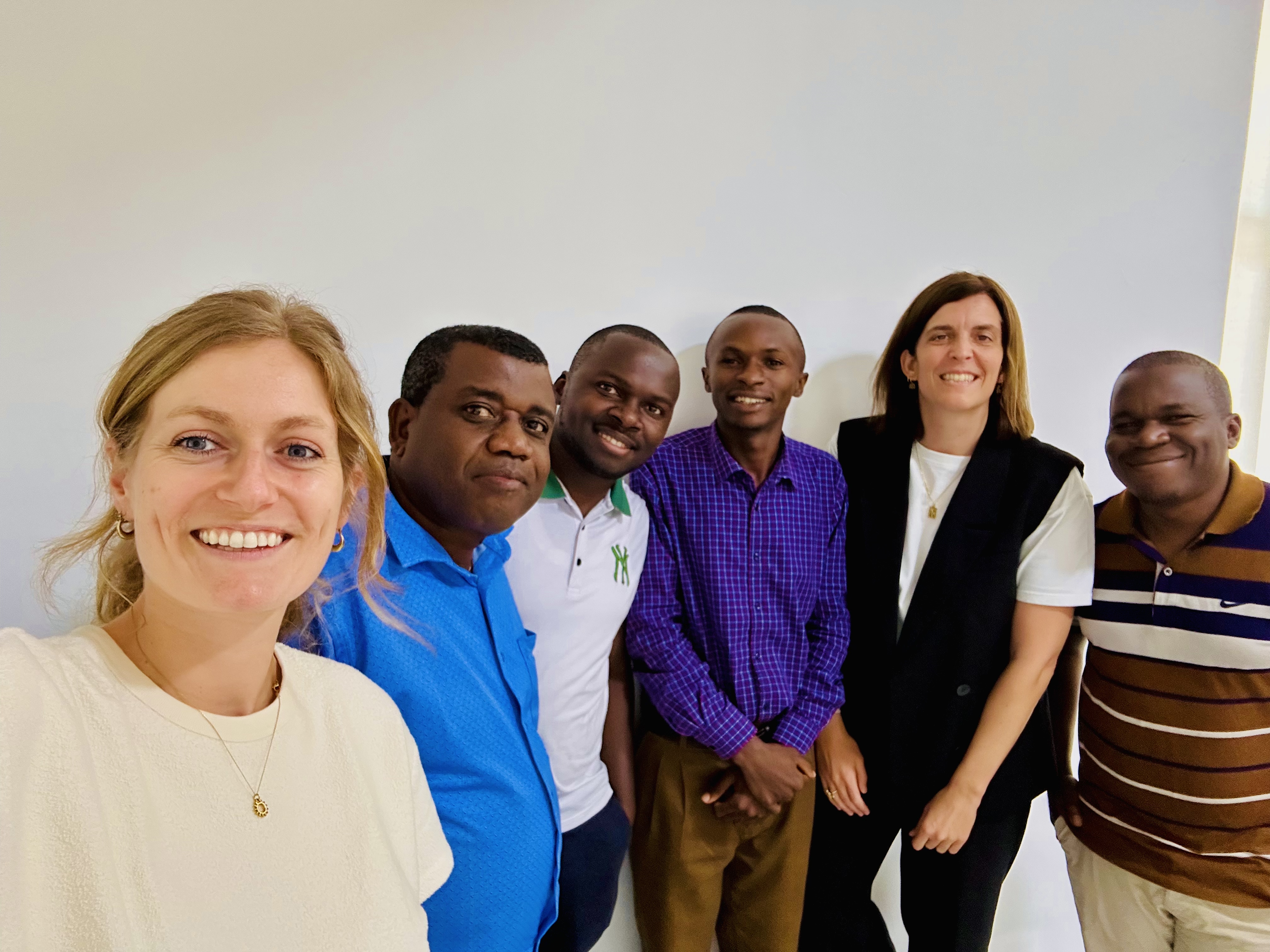
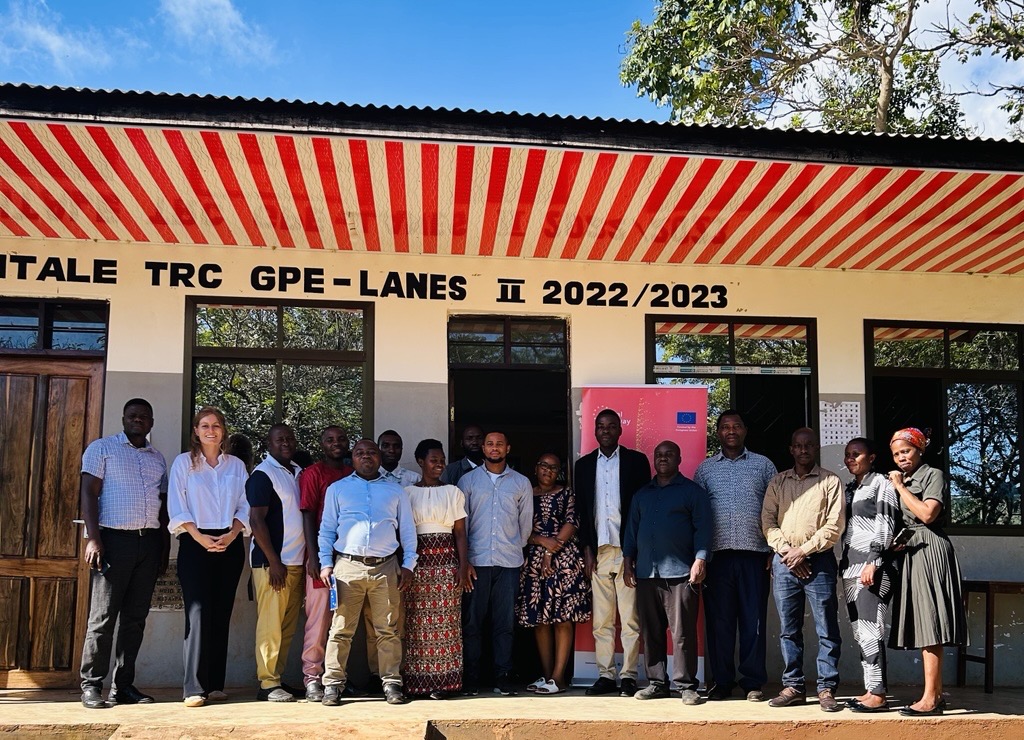
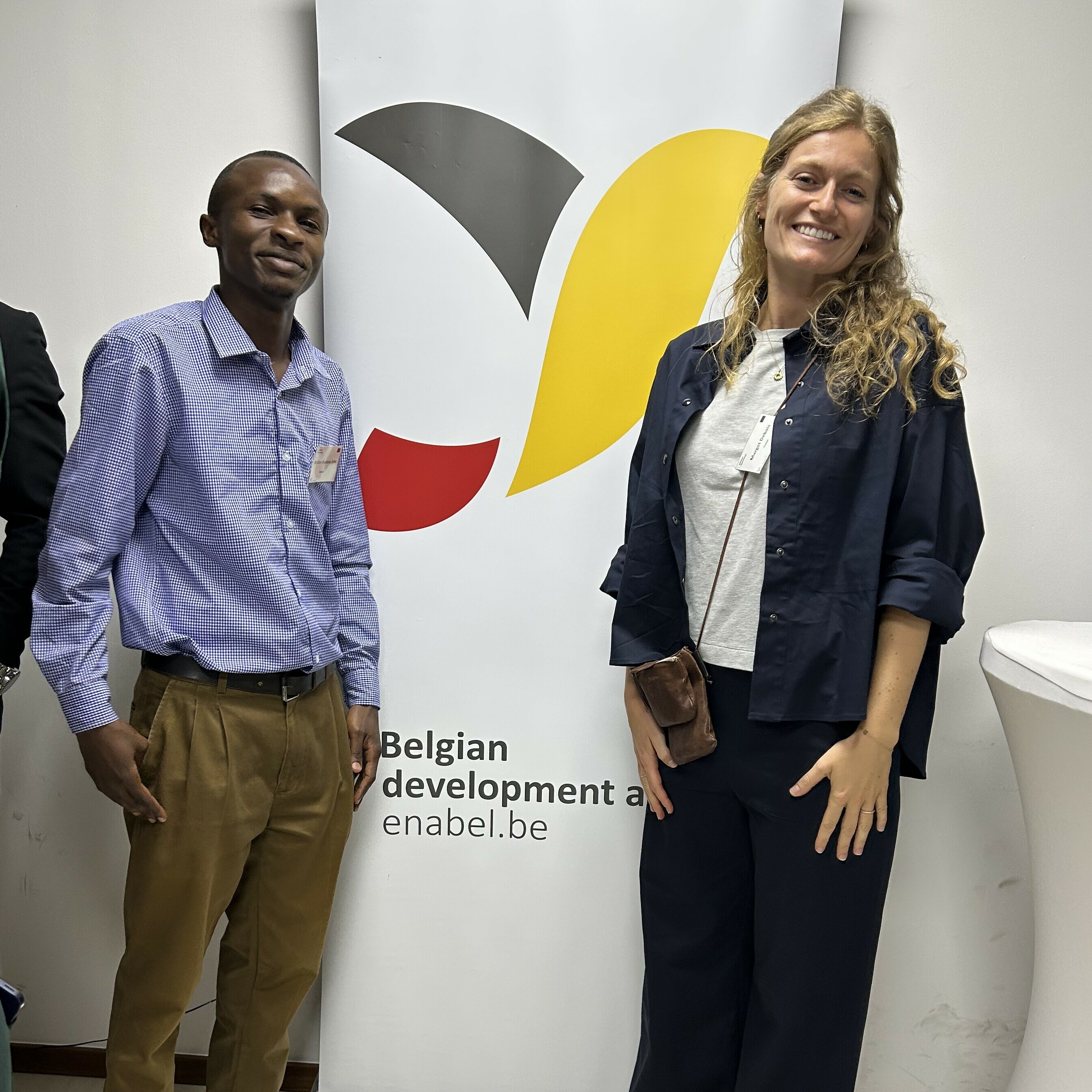
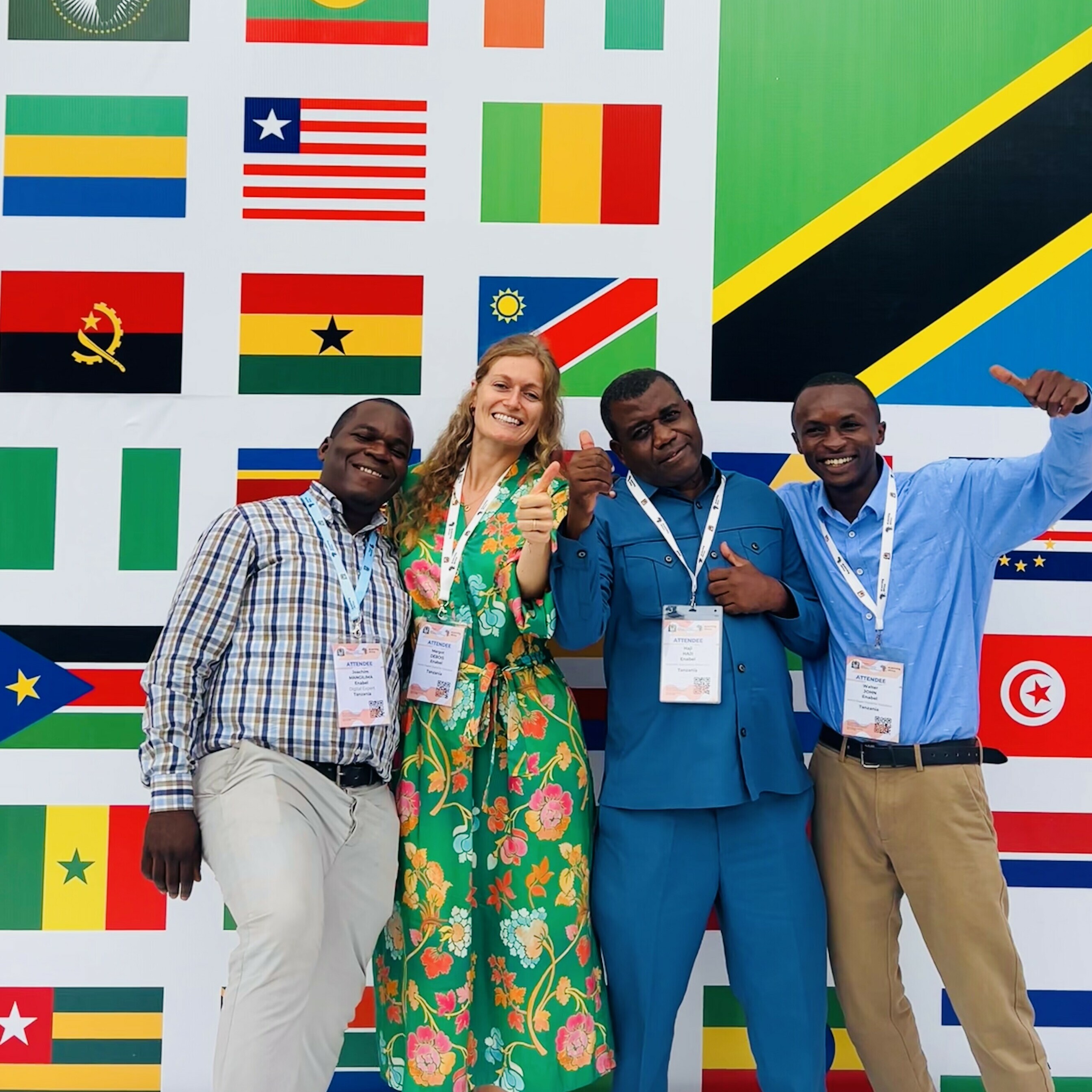
Walter John (Tanzanian) and Margot Debois (Belgian) joined Enabel in early 2025 to support digital learning in education. Based in Kigoma and Kasulu, they work with partner schools to help Tanzanian teachers integrate digital tools into their lessons. As part of a pilot project pairing two young professionals under 30 in similar roles, they reflect on their collaboration, on cross-cultural learning and on how their approach is helping teachers in their classrooms.
How did you both end up in this role?
Walter: I learned about the Junior Programme through the Enabel website. I was already familiar with their impact in Tanzania, especially linked to digitalisation within education. With my teaching background in chemistry and biology, I saw this as an opportunity to grow professionally and contribute meaningfully to improving methodologies used in schools and even broader, the Tanzanian education system.
Margot: For me, it all started during a teacher training internship in Malawi. I loved that experience and was looking into ways to work abroad again, preferably in education. Later, during an internship in Ecuador, I found out about Enabel and the Junior Programme. When I saw a vacancy for a junior expert role in Tanzania that matched my passion for education, I applied right away.
You started off working closely together. How did that shape your collaboration?
Margot: It was incredibly valuable. During our first week on the job, we attended a conference in Zanzibar about education challenges and solutions across Tanzania. Through that experience we immediately got to know each other better. In the beginning we also shared an office in Kigoma. It was important to work closely together during those first months. Walter knows the Tanzanian education system inside out and he helped me understand the context more deeply. While I was still learning Swahili, Walter translated for me, which made me feel more included.
Walter: Likewise, working with Margot exposed me to other ways of looking at things. For example, she introduced me to pedagogical approaches I wasn’t familiar with like ActivePresenter, which allows lessons to be recorded and re-used. We could make use of this during periods of teacher shortages, like during election periods when many teachers are called into administrative roles to make the election process run smoothly. This year is an election year, so it can come in handy to record lessons. T, that way students don’t have to miss out on their education during that period.
At the moment you work in different offices. What does collaboration look like now?
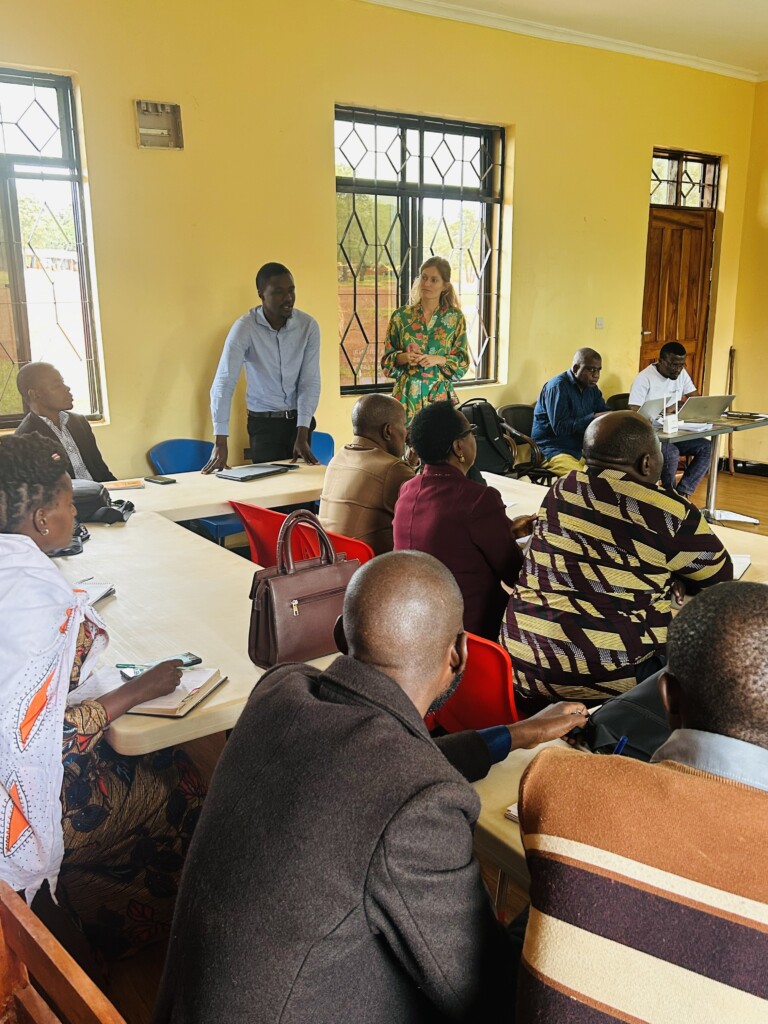
Walter: Enabel supports schools in both Kigoma and Kasulu, but from Kigoma it takes a couple of hours to get to Kasulu and some of the surrounding schools. That’s why together with the team, we decided I would start working in Kasulu. The move makes field visits more practical, and I can act quickly if something needs to be done in the schools I follow-up on. But I stay in close contact with Margot and we still share ideas all the time.
Margot: Yes, splitting up allowed us to take more individual responsibilities while staying connected. As Walter is working with schools in Kasulu and Kibondo, I follow up on the schools in Kigoma. Although we are working in different offices, our collaboration still runs very smoothly.
Can you share some examples of your current work?
Margot: Walter and I are both working on the Digital Innovation for Education (DI4E) scaling project. It’s focused on making learning more inclusive by strengthening teachers’ digital skills and bridging the digital divide. One of the key components is equipping 12 schools with Mobile Digital Toolkits: things like a smart projector, Bluetooth speaker, keyboard, and a solar-powered battery. These kits are meant to support more interactive teaching, especially in schools where access to technology is still quite limited.
Walter: Yes, and we’re also involved in setting up Innovation Hubs spread over Kigoma, Kasulu and Kibondo, where teachers can access digital resources and continue their professional development. The idea is to create sustainable spaces for learning and collaboration beyond just the hardware. We’ve seen that when the tools are introduced, they spark a lot of interest, which is great but we also need to make sure they’re used in a way that promotes equity.
Margot: Exactly. We want to make sure the tools are used meaningfully, not just as a one-off. Over the past few weeks, we have been setting up Digital 4 Education Learning Communities in the Kigoma Region. We trained facilitators, mostly teachers, who then bring other teachers together to share ideas on using digital tools. Since most schools have limited access to technology, these exchanges of what they can do with the few available digital resources are valuable.
Alongside that, I’m also involved in monitoring and evaluation work. I’m part of the evaluation committee for a recent Call for Proposals. These activities are giving me valuable opportunities to broaden my experience and deepen my understanding of Enabel’s project processes.
Walter: For me, inclusion has been a big focus. I’ve been looking at how digital tools can support learners with visual or hearing difficulties, how we can adapt or choose tools that work for them? I’ve also noticed that when new tools are introduced, boys tend to take the lead and dominate the space. Their enthusiasm is impressive, but we also need to make sure girls are equally encouraged to try things out. Sometimes they’re a bit more reserved at first, so it’s really important that teachers are aware of that dynamic and help create a balanced learning environment.
Apart from that, Margot and I are conducting Action Research together.
Action research, that sounds interesting. Could you tell us something more about that?
Margot: Action research is a hands-on approach where you explore and reflect on your own practice to improve it, while testing out ideas in real time. We are using this action research to investigate the determining factors for the use of Mobile Digital Toolkits in lower secondary schools in the Kigoma region.
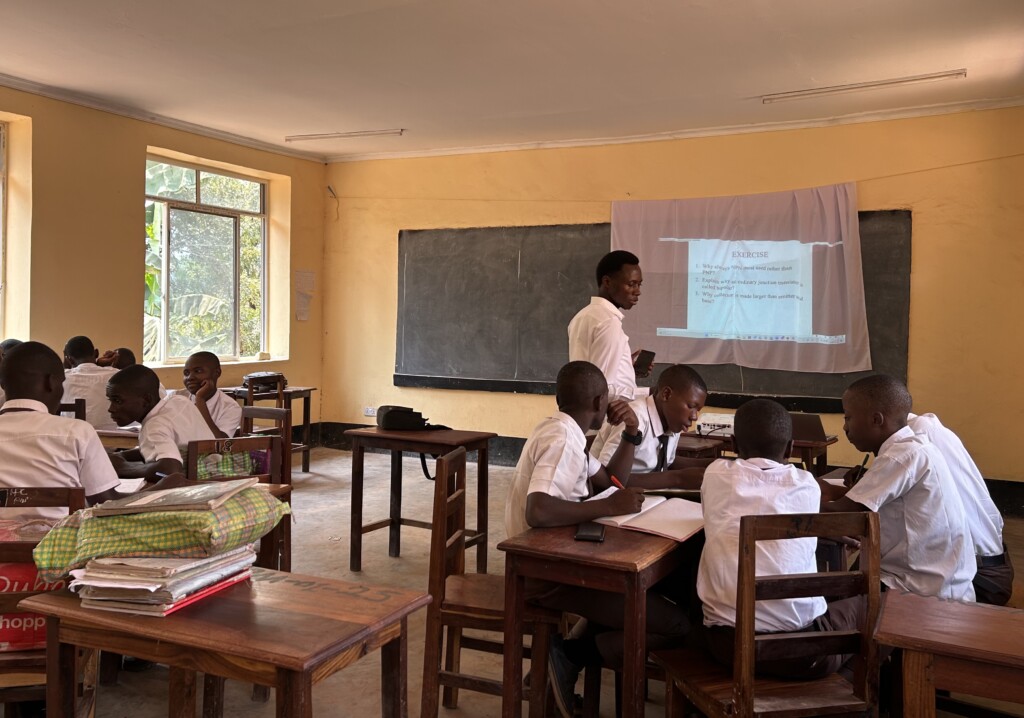
Walter: Since the official toolkits haven’t arrived yet, Margot and I created our own ‘self-assembled toolkit’ with materials available in our office.
Margot: Indeed, we wanted to get a head start and decided to already do a test. With the improvised toolkit, we are visiting schools to try out what works and collect meaningful insights to be prepared once the official toolkits are here.
Walter: We observed how teachers used the tools in class, then reflected with them on what worked and what could be improved. Many were hesitant at first, as they weren’t trained to integrate digital devices into their lesson plans, but their confidence has grown. It’s rewarding to see teachers now asking to use more tools.
What have you learned from each other?
Walter: From Margot, I learned about global best pedagogy practices, and how to innovate with limited resources. She brought fresh ideas that challenged how I thought about teaching.
Margot: Walter’s deep understanding of the Tanzanian education system has been invaluable. Working side-by-side also helped me grasp what’s realistic in the Tanzanian context and how to adapt ideas accordingly.
You’ve now been working together for about 7 months, are you looking forward to what lies ahead?
Margot: Absolutely. In the next weeks, the Mobile Digital Toolkits will be delivered to the schools. We will train teachers to use the toolkits and support them in strengthening their digital teaching skills. I am sure that this will be a valuable and enriching experience, not just for teachers, but for me as well. In addition, we will work on the establishment of four innovation hubs spread across the Kigoma region. So, there are quite a few exciting projects coming up.
Walter: Definitely. As the mobile digital toolkits will be available to schools within the next few weeks, I am now working on the digital content analysis to be preloaded onto smart projectors that align with the Tanzania curriculum. We do this to support the schools which are situated in areas with poor internet connectivity.
I’m also excited to train teachers and teacher educators on how to use these mobile digital tools effectively. The goal is to strengthen their digital skills and improve student learning outcomes.
As for the Innovation Hub, I’m working closely with the Digital for Education (D4E) team to set up a Digital Lab at Kasulu Teachers’ College. This lab will support Communities of Learning for both teachers and teacher educators.