News
10 July 2025
FFD4 Sevilla: Enabel advocates renewed architecture for international cooperation
Interview
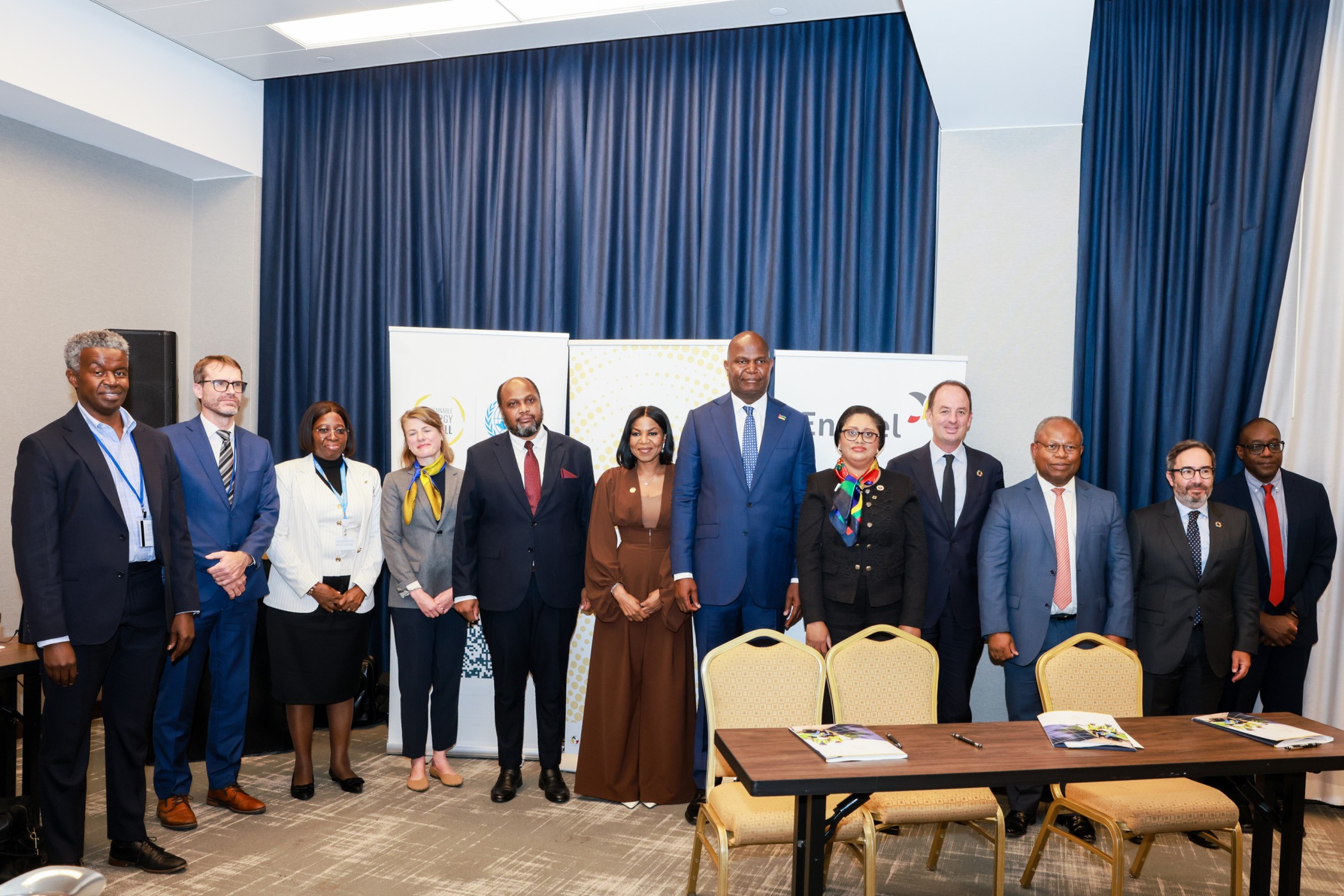
The Fourth International Conference on Financing for Development (FFD4) took place in Seville, Spain, from 30 June to 3 July 2025. This event brought together world leaders, international organisations, financial institutions, businesses and civil society to discuss and address the transformation of the global financial system in favour of sustainable development.
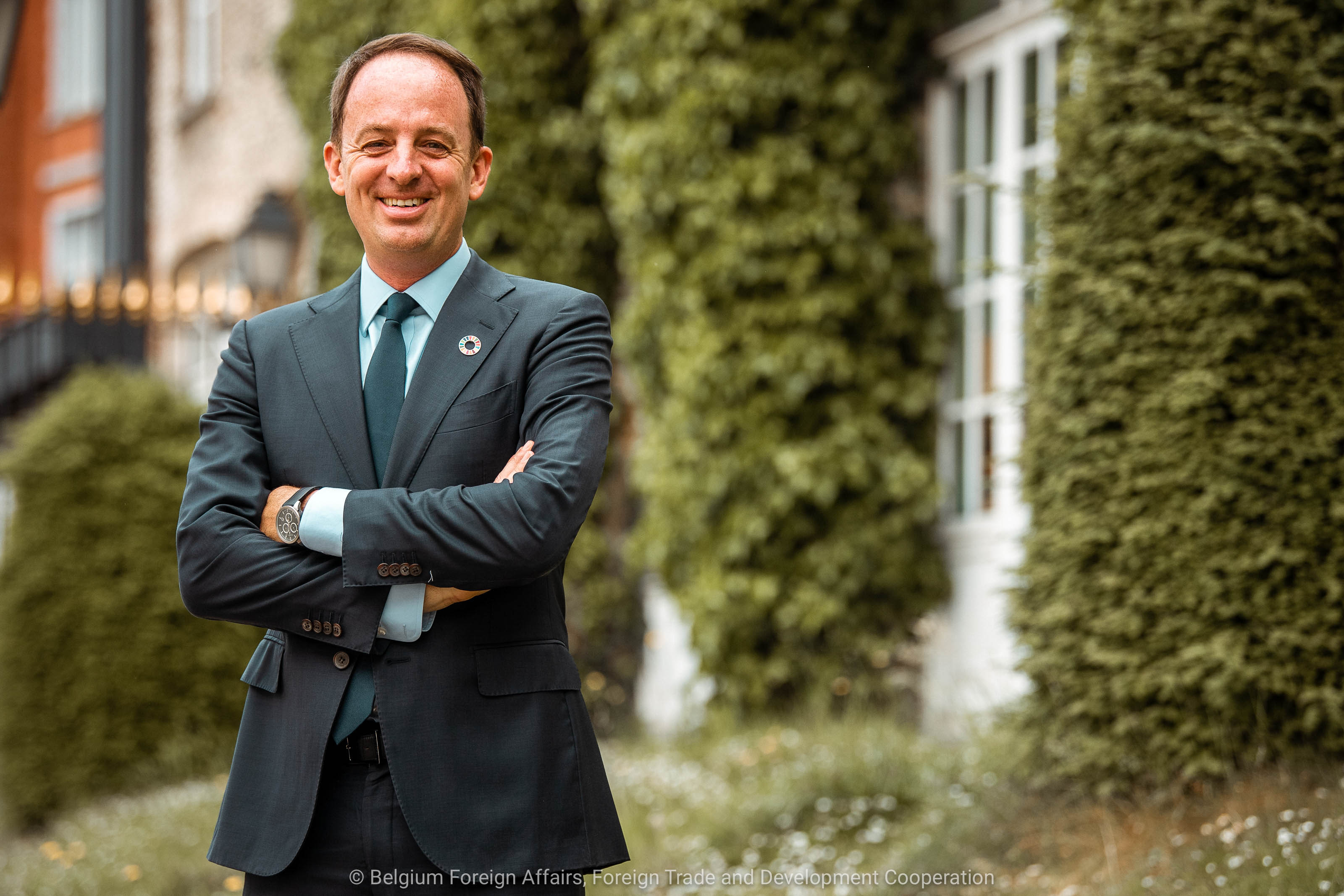
A look back at this important conference with Jean Van Wetter, CEO of Enabel.
Ten years after the launch of the Sustainable Development Goals (SDGs) and ten years after the Third Conference on Financing for Development in Addis Ababa, the Seville Conference is seen as a pivotal moment for international solidarity. Why?
Jean Van Wetter : The last Conference on Financing for Development took place in 2015 in Addis Ababa, so it was high time to review the mechanisms of international cooperation, especially as the budgets of most ‘donor’ countries are in sharp decline. The Seville conference therefore had to raise the level of ambition, but at the same time consider other mechanisms and other ways of financing international cooperation. There was a discussion on the debt of African states, on the possibility or not of introducing new taxes on extra wealth, on financial transactions or on airline tickets, and so it was also an opportunity for some countries to launch new initiatives.
For Enabel, it was important to take part in the conference for two reasons. Firstly, along with our Swedish colleagues from SIDA, we are co-chairing the Practitioners’ Network (PN), the European network of international cooperation agencies. The Network wanted to highlight the importance of technical cooperation, in a context where the focus is solely on financing and investment. We have a role to play as an agency working closely with our partners to develop systems and systematic changes in the countries in which we work. Our participation was also important in highlighting a new narrative for international cooperation, which calls for new types of partnership, particularly with the private sector. We are also promoting much more joint implementation between the players, and avoiding what I would call the ‘projectisation’ of development, where you end up with a whole series of projects next to each other, with little coherence. Here, with the Practitioners’ Network, we wanted to highlight the collective strength of 25 European agencies.
At the conference in Seville, the Practitioners’ Network issued a statement confirming that Official Development Assistance (ODA) remains an important source of funding for combating extreme poverty, inequality and fragility. However, given the decline in budgets worldwide, ODA must be used with great precision, where its impact is greatest. On the other hand, the global challenges are too great to be met by ODA alone. This is why funding for international cooperation needs to be reviewed and strengthened. The statement of intent signed in 2023 by the PN, the European Development Finance Institutions (EDFI) and the Joint European Financiers for International Cooperation (JEFIC) was a step in this direction.
For Enabel itself, our presence is important to consolidate the close partnerships we have forged over the past decades with our African partners. There were 70 heads of state, government representatives, leaders of major international organisations, major foundations, development banks, NGOs, civil society, the media and the private sector. Not being there would have been a missed opportunity.
“The system of international cooperation, which was built around donor countries giving to poorer countries, no longer holds water given the geopolitical evolution of the world.”
What is the result of this conference? What changes has it brought about?
Jean Van Wetter : The outcome of the conference is the Seville Declaration. It is a non-binding text that was negotiated in advance, even before the conference. It does not have a direct impact in terms of financial commitment. Most OECD member states have already committed to achieving the 0.7% of GDP for international solidarity, so the 0.7% has been put back on the agenda. But for me, the important thing is that sometimes there is not enough questioning of the system itself. It is the African states that are wondering whether this system of ‘donor countries’ and ‘recipient countries’ is still valid. There were a few debates on this matter, but not really any fundamental questioning of a system that is mainly supported by the players who are part of it and who are present at the conference.
We took part in a rather interesting initiative led by the Spanish cooperation agency, AECID, with the African Agency for International Economic Cooperation (ACEI) and the Brazilian cooperation agency. They brought together 40 international cooperation agencies from Europe, Africa, Latin America and Asia. Turks, Brazilians, Uruguayans, Chinese were all invited. There was a whole series of what I would call ‘unusual suspects’ in international cooperation who argued for an end to this dichotomy between North and South, and for a more joint approach to shared challenges. The system of international cooperation, which was built around donor countries giving to poorer countries, no longer holds water given the geopolitical evolution of the world. Personally, I believe that the conference did not challenge this model sufficiently. Another point of attention is that the private sector was not sufficiently represented. It’s an anachronism, given that everyone is convinced of the crucial role that business must play in international cooperation. Unfortunately, it has not yet found its place in these conferences.
International cooperation should be a budget for solving our shared challenges, such as climate change, immigration, insecurity… these are transnational matters that transcend borders. And there is a need for additional budgets to solve these global issues together. It’s a demand that many African states are making themselves.
Was the Seville conference a wake-up call, a realisation that things need to change?
Jean Van Wetter : Seville was something of a celebration of international solidarity, but unfortunately it was not accompanied by any firm commitments. It’s not like the NATO summit, which succeeded in convincing its members to commit 5% of their GDP to defence. The conference on financing cooperation is therefore more of a wake-up call, with no financial commitment in the end. Although it was a success to bring together so many heads of state and stakeholders, to finally reach a compromise and to put the importance of international cooperation back on the agenda, in reality there is no financial commitment. So, it’s more a reminder of what already exists, rather than a reinvention of the system. There is still work to be done, but Enabel and I remain convinced that we must go further, that we must continue to play this pioneering role and not be afraid to introduce radically new ideas.