News
5 March 2026
Business models, value and evidence: key ingredients to take innovations to impact at scale

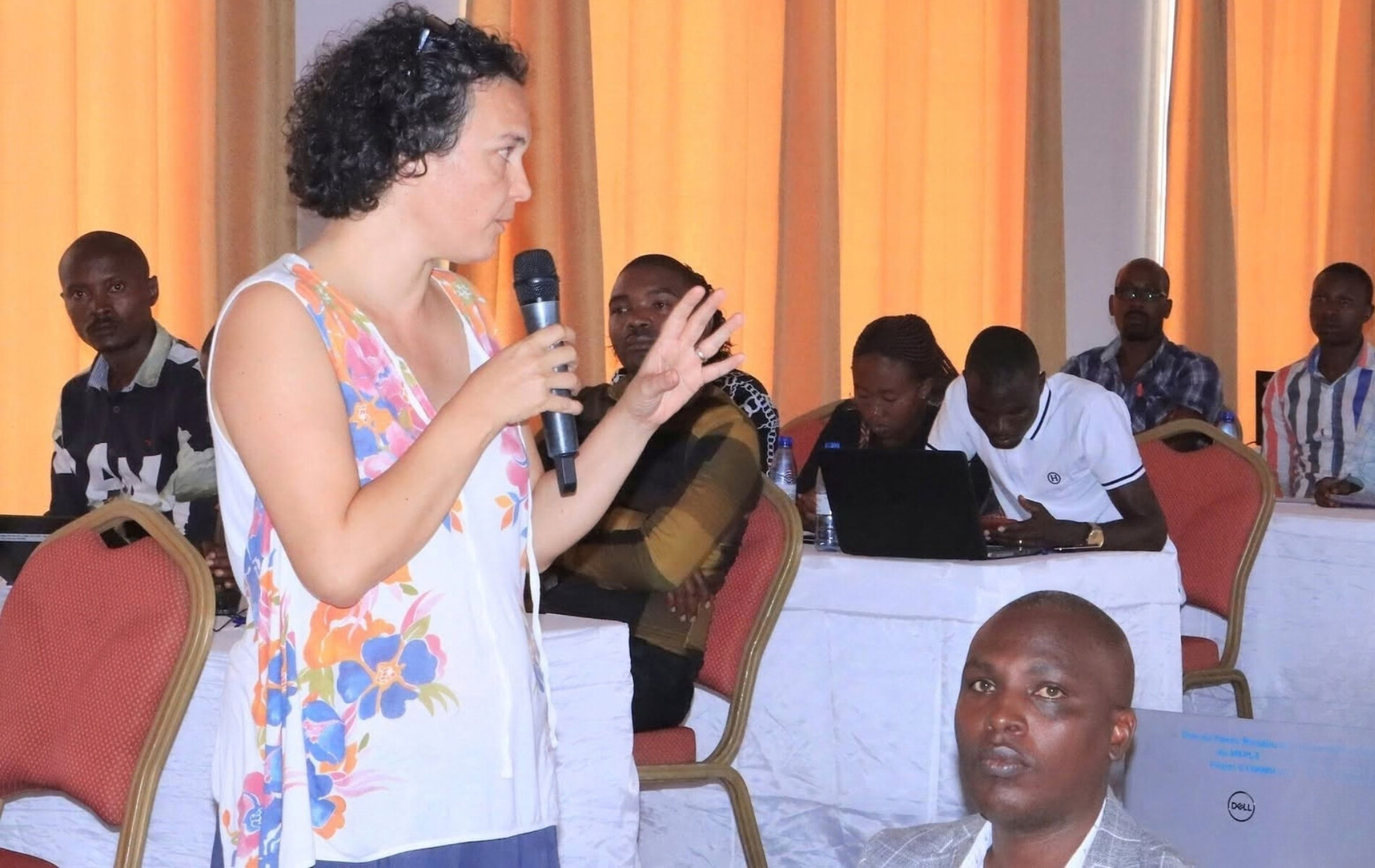
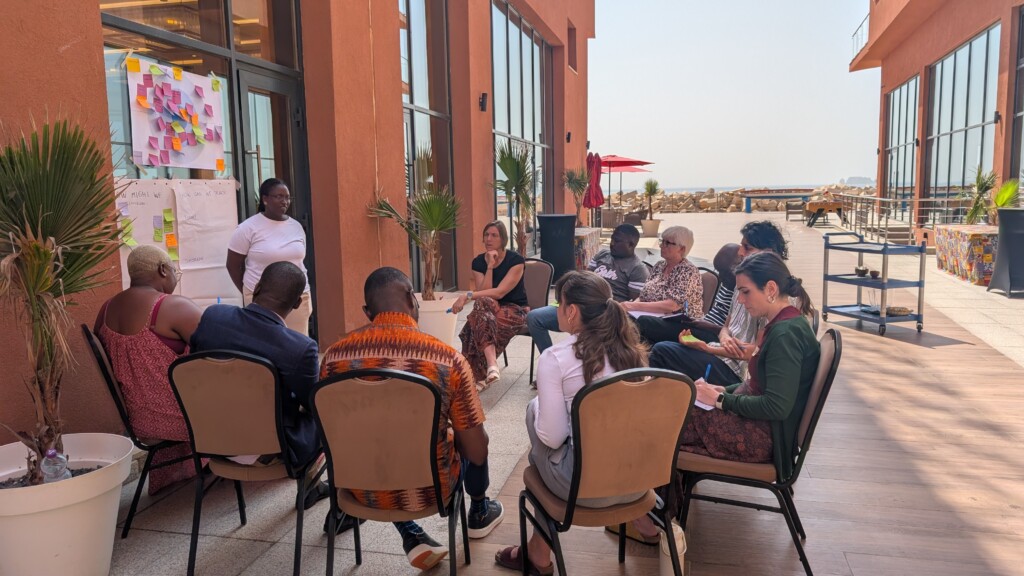
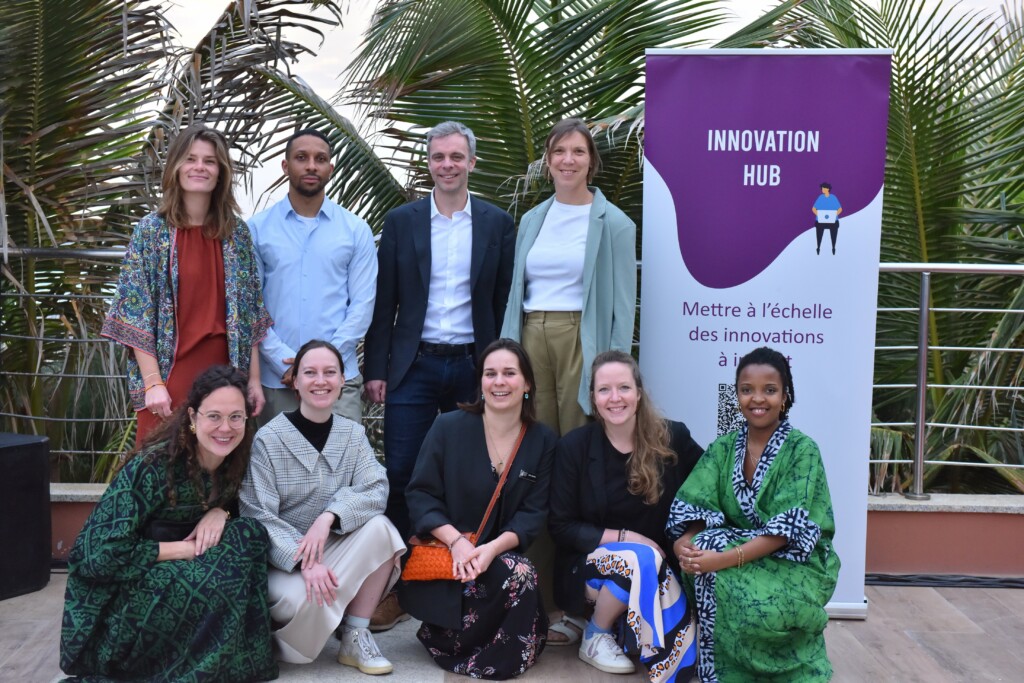
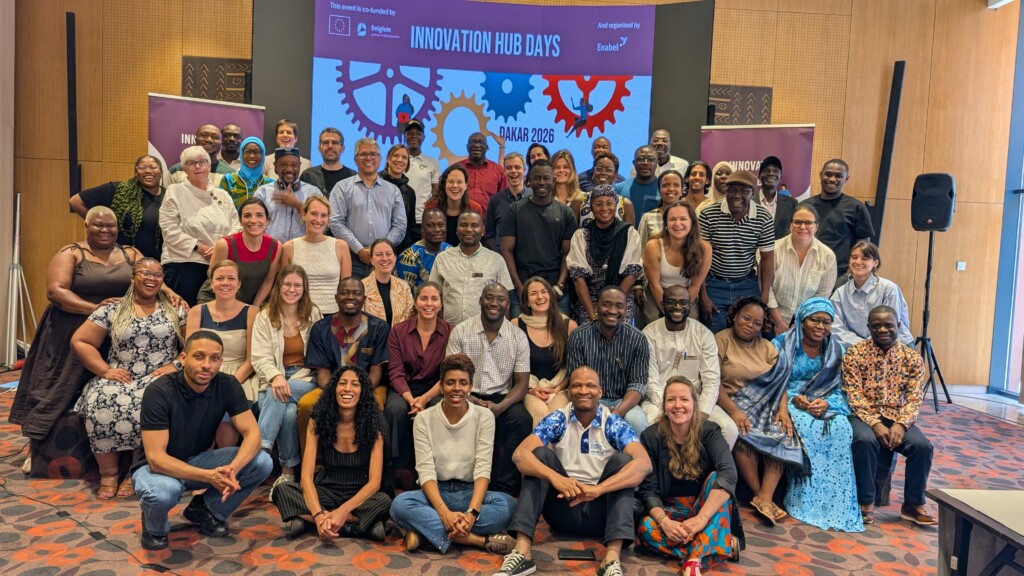
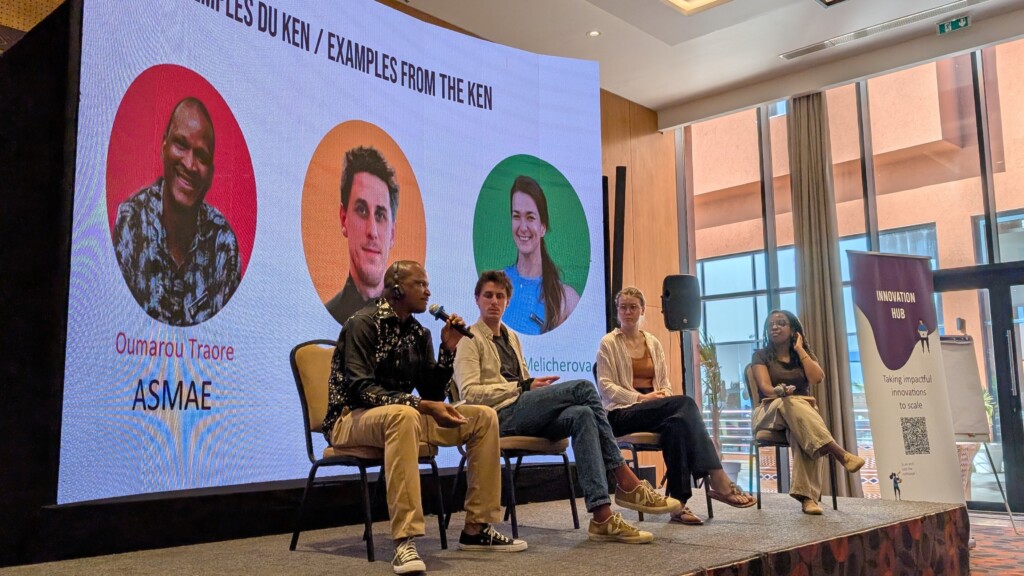
Enabel, through its Innovation Hub, supports the scaling of social innovations by combining financial support, strategic reflection and capacity strengthening. In February 2026, the Innovation Hub Days brought together in Dakar all the grantees supported through the Belgian Wehubit 2.0 programme and the three European programmes: DGA, DGI and RTIA.
This week of exchanges focused on three essential themes: sustainable business models, policy dialogue and value proposition. Beyond sharing experiences, one central question guided the discussions: how do we ensure our social innovation lasts? The “so what” question.
1. Aligning the solution with the right actor: the first step towards a strong value proposition
A social innovation can deliver real benefits to different actors, but not for the same reasons. What convinces a user is not necessarily what motivates a payer. This makes it crucial to identify early on who will use the solution and who will finance it.
Discussions in Dakar highlighted that financial sustainability is not an endgame but a condition to maintain over time. A model becomes truly resilient when each actor perceives a clear and concrete benefit in adopting the innovation. For this to happen, innovators must understand the key incentives: the specific motivations that will encourage an actor to support or fund the solution, backed by evidence and tailored communication.
Our social innovators exemplify this approach. The Asmae project, part of the RTIA programme, refocused its strategy on private school promoters, identified as priority payers after difficulties integrating with public authorities, and strengthened the institutional anchoring of its innovation by engaging provincial sponsors. Meanwhile, the EEPA project from the DGA programme, confronted with the limited ability of small local organisations to pay, is now exploring larger humanitarian actors and testing subscription prototypes to refine its model.
In short, knowing who pays, why and when is a decisive lever for scaling.
2. Defining a value proposition tailored to these actors
Once the key actors are identified, innovators must clarify the value the innovation creates for them. The essential question is not simply “what does the solution do?” but “why does it matter to this stakeholder?”
To convince a payer, user or partner, it is crucial to understand:
- their goals and constraints;
- what limits their capacity to act;
- why they have not yet adopted the solution.
Identifying stakeholders is not enough: innovators must also know how to speak to them. As several participants reminded us, if an innovation does not integrate into a payer’s activities, they will not adopt it; and value does not only mean financial value — social, organisational or data value can be equally decisive.
This alignment naturally prepares the ground for the third insight: adapting the economic model to meet diverse expectations.
3. Staying flexible in a changing landscape: hybrid models
After clarifying the value created, the next question arises: how do we finance the innovation sustainably? Social innovators in Dakar stressed the growing importance of hybrid models, combining commercial revenues, grants and other funding streams.
Hybrid models help:
- reduce reliance on a single funding source;
- secure the social mission more effectively;
- expand operational capacity.
However, they also require adjustments: more agile governance, new internal skills, and clearer processes to manage tensions between social and commercial logics. Hybrid models therefore rely on continuous adaptation but often become a key lever for stabilising an initiative, leading us to the fourth insight.

4. Evidence of change: the new currency of scaling
Public and private actors now expect evidence of real change, not just a theory of change. To scale an innovation, it is essential to demonstrate that it works and addresses a specific problem faced by the payer.
As the sessions confirmed, an action plan is insufficient without convincing results aligned with stakeholder priorities. Evidence becomes a strategic tool to:
- persuade a ministry or funder,
- negotiate more durable institutional integration,
- secure or diversify funding.
Impact evidence has therefore become a true currency for achieving broader adoption.
5. Integrating into systems: making scaling a collective effort
Scaling is not triggered by a single funding opportunity nor dictated by a perfect business plan. It mainly relies on the ability to integrate an innovation into an existing system (institutional, economic or community-based)
Adoption by a government or major actor does not happen by decree: it must be built. It requires robust evidence, an affordable cost structure and trusted relationships. When end users cannot pay the full cost of a service, alternatives become necessary: cross-subsidies, monetisation of expertise, integration into public budgets, or partnerships with actors capable of providing financial support.
Successful organisations are those that:
- diversify their revenue streams;
- strengthen their teams and governance;
- collaborate closely with institutions;
- leverage impact evidence to improve and expand.
The Innovation Hub Days demonstrated that growing a social innovation requires blending value, evidence, flexibility and systemic embedding. The organisations that succeed are the ones who understand their stakeholders, adapt their models, demonstrate impact and build long-term alliances. These five insights are just a glimpse: our full study on business models provides concrete tools to help secure the future of your social innovation.
Want to go further ? Get in touch at innovationhub@enabel.be to find out more and join us for the launch of the study conducted with Brink.