News
23 April 2026
Monitoring & Evaluation: Making the invisible visible
Interview with Fay Vastenhoud – Junior Expert in Mozambique for Enabel
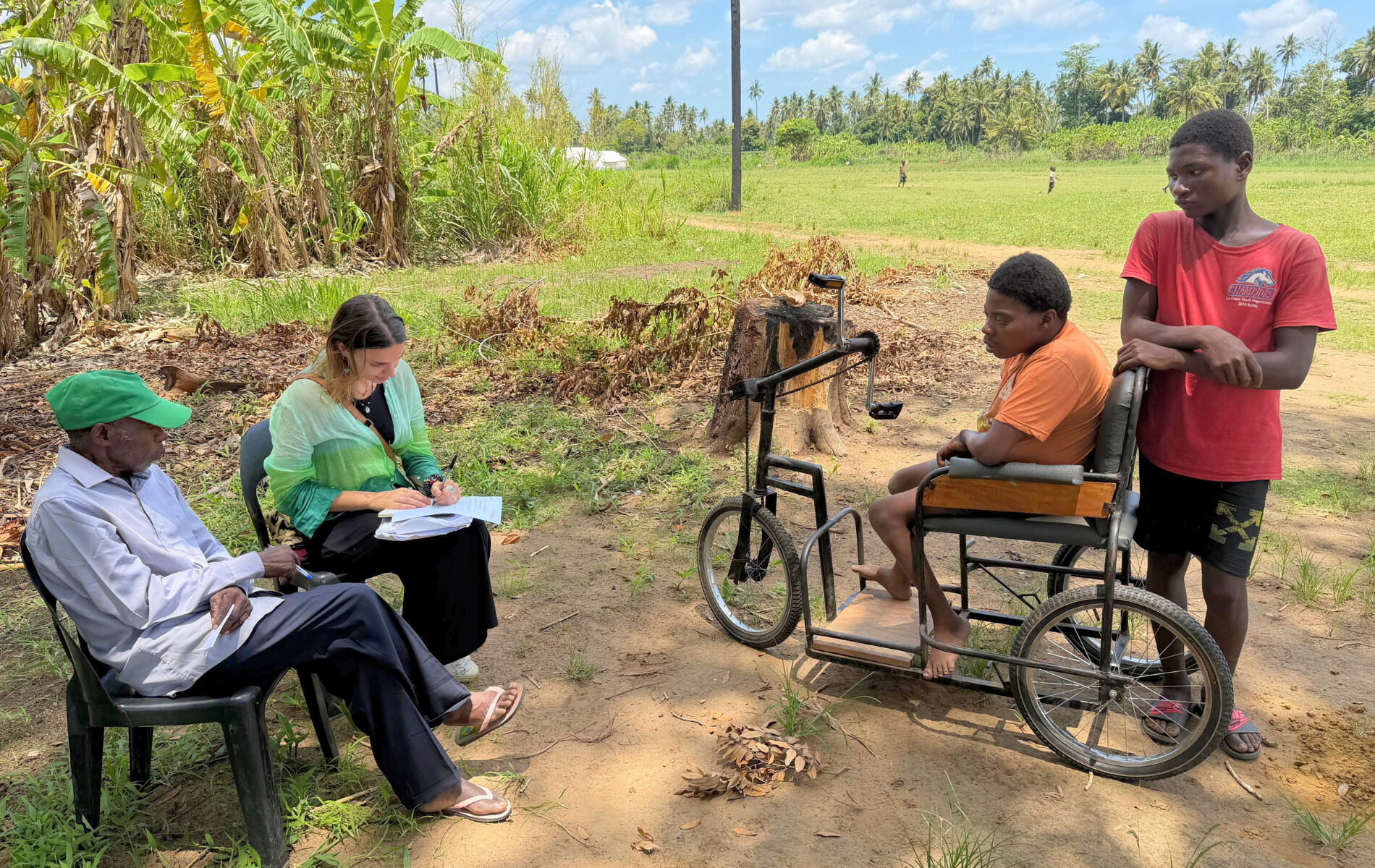
Fay (28) works in Maputo as a Junior Expert in Monitoring, Evaluation and Learning for Enabel. Since 2024, she has been supporting a new climate portfolio that the Mozambican government is developing together with Enabel. From access to energy and water management to waste processing and disaster preparedness, her role is to help build systems from the very start that provide insight into the real impact of projects.
Her work is about observing carefully and listening closely to the input of partners and end users. When Fay talks about her role, it is rarely just about figures.
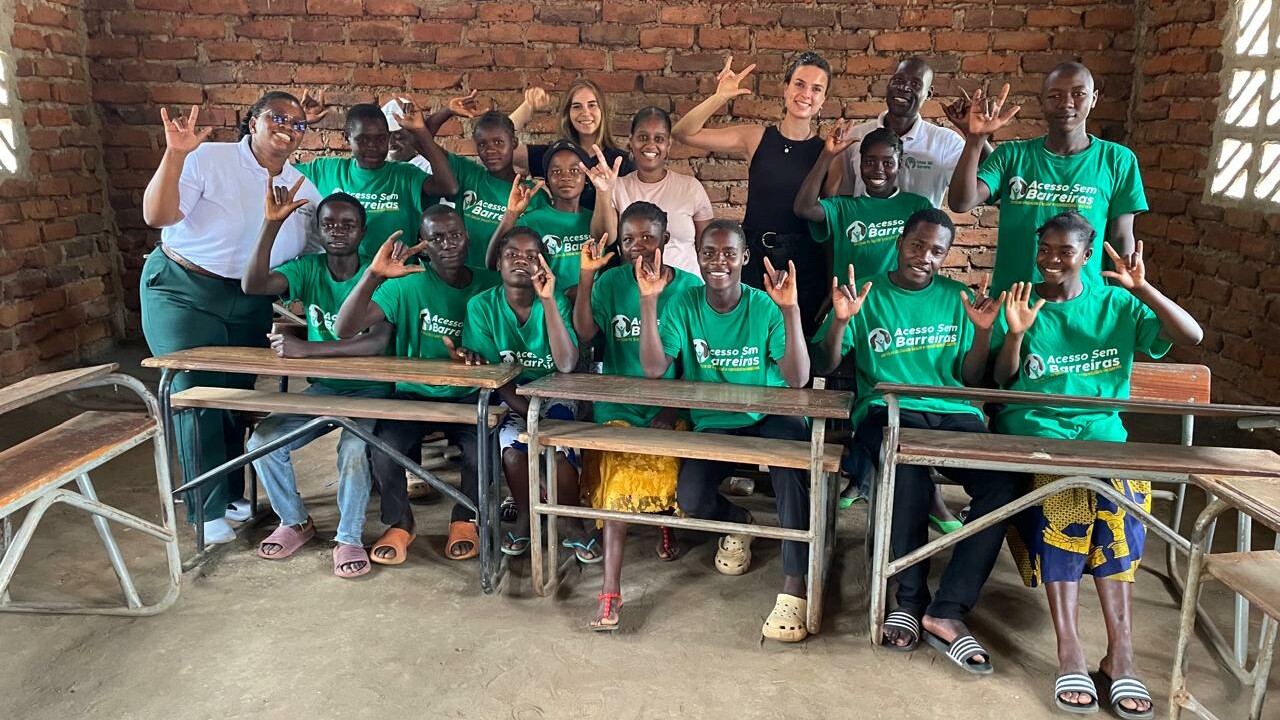
Mozambique is increasingly affected by extreme weather. In January alone, nearly one million people were impacted by severe flooding. One of the projects therefore organised a simulation exercise with communities that face a higher risk. “During that exercise, community members learned how to interpret warnings, pass on alarm messages and respond more quickly in the event of floods or cyclones,” Fay explains. “The goal is for people to be better prepared when things really go wrong.”
Her contribution during the exercise consisted of conversations with participants and on-site observations.“We wanted to understand what they had actually learned, what worked well, and whether women and people with disabilities were able to participate fully. We also asked about their previous experiences: how did they prepare in the past, and what is changing now?”
The exercise is not an end point. “After the rainy season, I go back to the same communities,” Fay says. “We want to know whether the exercise still proves useful weeks later. That helps us improve future activities.”
Not a straight-line path
Fay studied Spanish-French literature and political science, worked in Brussels at 11.11.11 and followed projects in Peru, Ecuador and Bolivia. Before that, she worked in an EU–Latin America policy network, where she focused on relations between the EU and Latin America on human rights and climate issues.
She enjoyed that work, but wanted the opportunity to follow projects closely over a longer period of time. Not from Belgium, but within the context where the projects are actually implemented.
In her search for a way to be closer to partners and impact, Fay came across the Junior Programme. The position in Mozambique, focused on monitoring, evaluation and learning within a new climate portfolio, was the ideal combination of content, responsibility and learning opportunities for her.
Monitoring = key to impact
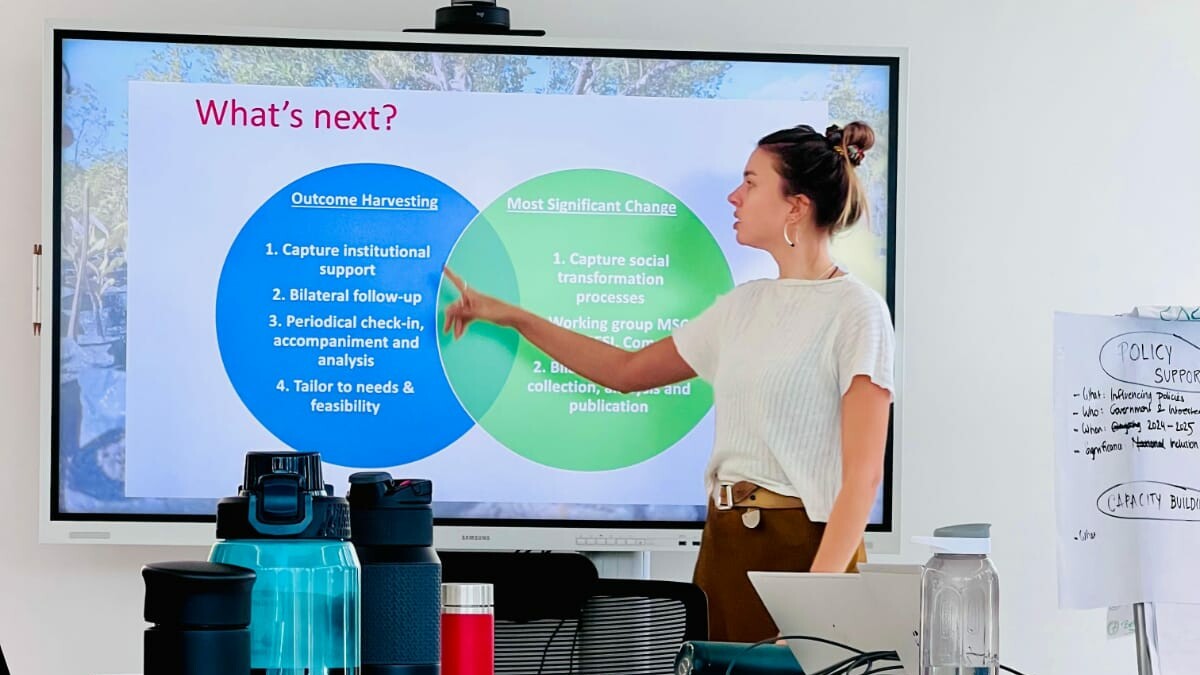
In Mozambique, Fay’s work revolves around one central question: do projects really make a difference? That means looking beyond outputs, such as the number of households gaining access to electricity or the number of training sessions delivered, and focusing instead on outcomes.
“If water becomes available more quickly, what new opportunities does that create for women in rural areas? What do they do with the time that becomes available? Questions like these force us to look beyond the original objectives.”
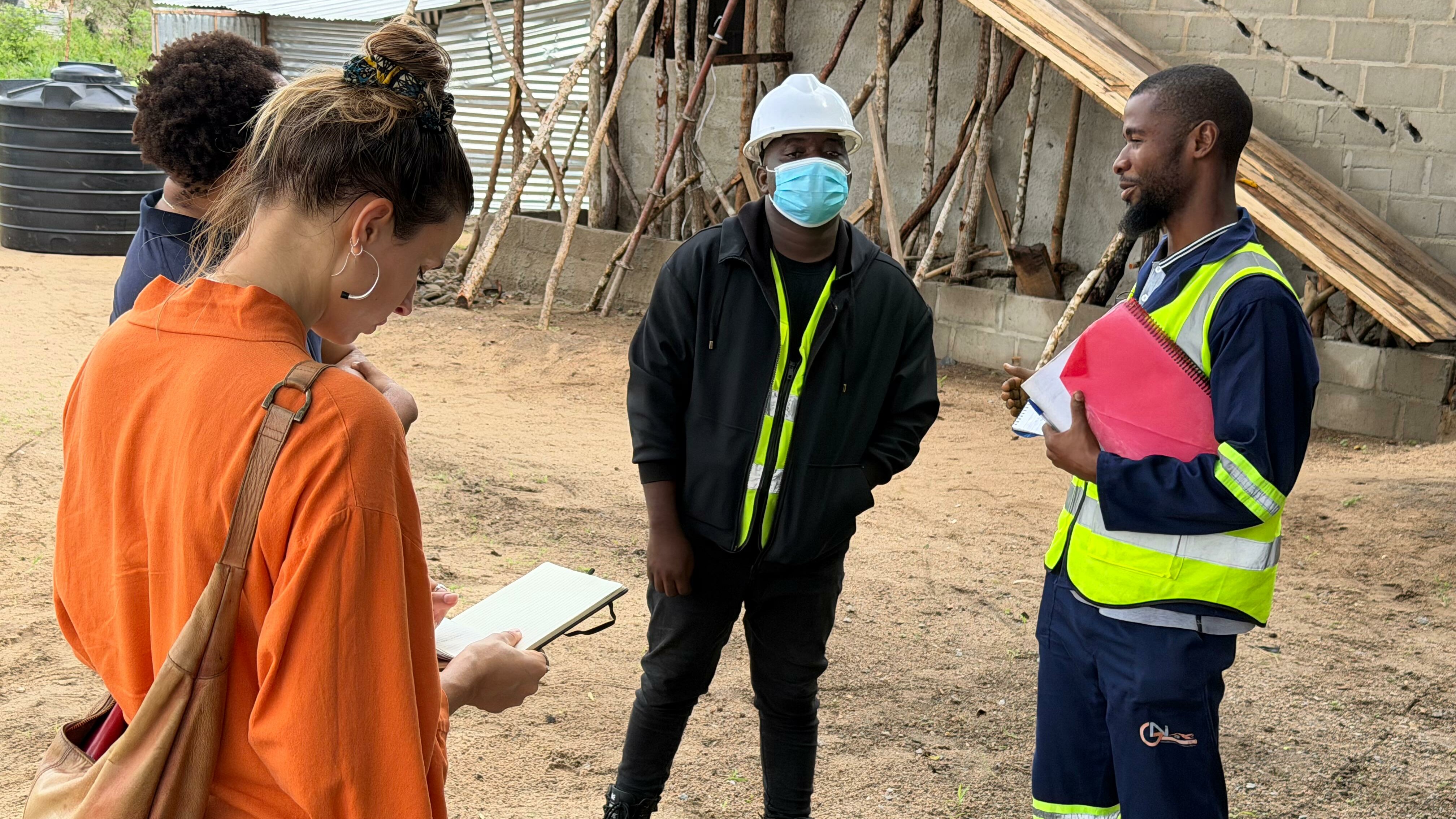
Her work includes defining indicators, collecting and analysing data, field visits, interviews and focus groups. In addition, she organises strategic reflection moments with teams and partners. This has already generated valuable insights on themes such as energy-efficient cooking and climate finance.
Where can things be adjusted? And what opportunities exist for further growth? “To make issues such as gender, power relations or social exclusion visible, you have to engage in dialogue,” she explains. “Who benefits most from new infrastructure? Who is left behind? And which pilot projects have the potential to be scaled up sustainably?”
Organising learning, overcoming resistance
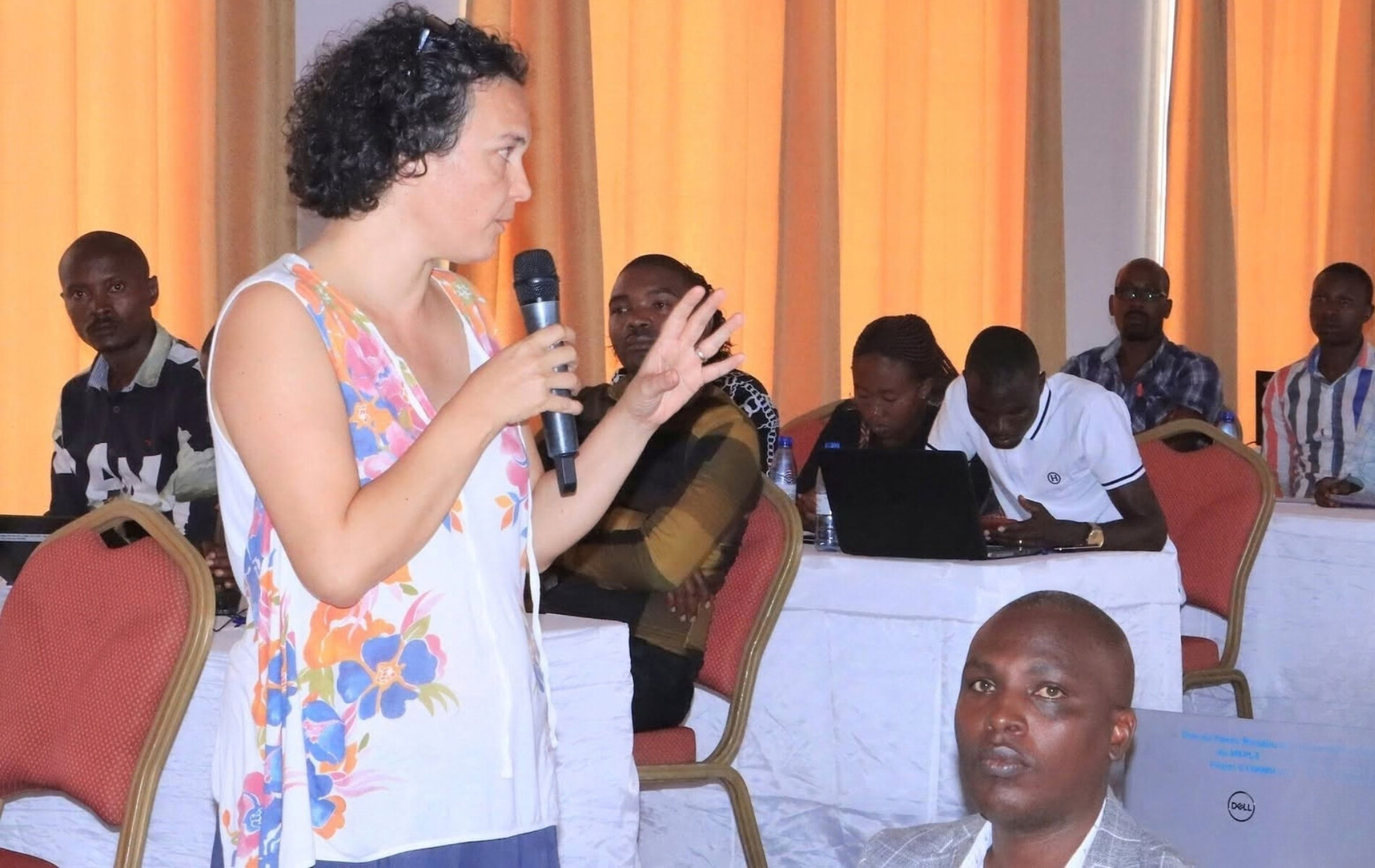
An important moment for Fay was the organisation of an internal workshop together with a colleague. The aim was simple: bringing colleagues together to share experiences and identify patterns.
Not everyone was immediately enthusiastic. Some colleagues feared a loss of time or discussions that would be too abstract.
“We calmly explained why taking time to reflect is precisely what matters,” Fay says. “When you share experiences, you can more quickly identify bottlenecks and opportunities. That ultimately makes the work more efficient.”
The workshop proved valuable: participants went home with new insights and practical ideas. “It helped people see monitoring not as mandatory paperwork, but as a way to better understand what we do.”
A valuable learning experience
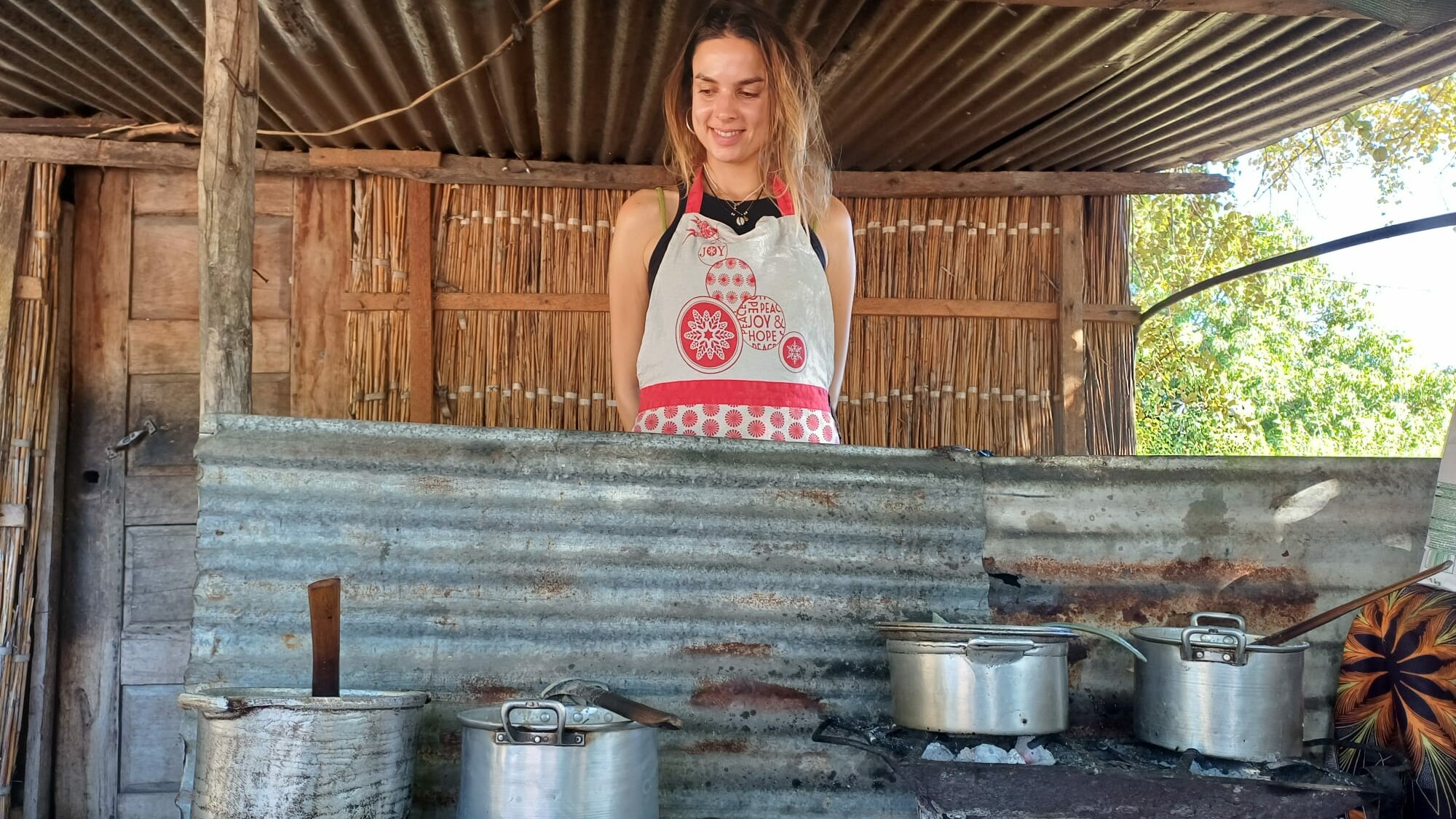
For Fay, the Junior Programme is a true learning environment. “For me personally, it’s a huge opportunity to be here, and I try to learn as much as possible.” And there has already been a lot to learn: new thematic areas, joining during the start-up phase of projects, learning how to work with government partners, and learning Portuguese. “It helps me to recognise small steps.”
At the same time, she continues to reflect on international cooperation. “I think it’s important to practise introspection and to dare to innovate where necessary. We need to keep questioning ourselves and think about how we can truly move towards more horizontal cooperation with partners.”
Language also plays a role in this. Learning Portuguese was not a detail, but a conscious choice. “Being able to speak the language opens doors to trust and informal channels that are crucial for quality monitoring, even though Portuguese is just one of the languages spoken here.”
For the future, Fay deliberately keeps her options open, but one thing is certain: working within an international organisation and focusing on themes such as climate justice and social inclusion will remain priorities. “What matters most is that I keep asking questions, keep listening, and keep helping to make visible what would otherwise remain invisible.”