News
9 March 2026
How fair and flexible procurement procedures make a difference for international cooperation
Interview with Brenda Mijimbu-Moyala – Former Junior Expert in Senegal for Enabel
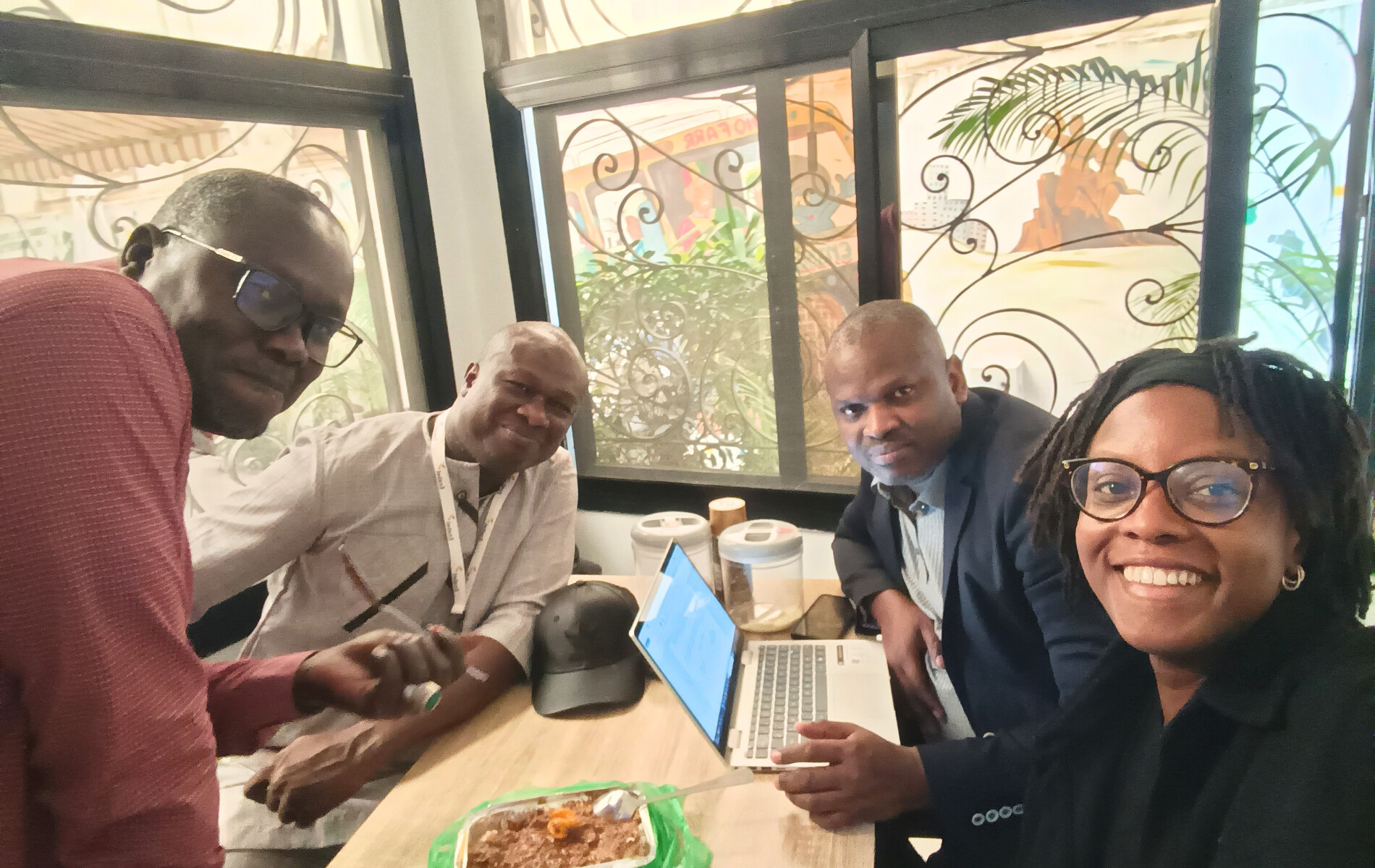
When Brenda arrived in Dakar as a Junior Expert in contractualisation, she stepped into a function that is often invisible, yet central to international cooperation: procurement How do you buy the goods and services that projects need to achieve their goals? “Procurement has a direct impact on whether projects can move forward efficiently and lawfully.”
Brenda joined the Junior Programme because she wanted long-term international exposure. Trained as a lawyer at the Université libre de Bruxelles, she had previously worked for APEFE, the international cooperation agency of the Wallonia-Brussels Federation, in Belgium. “I was based in Brussels, with occasional work visits abroad,” she says. “But I wanted to really experience working and living abroad for an extended period.”
Working with public money = transparency
“As we work with public money, we must follow public procurement procedures to guarantee transparency and equal treatment,” Brenda explains. “We need to justify every decision. There can be no preferential treatment.”
In her first year, Brenda focused on setting up framework contracts, including one with multiple hotels offering accommodation and meeting facilities for workshops. These long-term agreements allow projects to organise quickly, without relaunching procedures each time, mostly at a preferential rate. “Projects often work under tight deadlines. Without framework contracts their work can be delayed significantly.”
To ensure Enabel’s requirements matched local realities, she conducted prospecting visits to different hotels across Senegal. “If your criteria don’t reflect the economic context, you risk excluding operators unnecessarily. Procurement rules must be realistic as well as rigorous.”
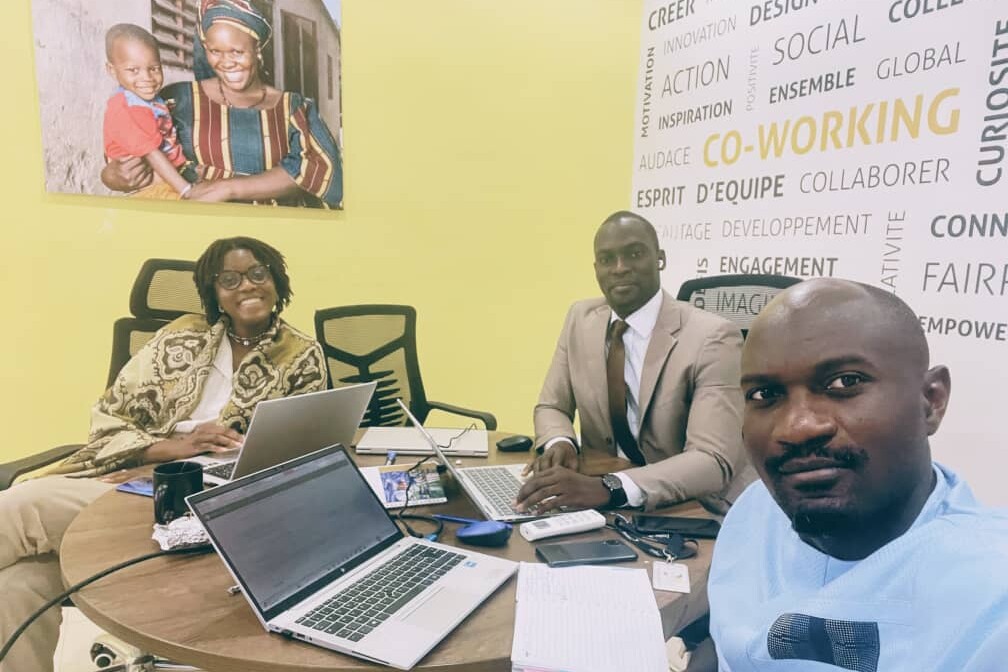
A decent wage or a minimum wage?
Environmental and social considerations were also integrated into the contracts, leading to an important debate. “We discussed whether to require a decent ‘living wage’ or align with Senegal’s legal minimum wage,” Brenda recalls. “The two are not necessarily the same.”
The team ultimately chose to align with national legislation. “If we imposed a higher threshold, many local operators would automatically be excluded. Strengthening the local economy is also part of development.”
However, this did not mean lowering standards. Compliance with labour law and social contributions was systematically verified, and better remuneration could score higher during evaluation. “We set a baseline, but we still encouraged better practices.”
For Brenda, this balance was crucial. “If we talk about development, we cannot ignore fair wages and social conditions,” she says. “Otherwise, we risk contradicting our own values.”

When procedures meet reality
In her second year, Brenda was assigned primarily to a food security project aimed at strengthening the value chain of locally produced cereals in Senegal. Following global supply disruptions, including the war in Ukraine, the project sought to valorise local production.
When a supplier delayed delivery, the formal solution would have been to terminate the contract and relaunch the procedure. “But in agriculture, timing is everything. Missing a planting season can mean losing a full year.”
The project team argued that waiting one additional month was more pragmatic than restarting the process. “That experience changed my perspective,” Brenda reflects. “Applying procedures too rigidly can undermine project objectives.”
She learned to integrate flexibility into contract design: anticipating delays, extensions or price revisions, while remaining compliant. “It’s not about doing things differently for the sake of it. It’s about understanding the purpose of the rules and adapting intelligently.”
Living and learning in Dakar
Beyond the office, life in Dakar shaped Brenda just as much as her professional responsibilities. She lived in the Ouakam neighbourhood, close to the corniche, and quickly joined a women’s club close to her house.
“I couldn’t have dreamed a better way to integrate into my neighbourhood” she says. “We had discussion tables about personal development, social realities, and there was also a book club.”
She travelled across the country, from Casamance to Saint-Louis and Île de Gorée. “I would have been sad to stay only in Dakar for two years,” she says. “I’m really happy I explored the country.”
Surfing became an exiting extra challenge. “Surfing is really popular in Dakar, so I told myself I needed to try it, and at least stand up on the board once,” she laughs. “When I managed that, I said: okay, check, on to the next thing.”
Staying true to yourself
Religious life also left a mark. During Ramadan, which coincided one year with Lent, Brenda participated in Lent. “In Belgian I do it in a ‘light way’ but this time I didn’t eat, I did drink water, however. But I did it discreetly in the kitchen, not in front of my colleagues. For me, that’s a question of respect.”
Integration, she believes, is reciprocal. “It’s important to make a step towards the culture you choose to live in,” she reflects. “But you must also stay true to yourself.”
Her farewell gathering in Dakar became one of the most meaningful moments of her stay. “When you focus day after day on tasks and results, you don’t realise the impact you have,” she says. “During my goodbye drink, colleagues told me I had influenced them positively.”
One colleague said she had learned to fully disconnect during holidays. “I never worked during my leave,” Brenda explains. “For me, if I’m on vacation, I’m off. I didn’t adapt on that point, and apparently it inspired others.”
A new challenge in Kinshasa
Looking back, she would do it again without hesitation. “It develops your capacity to adapt,” she says. “And it also helps you understand your own limits and values.”
At 32, she is now preparing for her next chapter with APEFE as Administrative and Financial Manager in Kinshasa. “It’s a step forward professionally,” she explains. “I wanted to continue evolving in the administrative field while expanding my responsibilities.”
She approaches the move with openness. “Kinshasa is totally different from Dakar,” she says. “I try not to have too many preconceived ideas. It’s a new phase in my career, and I’m really happy and excited to take it.”