News
11 March 2026
Enabel celebrates 20 years of Junior Programme
Press release
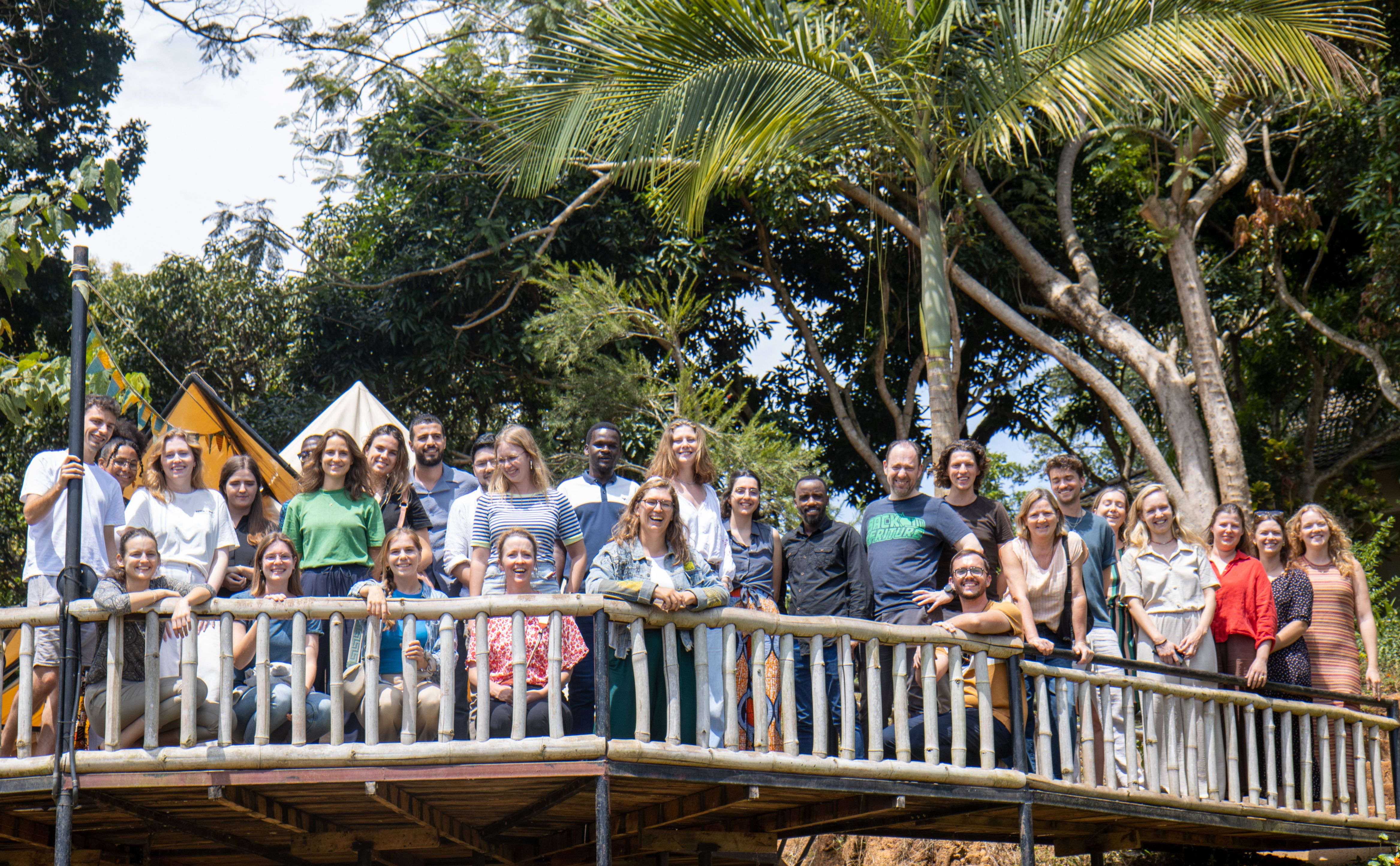
On 12 March 2026, Enabel will celebrate the 20th anniversary of the Junior Programme, an initiative launched in 2006 that has since put nearly 700 young people to work in Belgium’s international cooperation partner countries.
The programme was set up in the aftermath of the devastating 2004 Indian Ocean tsunami, which claimed more than 200,000 lives. Then Belgian Minister for Development Cooperation Armand De Decker launched the so-called ‘Voluntary Service for Development Cooperation’ (VSDC) to give young people the opportunity to put themselves usefully at the service of developing countries, to gain a first professional experience in development cooperation and to mobilise the Belgian population around development issues.
“In a world increasingly marked by polarisation, world citizenship remains more essential than ever. Our young people are growing up in a rapidly changing environment and need tools to better understand the challenges and find their place. In this respect, the Junior Programme offers real added value for their careers, both professionally and personally,” said Maxime Prévot, Deputy Prime Minister and Minister of Foreign Affairs, European Affairs and Development Cooperation.
“For 20 years, the Junior Programme has provided a gateway for young professionals to get started in international cooperation. What makes this programme unique is not only the expertise Juniors bring to our teams and partners, but also the mindset they convey: curiosity, integrity and a deep commitment to global citizenship. As we celebrate this milestone, I am proud of the hundreds of young people who have been able to build careers thanks to the programme and who remain committed citizens today,” said Jean Van Wetter, CEO of Enabel.
The first ‘volunteers’, with one- to three-year contracts, were mainly deployed in projects of the Belgian Technical Cooperation (BTC), Enabel’s predecessor. It was an instant success: more than 1 000 candidates applied for the first selections and the first 22 volunteers left for foreign countries in November 2006.
The VSDC focused primarily on young people with little or no professional experience in development cooperation, in order to rejuvenate the reservoir of Belgian development workers.
In 2009, the VSDC changed its name because the term ‘volunteer’ actually did not cover the load from the start. Young people are paid young professionals, and so the name Junior Programme is chosen. It better reflects the reality of a job in international cooperation and the requirements of the projects. Gradually, recognised Belgian NGOs are also eligible to include Juniors in their operations: after a trial period in 2009, NGOs became full Junior Programme partners in 2013. In 2018 and 2023, the Junior Programme was renewed each time for a period of five years.
A 2025 survey shows that the Junior Programme contributes significantly to the rejuvenation and professionalisation of international cooperation. Half of the ex-Juniors are still working in the sector, often as experts, consultants, project leaders, managers or directors of organisations. After the experience abroad, 70% of the ex-Juniors return for a job in Belgium, but a good 90% of the interviewees confirm that the Junior Programme still has an impact on their professional life.
The Junior Programme remains true to the spirit of the VSDC: it is a springboard to a career in international cooperation, with assignments of 1 to 2 years, guidance by external coaches and deployment in Belgium’s partner countries. In some countries, European Juniors are also paired with locally recruited young professionals, to encourage cross-fertilisation and learning in both directions.
Anouk Bonte, Deputy Director at Fedasil: “The Junior programme has really boosted my career. Immediately after my experience in Benin, I was able to work at Plan International, where several ex-juniors worked. Then I became an advisor on Gender and Youth Participation at the office of Minister for Development Cooperation Caroline Gennez. If you have worked for an international cooperation project yourself, you can imagine some things better. That helps enormously when developing policy recommendations.”
Hannes Demeyer, Manager Education at Football Federation Flanders: “The Junior Programme changed my life on a personal and professional level. It gave me the opportunity to live and work in Uganda in a completely different context than I was used to. It gave me insights and skills I would never have gained otherwise. I am grateful that I was able to contribute to the goals of Enabel and local partners, especially the hospitals we worked with. I would do it again immediately.”