12 June 2026
Enabling young Karimojong women to sustainably diversify their income is the key to addressing challenges in Karamoja
A research project by Merel Meersman – former Junior Expert in Uganda
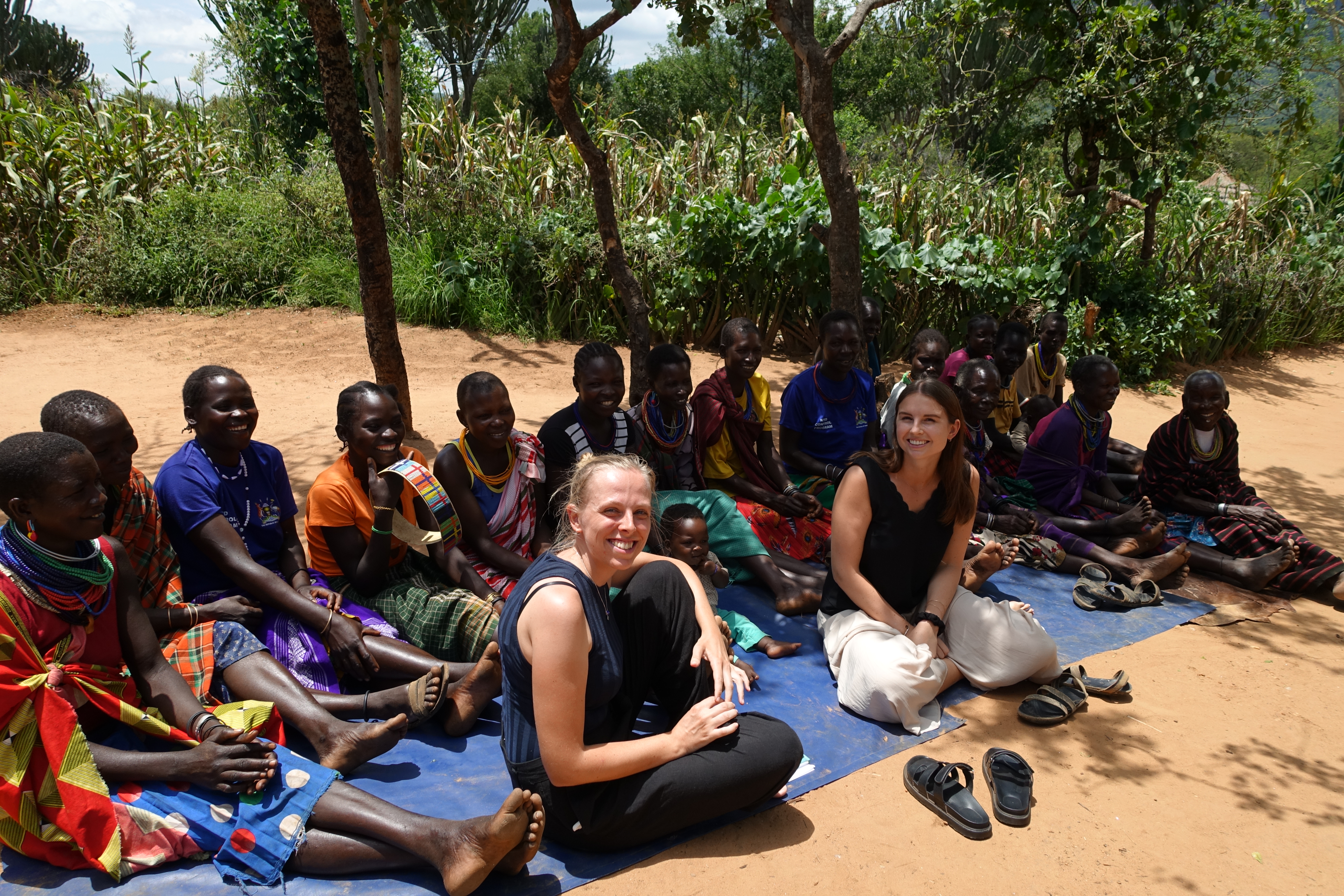
The text you’re about to read was written by Merel Meersman as part of her global citizenship trajectory within her assignment as a Junior Expert with Enabel in Uganda. Driven by her strong commitment to climate change and climate justice, she chose to explore the complex impact of the climate crisis on the Karimojong community in Karamoja. In this contribution, she highlights how climate change exacerbates inequality, poverty, gender issues and migration, and why the economic empowerment of young Karimojong women is key to building a more sustainable and just future.
Merel worked as a Junior Expert on Climate Action and Knowledge Management for Enabel in Uganda. Currently, she’s a researcher on Green Environment at VIVES university of Applied Sciences.
Her interest in raising awareness on the ‘unequal burdens’ of climate change, led her to do a research project in Karamoja together with Junior Expert Mathilde Chignesse. They conducted interviews with NGO’s, government instances, researchers, civil society organisations and focus groups to gain insights in the complex interlinkages between climate change, human mobility in a pastoralist society, hunger and poverty, conflict and gender issues. Where Mathilde focused on documenting the research with pictures, Merel put into words the testimonies of those interviewed.
This text draws on insights from this research.
Karamoja and the Karimojong
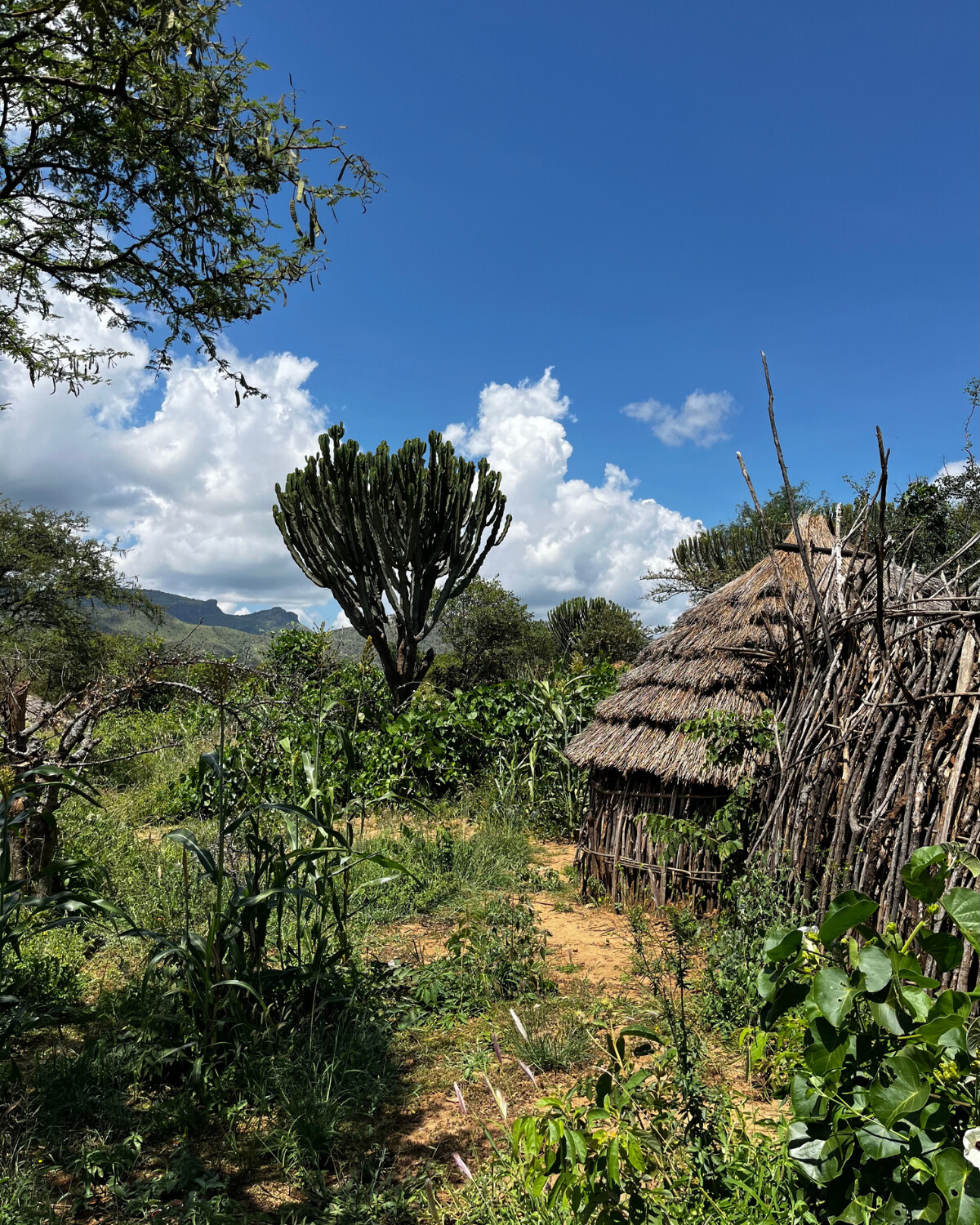
Karamoja is a semi-arid region in the north-east of Uganda and part of the cattle corridor region that stretches beyond Kenyan and Ethiopian borders. The Karimojong (or Karamojong) are traditionally nomadic pastoralists who migrate with the seasons – cattle keeping was the best solution to living in a rather inhospitable environment with nor a climate, nor a soil allowing for much else. Cattle raiding has always been a part of it, and conflicts are known to escalate linearly with other issues in the region. Climate change, to name just one.
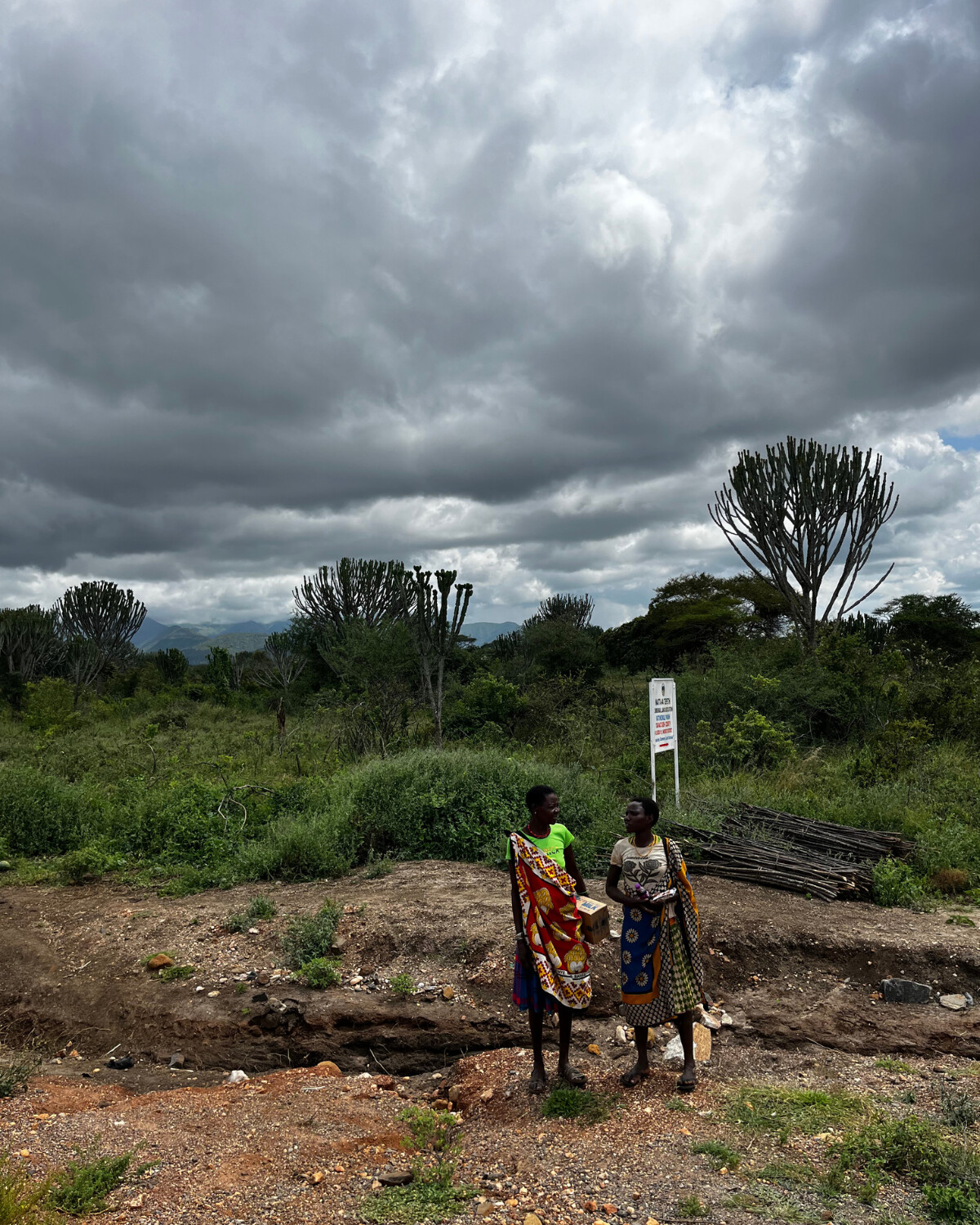
These past few years, erratic weather patterns have plagued the region. It’s too hot, too dry, too rainy, too windy. Driving through Karamoja, the landscape is green for once – it adds to the beauty of the region. This year, the rains came. Too much at once and not frequent enough overall – the soil didn’t manage to capture much of it –, but at least it rained.
Women don’t have much time to spare
By the late 1980s, widespread armament of pastoralist and a new government led the Karimojong to shift more toward sedentism and agropastoralism. Seasonal migration became too dangerous for women and children, and they settled down to access benefits promised by the Ugandan government such as education and health care*. In turn, women could invest their time working, generating some – now very needed – income.
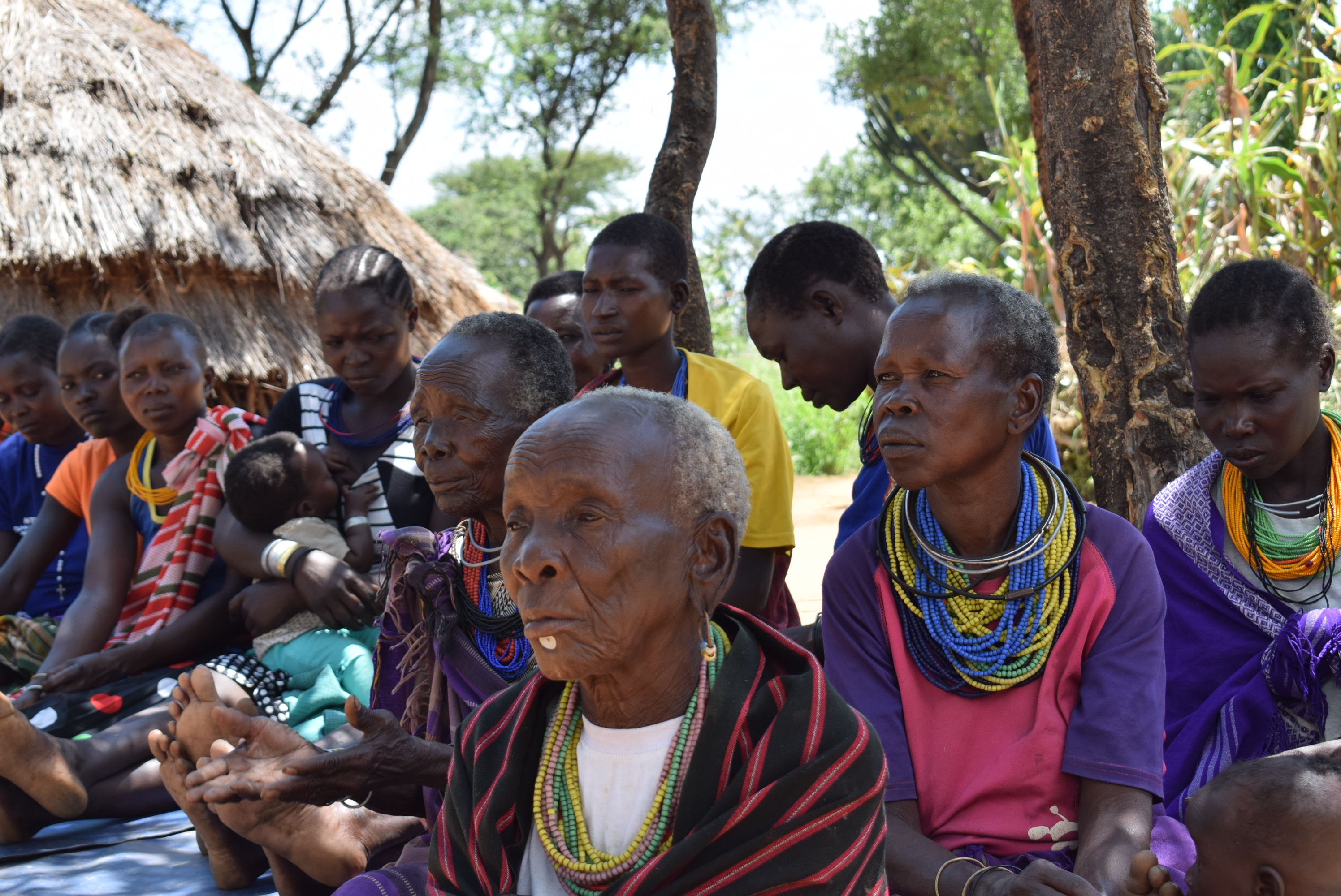
It’s the kind of emancipation that doesn’t really emancipate. While the men are off searching water and pasture for their cattle in the hopes of paying overdue and often very high dowries, the women are left in charge of everything else: fetching water for family use, making sure the family has food and that school fees and hospital bills are paid. They are also in charge of building and maintaining the house, gathering firewood and earning an extra income. They revert to agriculture, apiary, piggery, poultry, bead making, mining, shopkeeping, casual labour and selling firewood to make ends meet.
Women often travel far, leaving their children, and putting themselves in unsafe situations, all for an income of $1 a day – if lucky. Gender stereotypes keep women from acquiring certain, better-paying skills – e.g. they can keep bees but building hives is considered a men’s job.
Furthermore, research shows women play an important role in peacebuilding at an intercommunal level. They enhance conversations between communities and build relationships. They even encourage their sons to marry into other communities to help maintain peace agreements. Allas, women in Karamoja don’t have much time to spare.
Income-generating activities versus deforestation
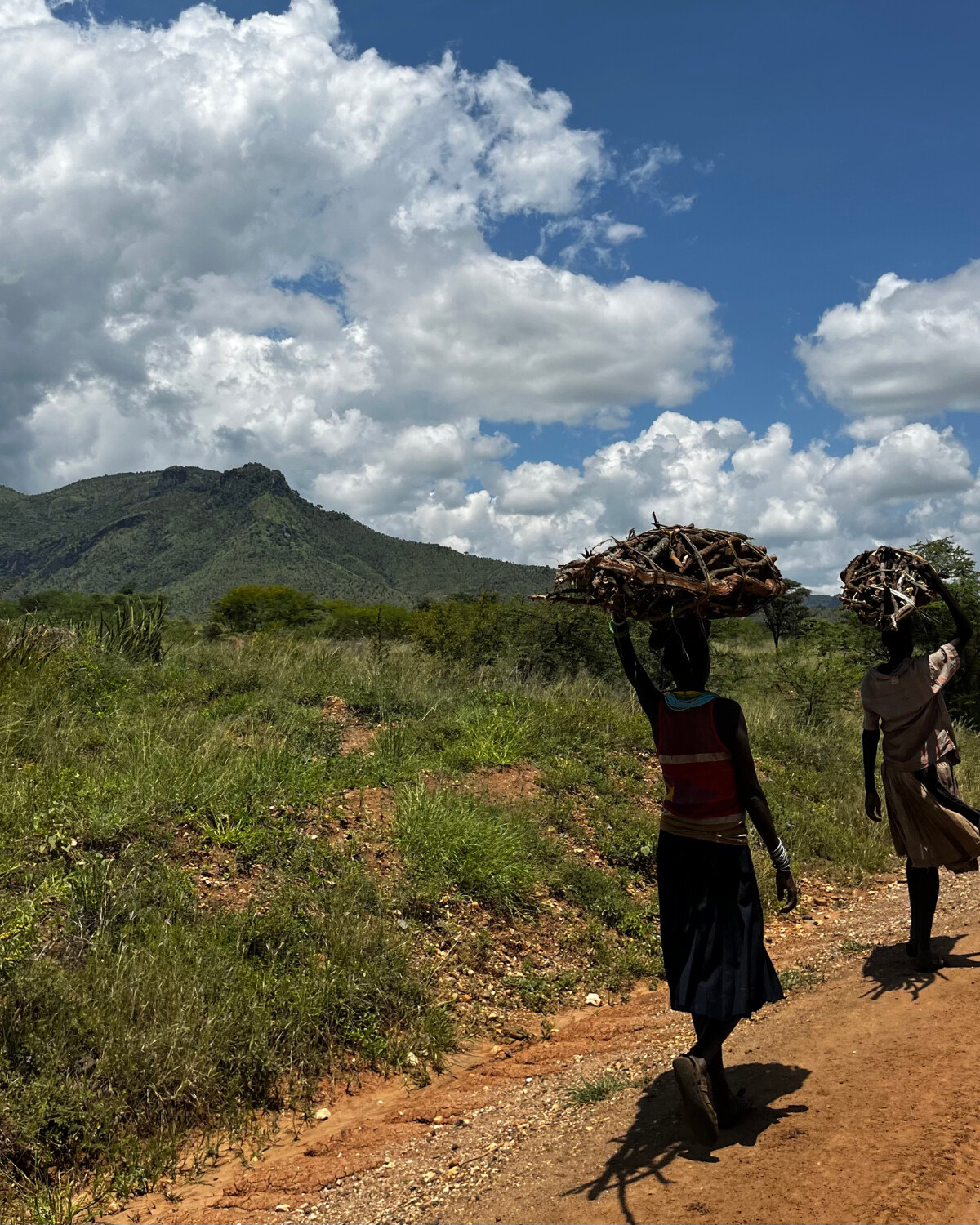
A common income-generating activity is cutting and selling firewood. The demand for firewood in Kampala is high enough to make the 10-hour journey from Karamoja worth it, and trucks are constantly driving through. One bunch of firewood in Karamoja sells for 20.000 ugx (about €5), a lot of money for a Karimojong. In Kampala the same goes for 100.000 ugx (about €25). Quality wood is rare in the capital and considered ideal for cooking the typical Ugandan stews.
Selling firewood offers a low-risk income for women in Karamoja, and deforestation has thus rapidly increased these past years. It’s a vicious circle, leaving women – and by extend everyone – in increasingly fragile positions, as the natural resources they depend upon become ever so scarce.
With the changing climate, it becomes ever so difficult to find water and grass for the cattle. During the interviews that Mathilde and I conducted, Eeveryone tells us life used to be easier, that at least they used to be able to make ends meet. Seasonal migration patterns are halting, with cows piling up in the few remaining grassland areas, creating tension and impacting the environment heavily. The Turkana – coming from across the Kenyan border – are more and more often permanently staying in Uganda. It pushed the Karimojong pastoralists to districts further inland, creating tensions there.
The cost of living
The cost of living has only ever increased, leading to more and more Karimojong living under the poverty line (about 66% in 2019) (UNDP, 2023). The Karamojong are all too aware of corruption problems in the capital, which causes delays and even worse, constraint in the flow of aid meant for Karamoja to reach them.
Corruption remains a tremendous issue, and means are not always spent well. Programs are short and not sustainable, people continue to depend on aid (often food donations), and all that tends to do is further drive up the price of cows.
So, the Karimojong figure, they might as well go to Kampala themselves and find some of that money that was meant for them. Seasonal migration requires building and using extensive social networks to gather information about available resources for cattle. But in recent years, the most valuable connection for a Karimojong is someone in the city who might know about a labour opportunity.
Seasonal migration is turning into urban migration, and it’s not a solution for many.
Business opportunities
The need for business opportunities in Karamoja was brought up by most interviewees. Having certain skills that people are willing to pay you for – now and in the future –, is rapidly becoming the only way to thrive (or just survive) as a woman in Karamoja.
A skill can offer a sustainable income – sustainable being the key word here. For instance, apiary has become increasingly popular, while not a lot of people can afford to buy the honey and a decrease in production is being noticed year after year – bees like heat nor rain, they don’t do well in a changing climate. But if girls would receive an education with a technical training component, they could much more easily earn an income once they grow up, feel empowered, take care of their families and have time for peacebuilding and conservation of natural resources. It would increase the resilience of the Karimojong and reduce last-resort urban migration.
The empowerment of girls and women could even lead to a cultural change in dowry-practices – which in turn could reduce pressure on grassland and water resources, reduce cattle raiding practices, and partly restore traditional seasonal migration patterns – as far as the climate allows it. Could this eventually create room for men to take part in more household activities, creating a more equal society?
*Background information: working paper on Livelihoods, basic services and social protection in Northern Uganda and Karamoja – https://media.odi.org/documents/7781.pdf
Interested in more?
This research project originated from a collaboration between two Junior Experts, Merel and Mathilde. While Merel wrote this article Mathilde took photographs. You can have a look at her photo report right here.