News
10 May 2026
Human mobility: public services to support reintegration
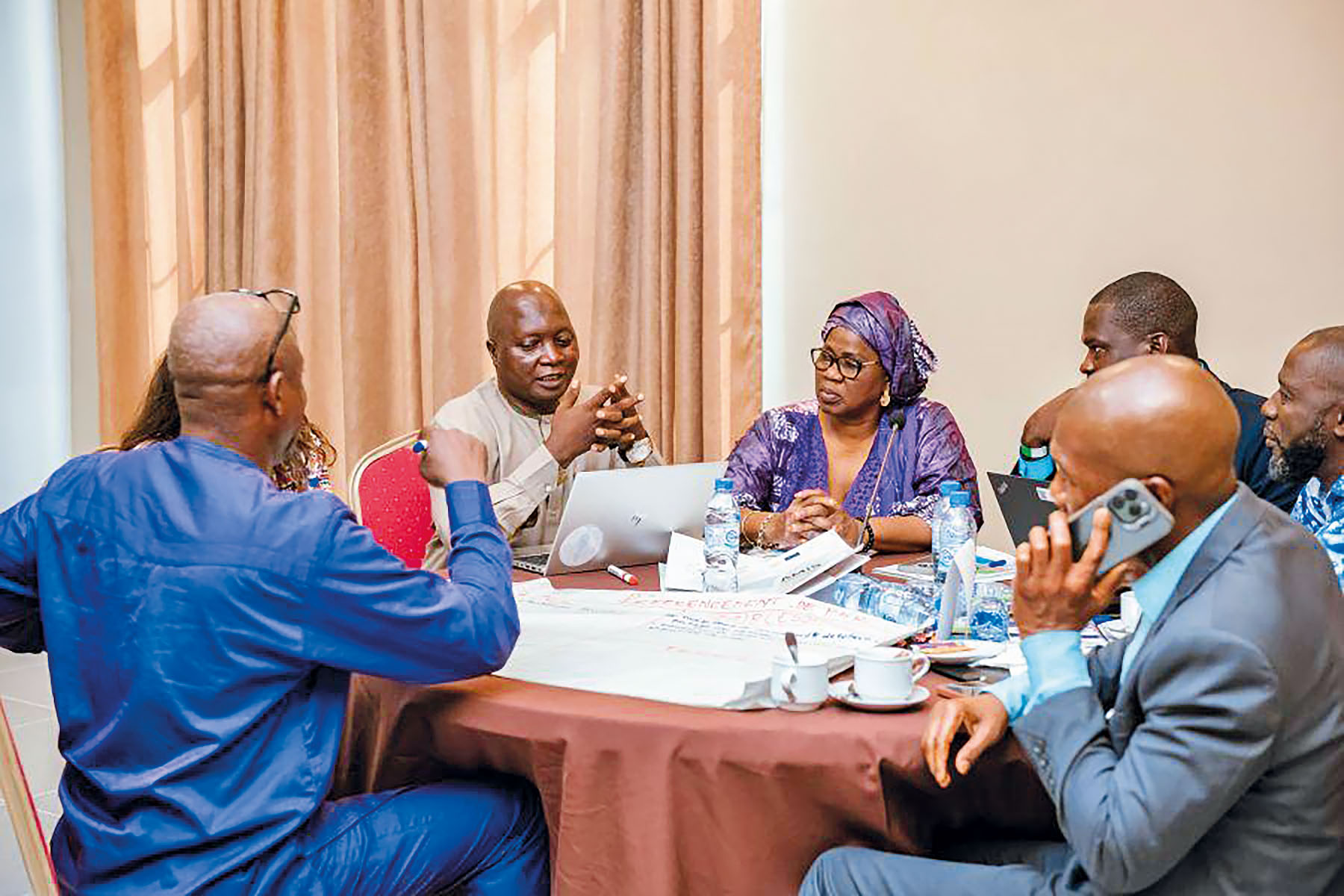
Migrants who return to their country of origin may do not always find their place in society again. For many, it is a time of uncertainty – little information available, difficult access to services, and few job opportunities.
For public services in countries of origin, these returns present both a challenge and an opportunity to align with the needs of everyone, including returning migrants. Reintegration thus becomes an opportunity to promote inclusion. Through the MIGRET project in Côte d’Ivoire and AMIS in Guinea, both funded by the European Union, Enabel promotes this approach to mobility: strengthening the conditions that enable people to rebuild their future.
Creating the conditions for reintegration
Recognising the challenges involved in reintegration, Enabel supports public and private actors to facilitate access to economic opportunities and existing services. Rather than providing one-off assistance or parallel reintegration schemes, Enabel strengthens existing systems that connect returning migrants to social assistance, employment, training, and entrepreneurship services.
In Côte d’Ivoire, through the MIGRET project, Enabel has analysed the challenges faced by returning migrants in accessing rights, services, as well as available socio-economic opportunities. These analyses enable public, private, and civil society actors to adapt their services and accessibility conditions. From reception and follow-up to guidance, psychosocial support, training, job placement, and access to financing, all the actors involved in providing care are considered.
In Guinea, the AMIS project strengthens the links between public employment services, training centres, support structures and businesses in order to connect returning migrants with concrete opportunities. Partnerships with the private sector are essential to ensure career path are aligned with the real needs of the local economy.
Support is also based on recognising and making the most of the skills acquired during migration. Migratory experiences, however difficult they may be, provide a valuable source of technical, relational and entrepreneurial know-how. Enabel supports tools used by public services, such as skills assessment, which highlight existing skills, identifies training needs and guides young people towards the right career path. Particular emphasis is placed on psychosocial and professional support for women, young people, and people with disabilities.
The goal is to support realistic career paths that build on existing skills and local opportunities.
From the individual to the region: a collective dynamic
Reintegration is, first and foremost, a systemic issue: Do the services that provide access to rights and opportunities exist? Are they accessible and adapted over time?
For returning migrants, the challenge is twofold: having access to services tailored to their experiences, and relying on actors capable of ensuring their inclusion in coordination with national and local institutions.
Rather than creating ad hoc parallel mechanisms, MIGRET and AMIS strengthen existing ecosystems for the benefit of the entire population. Enabel’s approach is anchored at a territorial level. It strengthens the management capacities of public services, local authorities and civil society so that they can welcome, guide and support returning migrants in the long term.
By avoiding a one-size-fits-all model that is sometimes ill suited to local realities, Enabel’s approach also helps integrate reintegration challenges into national employment, youth and migration policies.
An approach consistent with European developments
These experiences demonstrate that the existence of appropriate systems, along with access to socio-economic opportunities, enables migrants to make free and autonomous choices within a legal environment.
This approach is part of a broader evolution in European policies, which are moving toward a more integrated model that combines mobility and migration governance, cooperation with partner countries, and support for national (re)integration systems.
Projects like MIGRET and AMIS translate these orientations to life through concrete actions – investing in local territories and systems, and recognising mobility as a driver for creating value.