Science at the service of the climate
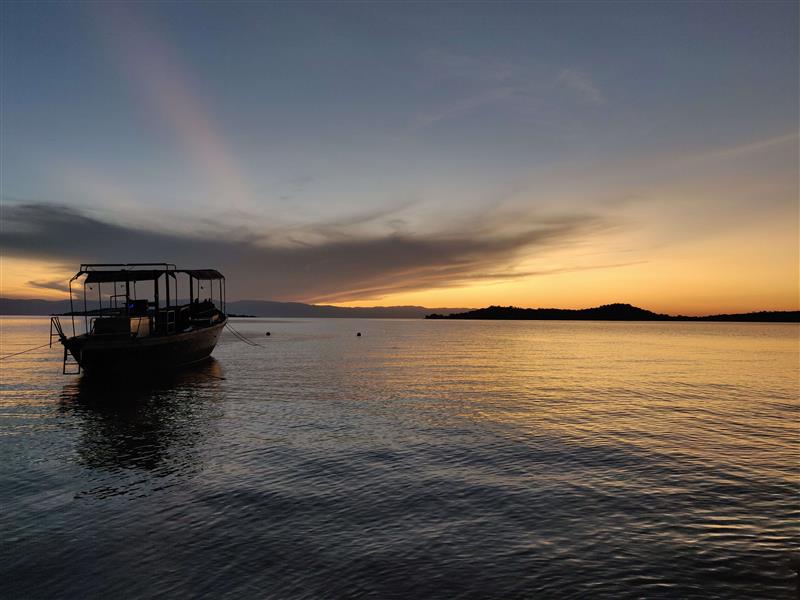
With 18% of the world’s freshwater reserves, the catchment area of Lakes Tanganyika and Kivu plays a crucial role on a global scale. It is a vital resource for nearly eight million people living along its shores, and is home to one of the world’s most biodiverse ecosystems.
However, these natural resources are coming under increasing pressure, accentuated by the proliferation of extreme climatic phenomena.The Tanganyika Kivu Water Management Project (TAKIWAMA), a European initiative implemented by Enabel and GIZ,aims to ensure sustainable management of these resources, preserve ecosystems ,and ensure a sustainable future for the region’s inhabitants.
Supporting cross-border resource management
Since 2019, Enabel has been working closely with the Lake Tanganyika Authority, which brings together the four countries bordering the lake – Tanzania, the Democratic Republic of Congo, Zambia and Burundi – to set up an environmental monitoring network for the Lake’s water.
During the first phase of the project, four regional laboratories were rehabilitated and equipped to improve water quality analysis, while monitoring and data processing methods were harmonised. The Bujumbura wastewater treatment plant in Burundi, the only such facility on Lake Tanganyika, was upgraded and initiatives were taken to improve solid waste management in Kigoma, Tanzania, thereby reducing pollution.
Building on this progress, the second phase of the project aims to expand these initiatives while strengthening their scientific dimension. The objective is to optimise the water quality monitoring network by developing new environmental monitoring centres.

reduce pollution caused by human activity.
An international scientific approach
Monitoring an ecosystem as vast and complex as the Lake Tanganyika and Lake Kivu ecosystem requires in-depth expertise and enhanced scientific cooperation. TAKIWAMA relies on a network of research centres and universities and combines local and international expertise.
In addition to the collaborations already established with institutions and organisations in the riparian countries, the project relies on a broad scientific partnership, including the European Union’s Joint Research Centre, the University of Liège, the University of Milano-Bicocca, the University of Burundi and the Frankfurt Zoological Society.
At COP29, the Walloon Region announced its support for the preservation of the two lakes, with funding of EUR 2 million for the construction of two environmental and climate monitoring centres in Nsumbu (Zambia) and Kipili (Tanzania). At the same time, the network of weather stations around the lake will be extended and modernised, and equipment will be acquired to improve biodiversity monitoring.
“Our collaboration with Enabel is fully in line with our mission to provide high-quality geographic data and services to meet global challenges. By working on the TAKIWAMA project, we share our expertise beyond our borders and help to build the capacity of local partners, particularly in the field of geodesy.” declared Ingrid Vanden Berghe, Administrator General of Belgium’s National Geographic Institute.
Better understanding for better action
In view of the significant rise in the level of the Lake – and its devastating effects on people, agricultural areas and infrastructure – understanding and anticipating these variations is a priority to better protect people and their environment.
Enabel will be working with Belgium’s National Geographic Institute to harmonise the topographic networks of the neighbouring countries and to analyse the environmental impact of flooding and soil erosion. These studies will make it possible to assess the risks and guide public policies to ensure the long-term preservation of the Lakes.
There are still many challenges ahead, but the emergence of a solid scientific network and the mobilisation of local and international actors are encouraging signs. Through an approach based on science and international cooperation, TAKIWAMA illustrates the importance of collective action in the face of climate and environmental challenges, demonstrating that preserving natural resources requires effective coordination between governments, the international scientific community and local populations.