News
10 May 2026
Ukraine: beyond the war, hope for the future
Interview
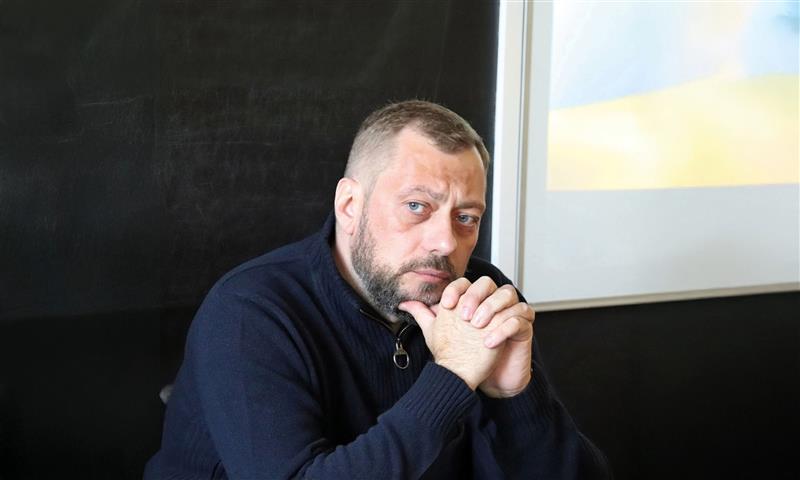
Viacheslav Chaus is the Head of the Chernihiv Regional Military Administration. Having worked across both the private and public sectors, he stepped into this position mere months before Russia started its full-scale invasion of Ukraine – and has been in the governor’s seat through four years of the war. Enabel asked him about the region’s current challenges and his vision for Chernihiv’s future – one defined by prosperity, inclusivity, and strong international partnerships.
How would you describe the current situation in the Chernihiv region? How are people coping, and what are the most pressing needs?
Our people first experienced life without electricity, water, heating, and gas in 2022, when part of the region was temporarily occupied by Russian forces. This drove us to strengthen our air defenses – but when confronted with such relentless missile and drone attacks, even the best defenses can only do so much.
Over the past year, more than 24,000 enemy strikes were recorded in our area. While the strikes have been ongoing for four years, this winter saw the most brutal attacks on the energy sector. Russia also deliberately carries out double-tap strikes, targeting energy workers mid-repair and making infrastructure restoration extremely dangerous.
Still, we did everything in our power to ensure our people did not freeze in -20°C temperatures. We opened numerous resilience hubs and made every effort to support people with disabilities and the elderly. With rolling power outages already a fact of life, our priority was to at least preserve access to heating – and this is where Enabel’s mobile boilers proved invaluable.
The region’s demographics have shifted – many have fled, but many have also arrived. How is this shift affecting social services?
Chernihiv is Ukraine’s second largest region by territory but it’s also least densely populated, so access to social services has always been a challenge. The full-scale invasion has only stretched this further, with about 30,000 internally displaced people from other regions and a growing number of war veterans now among our residents. Maintaining the quality and accessibility of healthcare, education and administrative services is a shared priority across communities and all levels of government – and having strong partners to support institutional capacity is essential.
What do you think could draw people back to Chernihiv and anchor them in their communities?
Security comes first. Then it’s about building back better – restoring housing, energy infrastructure, schools and healthcare facilities. This is what will encourage people to stay and motivate those who have left to return. We also need to ensure that businesses remain in the region and are eager to grow, creating jobs for our residents.
I’m glad the government has placed greater focus on vocational education and training. For Chernihiv specifically, developing VET is, I believe, a vital guarantee that people will choose to stay here.
The labour market is evolving, and initiatives such as Enabel’s ALMP Facility aim to better match skills with market needs. Which industries do you see as strategic for the region’s recovery and competitiveness?
Definitely construction, transportation infrastructure, housing and utility services. Agro-processing – we are an agricultural region, after all. Wood processing, light industry… These are the sectors that will define Chernihiv’s future – and to seize that future, we need to equip the younger generation with the relevant skills today.
How do you see economic opportunities developing, particularly for the private sector?
When I stepped into this role in 2021, I made it my personal priority to attract investment to the region. I was optimistic – we had several joint projects with Baltic countries in development. Then February 2022 came, and everything stalled.
Chernihiv is rich in natural resources, particularly in agriculture. We may be the northernmost region bordering the EU, but we are also one of the closest to Kyiv, which works in our favour – logistics are fast, and proximity to the capital drives development. But let’s be realistic: when 2,224 Shahed drones enter the region’s airspace in a single month, the appeal for foreign investors is close to zero.
What stands out, however, is that our local businesses have proven remarkably resilient, continuing to reinvest in their operations. No major business has fully relocated from the region, which speaks for itself. And we do have preliminary agreements with foreign companies for future investment – I hope we will be able to act on them once the war is over.
Enabel began its work here in 2024. How would you assess this partnership so far?
I wish all memoranda of cooperation worked as well as the one we have with Enabel. Belgium’s support for energy resilience, healthcare and education has been consistent and timely, and we are truly grateful.
My hope is that one day the Chernihiv region will also become a full-fledged partner to our allies – not just a recipient of support, but an equal contributor. I envision a bilateral relationship built on economic, cultural and educational exchange. In healthcare alone, our doctors have developed invaluable expertise in areas like rehabilitation – hard-won knowledge that the world could learn from. That kind of mutual cooperation is my dream. Second only to Ukraine’s victory.
Looking beyond the war, what is your vision for Chernihiv’s future?
We see several development scenarios ahead, but in all of them, tourism remains a cornerstone. Before the full-scale invasion, Chernihiv was a popular weekend destination for Kyiv residents – offering historical, cultural, and recreational sites – and I believe its potential has yet to be fully explored.
I also see real opportunities in the IT sector. Before the invasion, Chernihiv had one of the most powerful IT clusters in Ukraine. Many people have left, but the cluster still exists and has room to grow. We don’t have industrial and tech giants in the region – and frankly, that’s a good thing, as it has helped us preserve a clean environment.
Chernihiv may be sparsely populated, but its people are open and reliable. These are people you can build something meaningful with. The most important thing now is to end this war – together.
About our work in Ukraine
Belgium’s investments in the Chernihiv region span healthcare, education, and energy sectors.
In the hospitals of Koriukivka and Pryluky, rehabilitation departments will soon reopen following reconstruction, while in Kyinka, the local school has undergone energy-efficient modernisation. Work is also underway at the Regional Blood Centre, which is set to meet EU standards through Enabel’s partnership with Red Cross Flanders. These infrastructure efforts are complemented by capacity-building programmes for medical professionals.
Another upcoming project is the Bosch Junior Academy, set to be established at two Chernihiv vocational and educational training schools. Market-driven training is also central to the ALMP (Active Labour Market Policies) Facility – an Enabel-led initiative funding training programmes designed to boost the productivity of the local workforce.
Support for the energy system remains just as vital: last winter, Enabel supplied the region with 28 mobile boiler units for social infrastructure facilities.