News
10 May 2026
Puratos and Enabel: a strategic alliance that gets the cocoa industry moving
Interview
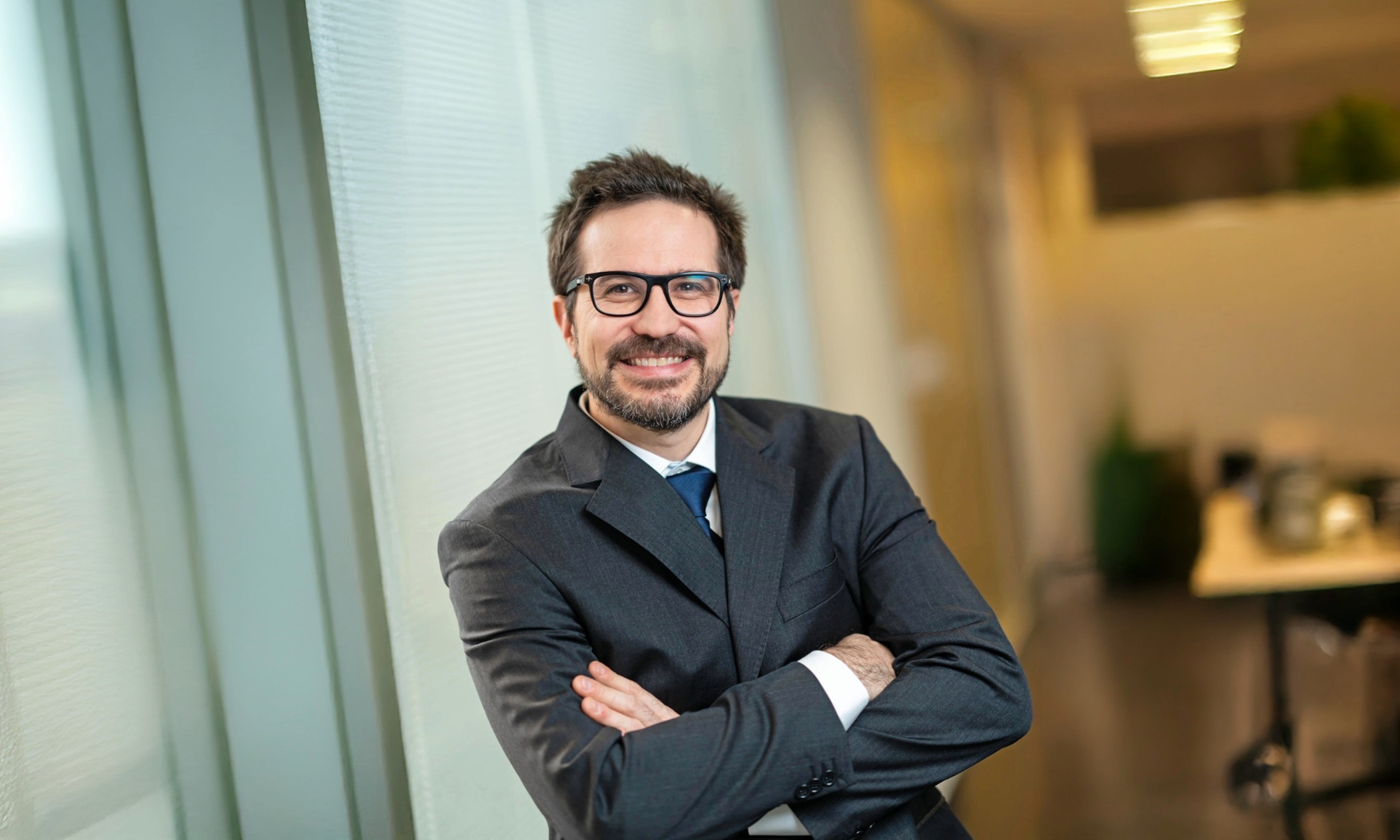
Puratos is a global Belgian group specialising in ingredients for the bakery, patisserie and chocolate industries. It was founded in 1919. Today, it is present in over 100 countries and generates annual sales of almost 3.5 billion euro.
Cédric Van Belle, Chair of the Board of Directors, talks about the group’s cocoa strategy and explains how sustainability and the strategic partnership with Enabel are helping to transform the industry in a sustainable way.
Sustainability is at the heart of your cocoa strategy. Why is this a key matter?
The cocoa strategy of Puratos is the result of a historic development. We entered the chocolate business rather late, in an already highly competitive market. That was in 1989. We very quickly decided to focus on chocolate from specific plantations or from specific regions. While learning the trade, we discovered a major problem in the cocoa supply chain, particularly in Africa: farmers were very poorly paid and struggled to make a living from their work.
We were shocked. Both ethically and strategically. If producers cannot make a living from their work, why would they pass the trade on to their children? In the long term, the very future of cocoa supply is at risk. We set out checking existing sustainable certification labels, but found that they were not perfect, and that part of the premiums inevitably remained within the management structures.
So, we decided to create our own programme, Cacao-Trace, built on two pillars. Firstly, improving cocoa quality. We pay farmers a premium price in relation to the market price, and have developed expertise in fermentation and drying, which allows us to produce very high-quality cocoa.
Secondly, we have the chocolate bonus. As we are a B2B company, our customers pay an extra 10 cents for every kilo of Cacao-Trace chocolate they buy. 100% of this sum is paid back to the farmers via a foundation.
Depending on the country, this bonus is distributed directly to farmers or invested in community projects such as schools, maternity units, water towers and school kits. Today, this bonus represents more than 3 million euro a year, with approximately 2 million euro going to Côte d’Ivoire. Thanks to this system, producers benefit from significant additional income while improving the quality of their cocoa. For us, it is a real win-win model: we get better quality cocoa while having a real impact on the lives of farming communities.
How is this approach transforming the relationship with producers?
Investing in the quality of cocoa profoundly changes the relationship with producers. We are no longer in a purely transactional logic, but in a win-win partnership. By paying farmers more for quality beans and providing technical expertise, we enable them to improve their production and earn higher incomes.
Depending on the country, we work directly with producers, via our own fermentation centres, or in collaboration with partners and cooperatives. In some cases, such as Vietnam, we know each farmer individually. In Africa, where supply chains are more complex, we prefer to work with cooperatives and partners to guarantee traceability and project management.
This model creates a long-term relationship. Farmers know that their cocoa will be bought at a premium price, which encourages them to invest in their farms. For us, this guarantees a stable, high-quality supply. It is not charity: it is a sustainable win-win economic model. Today, Cacao-Trace accounts for around a third of our chocolate. We aim to reach 50% sustainable sourcing by 2030 and, eventually, 100%.
Why are public-private partnerships essential, and how do Puratos and Enabel team up?
Public-private partnerships are essential, as acting alone is often slower and harder. In many countries, particularly in Africa, administration and logistics make projects more complex. Public-sector partners like Enabel bring credibility, an institutional network and knowledge of local contexts that we do not always have.
The complementarity is clear: Puratos brings its cocoa expertise, investment capacity and technical knowledge. Enabel facilitates local relations, supports the structuring of cooperatives and speeds up the implementation of projects. This collaboration is particularly important when we are expanding into new countries where we do not yet have local teams.
For example, we are looking to diversify our supply beyond Côte d’Ivoire, with projects in Congo, Cameroon and Uganda. In these contexts, the support of a public player helps to reduce risks and accelerate initiatives. It is this complementarity that guarantees the success of our projects.
What role can a public player like Enabel take on in the current crises?
Climate, economic and geopolitical crises are making value chains more fragile. Companies need to both secure their supply and invest in sustainability. A public enterprise can play a key role in facilitating access to markets, bringing players together and speeding up projects.
Local teams are particularly valuable, as they enable us to understand the realities on the ground, facilitate contacts and monitor projects. In complex contexts, such as certain countries in Central Africa, this presence is essential if sustainable initiatives are to be launched and maintained.
Enabel can also make Belgian companies more aware of the opportunities available in Africa. Often it is unknown what a public player like Enabel can mean. By highlighting success stories and supporting pilot projects, risk perception can be reduced and investment encouraged.
What message should be sent to private companies looking to invest in Africa?
For us, Africa is the continent of the future. The demographic trends of the next twenty to thirty years are clear. Not to be there would be a strategic error. At Puratos, we have a long-term vision, spanning ten, twenty or thirty years. Africa is an integral part of our development.
However, we need to move forward gradually and give priority to partnerships. Starting up on your own is difficult; we strongly believe in joint ventures with local partners. This is how we have developed our activities in several African countries, with partners who know the terrain and facilitate integration.
Beyond the geographical aspect, there is also the sustainable dimension. Investing in sustainability is not charity; it is a strategic choice. In the long term, sustainability and economic performance are reinforcing one another. Companies that make a commitment today are creating dynamics for progress, securing their value chains and meeting the growing expectations of their customers.
In short, we need to see Africa as a long-term opportunity, move forward in partnership and embrace sustainability at the heart of our strategy. Those who make such choices now will have a decisive advantage in the years to come.