News
18 December 2025
Enabel and the Walloon Region join forces for sustainable water management in Tunisia
Press release
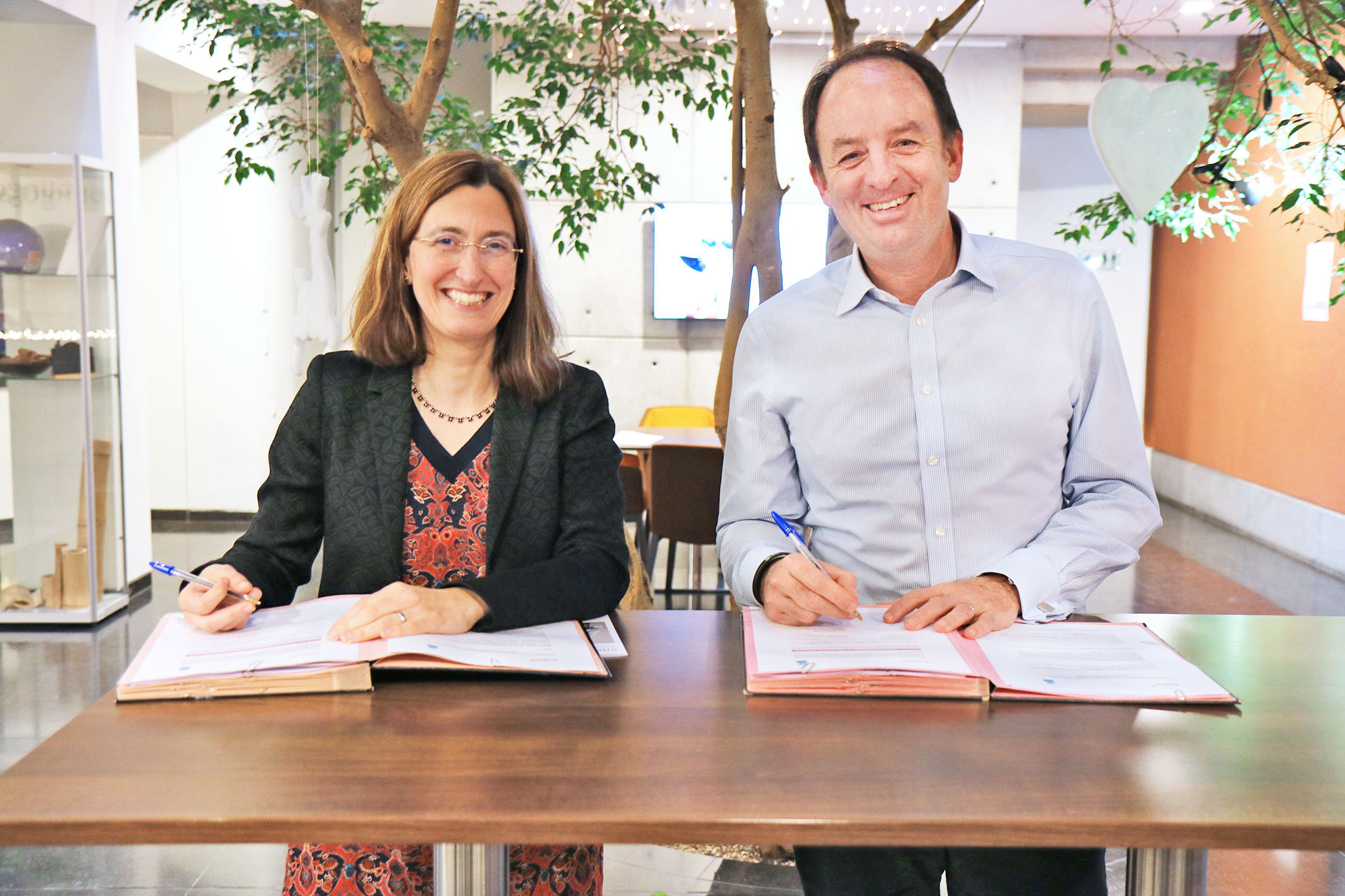
The Belgian agency for international cooperation Enabel and the Walloon Region, through the Walloon Agency for Air and Climate (AWAC), are launching a project focused on the Balanced Management of Groundwater in Tunisia (the GEEST project). This project mobilises the expertise of the Société Wallonne des Eaux (SWDE), builds on recent initiatives in Senegal, Burundi, Morocco and the African Great Lakes region, illustrating the relevance of the “Team Belgium” model in addressing global climate challenges.
A pilot project for water resilience
The project aims to strengthen the capacities of Tunisia’s Ministry of Agriculture, Water Resources and Fisheries (MARHP), in particular the General Directorate of Water Resources (DGRE) and the Regional Commissariats for Agricultural Development (CRDA), to enable sustainable, anticipatory and data-driven groundwater management. This takes place in a context of chronic overexploitation (averaging 133%) and increasing climate pressures (drought, reduced recharge, salinisation).
With a budget of €1.65 million over 18 months, first, an integrated groundwater management model combining scientific monitoring, participatory governance and digital innovation is tested before the model is to be gradually scaled up at national level.
A structured and inclusive partnership
The collaboration between Wallonia and Enabel is based on a shared commitment to leveraging Walloon public-sector expertise in hydrogeology, remote monitoring and data governance, while strengthening Tunisian institutional capacities. SWDE contributes its technical know-how, already proven in Wallonia, through the installation of an automated piezometric monitoring network and the development of a digital groundwater monitoring platform.
Jean Van Wetter, CEO of Enabel: “This project perfectly illustrates the strengthening of our partnership with the Walloon Region. By combining the expertise of Enabel and SWDE, we are working with Tunisian authorities to deliver coherent and sustainable solutions for balanced groundwater management in a context marked by the impacts of climate change.”
At SWDE, we believe that public-sector expertise reaches its full value when it is embedded in sustainable partnerships and genuine skills sharing. The GEEST project illustrates Belgium’s ability to combine public know-how with international cooperation to design relevant solutions tailored to local realities—whose lessons can also inspire and enrich our practices in Wallonia.
The project also relies on academic and scientific partners such as the University of Liège (Gembloux Agro-Bio Tech), the National Agronomic Institute of Tunisia (INAT), the Institution for Agricultural Research and Higher Education (IRESA), and the French Agricultural Research Centre for International Development (CIRAD). These partnerships support skills transfer, applied knowledge production, and evidence-based public decision-making using local and satellite data.
International experience serving Tunisia
The project builds on initiatives implemented by Enabel and the Walloon Region in Africa, notably in Senegal and through support to the regional LATAWAMA/TAKIWAMA programme in the Lake Tanganyika and Lake Kivu basins. These experiences have demonstrated the effectiveness of an integrated approach combining Belgian expertise and international cooperation to strengthen climate resilience and promote sustainable natural resource management.
Objectives and expected results
The project pursues several key objectives:
- Strengthen groundwater monitoring and management capacities through the installation of remote monitoring systems, smart meters and the development of an information-sharing platform.
- Define a territorial and multisectoral governance model, developed in a participatory and inclusive manner, to ensure sustainable groundwater use and address climate change.
- Raise awareness among policymakers and the general public about the preservation, rational use and exploitation of water resources through innovative communication tools that promote ownership of climate-related challenges.
Knowledge-building and scaling up
The pilot phase in Kairouan (central Tunisia) is designed as a national laboratory, whose results can be capitalised on and extended across the entire country. The knowledge generated will be structured and disseminated through learning notes, scientific publications and techno-economic syntheses, in order to prepare for a potential national roll-out of the initiative.
This capitalisation dynamic positions the pilot phase as the first step of a long-term national programme aimed at strengthening Tunisia’s water resilience in the face of climate change impacts.
A replicable and sustainable model
By focusing on innovation, data transparency and local dialogue, the project aims to demonstrate the feasibility of coordinated and balanced groundwater management that can be transferred to other contexts and countries. The project embodies the commitment of the Walloon Region and Enabel to pursue structured, inclusive and sustainable cooperation in support of climate resilience and development for all.