News
10 May 2026
Critical raw materials: reconciling strategic autonomy and global responsibility
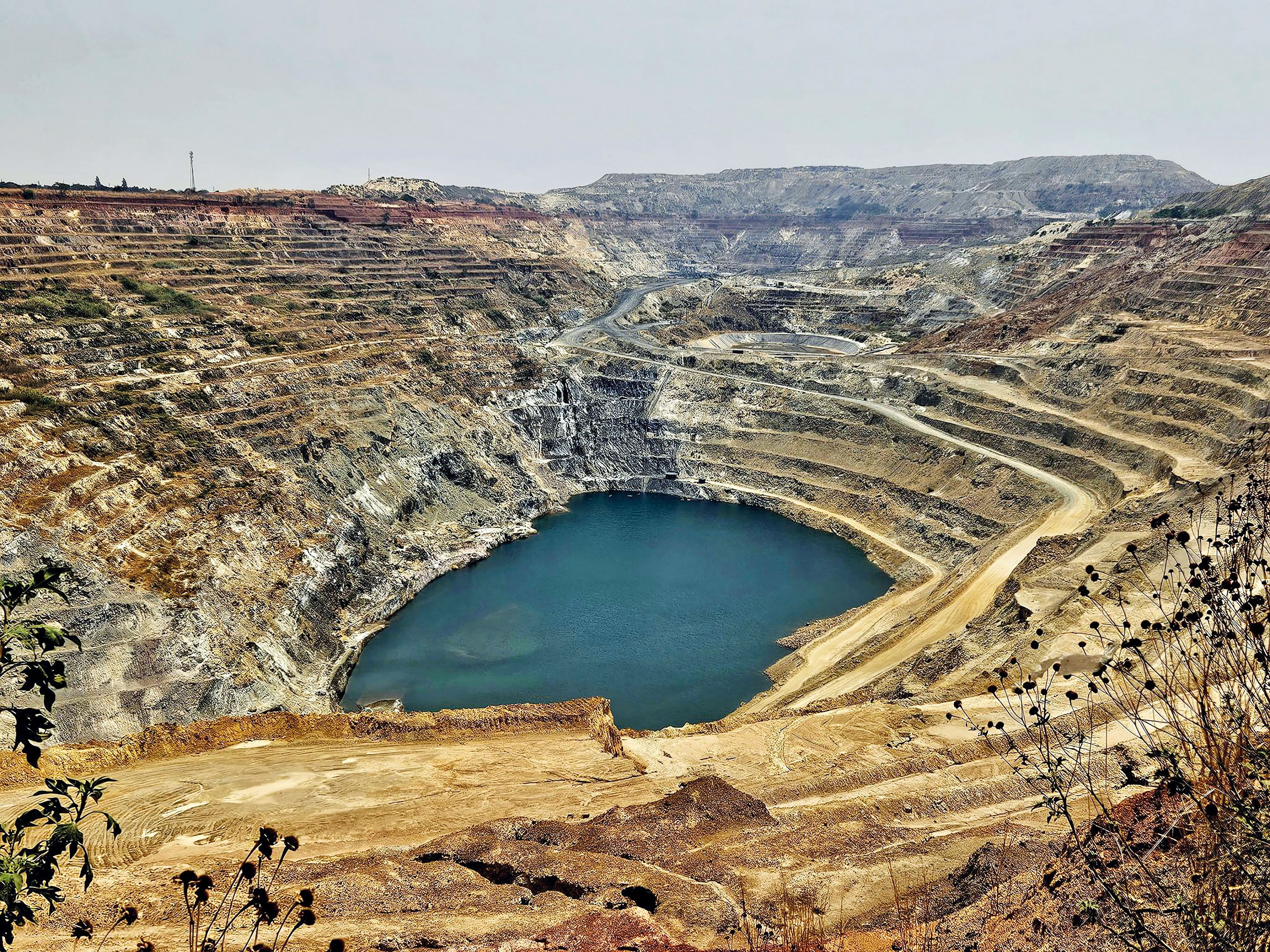
In a global context in which industry is boosted anew and geopolitical uncertainty is on the rise, access to critical raw materials has become key to strategic autonomy. Critical materials are essential to the energy, automotive, military and electronics industries and are at the heart of the world’s energy and digital systems. But in the quest for autonomy, particularly for the countries of the European Union, a central question arises: How can we secure a responsible and sustainable supply from mining countries?
European strategic autonomy and African industrial development
In 2025, the European Union identified 34 critical raw materials and 17 strategic raw materials that are essential to its economy. Rare earths, nickel and cobalt are essential for energy transition technologies (wind turbines, solar panels), while lithium, graphite and phosphate play a key role in battery production and energy storage.
With the Critical Raw Materials Act, the EU established a framework to accelerate the development of sustainable and inclusive mining projects, while diversifying its sources of supply and partnerships.
Given their abundant reserves of critical and strategic metals and minerals, African countries are key partners: The development of mining and industrial projects in Africa thus represent both a global geostrategic challenge and a major economic development opportunity.
But it also comes with challenges: while mining offers considerable opportunities for industrial development, dependence on natural resources also poses macroeconomic and governance risks. Beyond economic uncertainties, the mining sector faces energy-intensive operations as well as numerous environmental and social concerns linked to the extraction and trade of these resources.
Enabel operates at the intersection of these dynamics: drawing on its expertise and experience on the African continent, the agency supports African and European public and private players in managing mining resources in a more transparent and sustainable way, creating decent jobs and generating value for local populations.
A comprehensive approach to the mining sector in DR Congo
The Democratic Republic of Congo, which, according to the World Bank, accounted for more than 74% of the world’s cobalt production in 2021, is a prime example of the link between geostrategic challenges and local development: At central level, Enabel is supporting Congo’s Ministry of Finance in drawing up and implementing its 2025-2027 roadmap to improve the macro-budgetary and financial management of mining and oil resources. This will improve transparency and monitoring of the State’s investments and revenues.
At regional level, in the mining hubs of Haut-Katanga and Lualaba, Enabel is supporting skills development to strengthen decent employment, the value chain (extraction, processing industry) and the sustainability of the sector. In Kolwezi (Lualaba), the agency entered a partnership with a mining subcontractor to train young people in industrial electricity according to international standards, while equipping training centres and building the capacities of local trainers.
In Lubumbashi (Haut-Katanga), as part of the European United for Education and Employment project, Enabel is supporting training centres to offer courses directly linked to mining and related trades (maintenance, mechanics, machine driving, logistics), combined with work placements. This approach takes the actual needs of businesses as the starting point for job training.
At the same time, Enabel is working to improve working conditions in the mining sector. Thus, the agency trained artisanal miners in their rights and in safety at work, supported the labour inspectorate, organised awareness campaigns and strengthened trade unions in partnership with Belgian and Congolese organisations.
Finally, these actions are part of a wider vision linked to the strategic corridors supported by the European Global Gateway initiative – in particular, the Lobito Corridor – which are designed not only as transport infrastructure, but also as genuine green and inclusive development corridors. Enabel includes skills development in the mining centres along the corridors, targeting key professions in responsible operation, logistics, maintenance and energy services.