News
12 August 2026
Entrepreneurship to transform society
‘The Impact of the Awa Prize’ series – Episode 5
For four years, the ‘Awa Prize’ project has supported women entrepreneurs making a significant social and community impact. This initiative, funded by Belgium and implemented by Enabel, aimed to support women’s entrepreneurship in Belgium’s partner countries.
Through three international competitions held in 2022, 2023 and 2024, the project selected 27 female entrepreneurs across 13 countries and provided them with tailored support in the form of grants ranging from €1,500 to €50,000. This support has borne fruit. Today, Enabel invites you to continue discovering, through a series of articles, the impact the Awa Prize has had on the supported female entrepreneurs.
For many of the Awa Prize winners, entrepreneurship is not just about building a business: Entrepreneurship is a real catalyst for social change. Empowerment of young women, the creation of decent jobs, access to energy, young people having their say…
This episode follows the seven women entrepreneurs who, each in their own way, use their businesses to serve their community: Adétola Adanlawo (Benin), Aminata Simpara (Mali), Bouchra Masrour (Tunisia), Jamila Mayanja (Uganda), Mireille Niyonkuru (Rwanda), Sandrine Vyimana (Burundi) and Saran Traoré (Guinea).
Supporting girls’ independence, both at school and in their everyday lives
In Benin, Adétola Adanlawo founded Ilewa, a company that manufactures reusable nappies and sanitary pads made from banana fibres. Her company thus reduces waste in an innovative way and can raise awareness on menstrual hygiene. Thanks to winning first prize in the Scale-up category in 2023, Ilewa has gained greater visibility, strengthened partnerships, created jobs and developed awareness-raising initiatives in schools on hygiene and environmental protection. This way, a practical impact was made:
“In collaboration with the Awa Prize, I was able to develop and distribute among young girls an informative booklet on the menstrual cycle.”
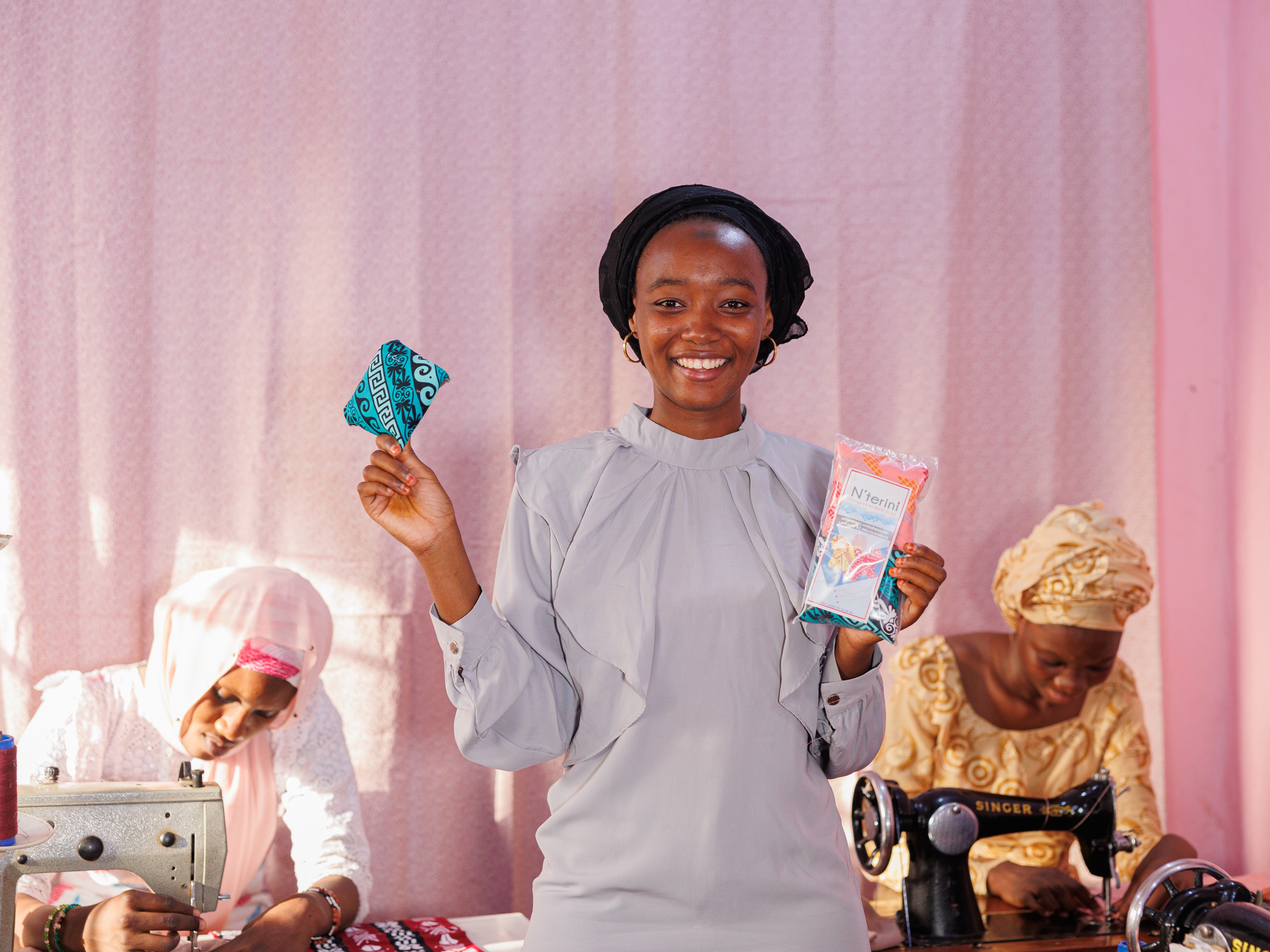
Faced with the same challenge in Mali, Aminata Simpara launched N’terini and started manufacturing reusable sanitary pads. Thanks to Enabel’s support, the business was able to significantly increase its turnover and forge new partnerships with international NGOs. Today, one of her main aims is to facilitate access to sanitary products in camps for internally displaced people.
In Uganda, by providing mentoring and training, Jamila Mayanja supports the development of young girls’ skills through Smart Girls Uganda. She tackles a widespread problem in the country: Due to a lack of suitable sanitary products, many teenage girls miss several days of school each month whilst on their periods, sometimes because they cannot afford them and sometimes out of fear of being stigmatised.
To address this, Jamila designed the Smart Bag: a water-resistant backpack made from recycled plastic, complete with reusable sanitary pads, a sewing kit for mending them, an educational booklet on menstrual health as well as a solar-powered lamp to enable girls to study after dark. Thanks to the Awa Prize, Jamila raised the profile of her initiative and gained recognition for the Smart Bag from the authorities – more than 2,000 girls have since received one.
Meeting the practical needs of communities
Other award winners preferred to focus on employment, energy or information in their approach. In Tunisia, Bouchra Masrour, through Bahia Laboratoire, develops products from sustainable farms and creates decent working conditions for the sometimes-young women farmers with whom she works. As the winner of third prize in the Innovation category in 2023, she noticed market access expanded, while her local visibility improved and new decent jobs were created.
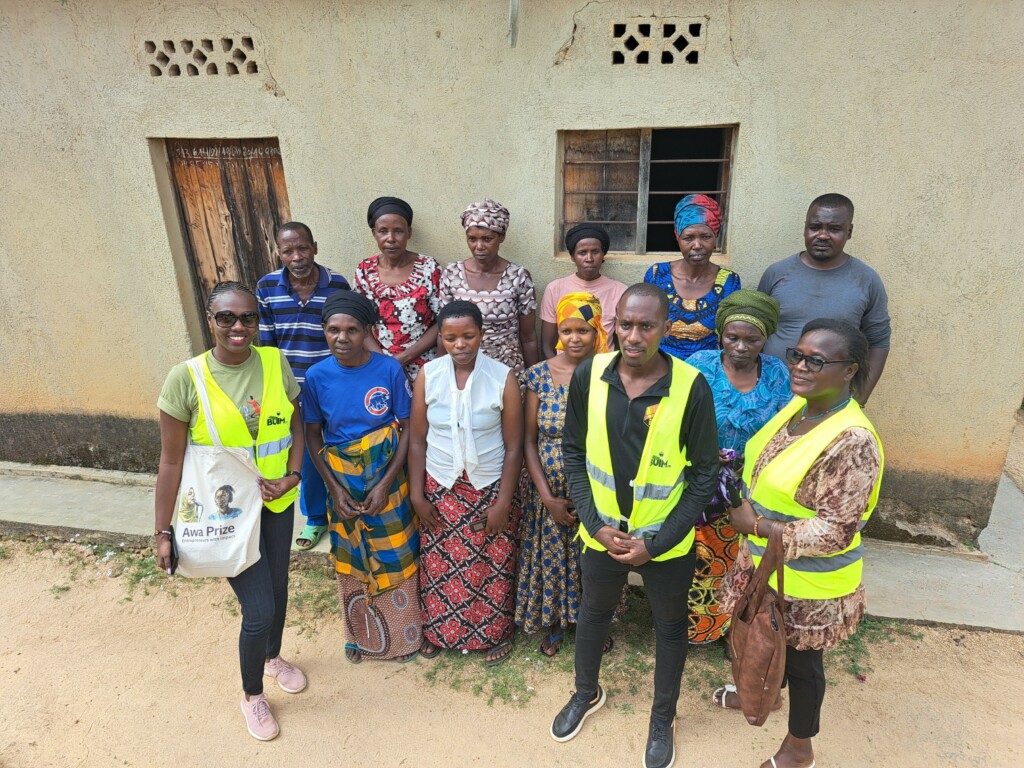
In Rwanda and Burundi, Mireille Niyonkuru is working to improve access to energy in rural areas: Through BUIM she distributes solar kits that improve living conditions for households whilst enabling children to study after dark. “I am very proud that I could provide electricity to more than 2,000 households, thereby benefiting 8,000 people.”
In Guinea, Saran Traoré (SAT MEDIAS) gives a voice to Guinean young people through programmes on topics that directly affect them. She won third prize in the ‘People’s Choice Award’ category in 2022 and used her prize money to develop her skills and reach out to more young people.
In Burundi, Sandrine Vyimana, who heads up Belle & Enceinte, is developing a range of products tailored to pregnant and breastfeeding women. With her third prize in the Innovation category in 2022, she was able to purchase equipment to raise awareness of her creations.
As these stories show, the Awa Prize demonstrates that targeted support for women’s entrepreneurship can have an impact that extends far beyond economic growth: decent jobs, access to energy, education and sanitation, and the empowerment of women and communities. All of this shows that social entrepreneurship is a powerful driver of sustainable and inclusive development.