News
23 September 2026
From the first cohort of Junior Experts to a career dedicated to social engagement
Interview with Farah Beniacoub – Former Junior Expert in Niger and Mali
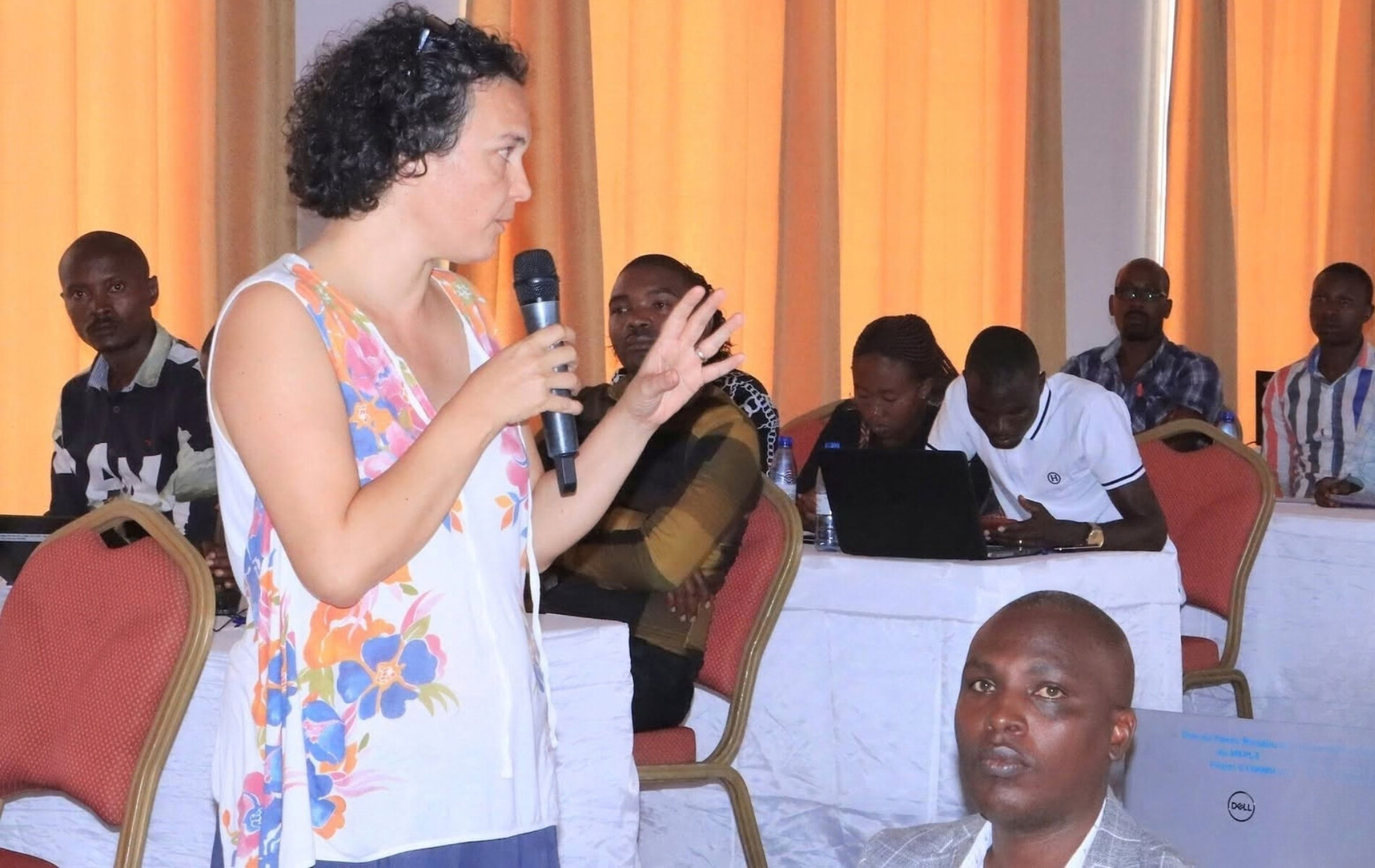
In 2006, when Farah joined the very first cohort working in a partner country of the Belgian international cooperation, as part of what was then still known as the Development Cooperation Volunteer Service, nobody really knew what the adventure would be like. Twenty years on, her journey perfectly illustrates the role the Junior Programme plays as a springboard. From Mali to Niger, then to Rwanda and Burundi, before joining Enabel in Brussels, Farah has built a career characterised by learning, adaptation and encounters that continue to shape her today.
When Farah applied in 2006, she was one of the first. At the time, the Junior Programme did not yet exist under its current name. Participants were referred to as ‘volunteers’ and the arrangements differed from those of today. Specific information sessions were even organised to recruit the first groups of candidates.
Having completed her engineering degree, supplemented by a specialisation in development cooperation at the ULB, she was looking for her first international career opportunity. The situation was not straightforward: without practical experience , it was difficult to break into the sector. The programme therefore came at just the right time.
“For me, it was exactly the opportunity I needed. I wanted to go and work abroad and join a solid professional organisation.”
Initially drawn to South America, she eventually discovered that her destination would be Mali. A surprise that would prove decisive. “When I set foot in Mali, I immediately felt that I was in the right place.”
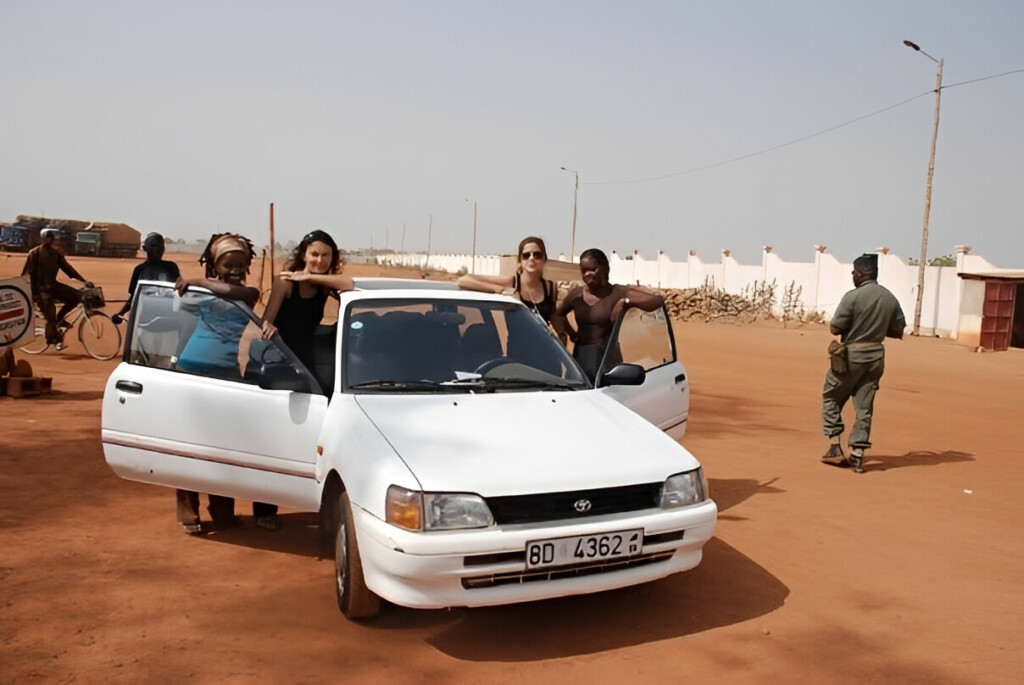
Her posting took her to Ansongo, in northern Mali, some 1,300 kilometres from the capital, Bamako. The early days were sometimes a bit of a make-do. Farah initially stayed with her mentor whilst a solution was found. In this remote region, there were only two expatriates on the ground.
“At first, it was a bit of a struggle. But it was an incredibly enriching experience,” explains Farah. This reality on the ground, far from big cities and the usual infrastructure, enabled her to learn quickly how to adapt. It is a skill she still considers today to be one of the key lessons she learnt from her early career.
Inventory of water points
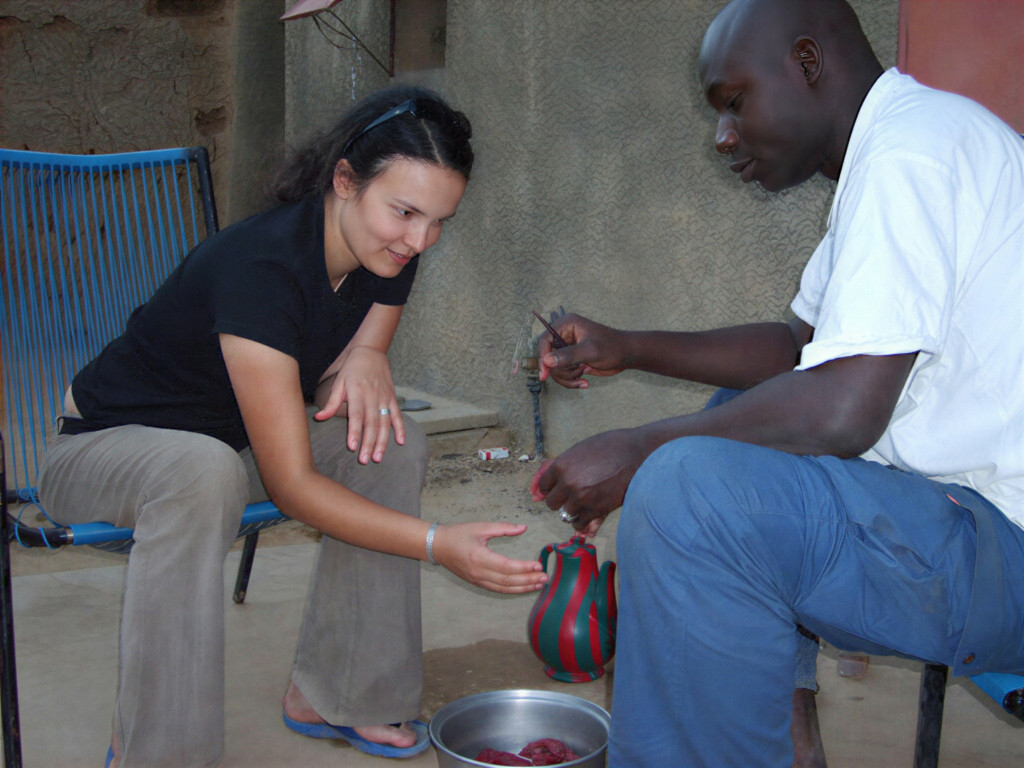
In Mali, Farah is working on an inventory of water sources to feed into the national water sector database. Together with local teams, she travels long distances to survey existing infrastructure and identify the needs of communities.
Assignments sometimes last several days, with nights spent under the stars whilst travelling. “We’d drive for hours to reach small villages, collect data and understand local needs. It wasn’t a job spent sitting behind a computer.”
But what Farah remembers most is her Malian colleague, Sidibé. Recruited by the project, he carries out exactly the same tasks as her. Together, they share an office, duty travel assignments and even their weekends.
Every weekend, they would head to Gao, where Farah was welcomed into her colleague’s family. “Professionally, I learnt an enormous amount from him. And on a personal level, it allowed me to integrate into Malian culture in a truly exceptional way. I was genuinely welcomed as a member of the family.”
This immersion remains one of the most vivid memories of her career. She believes that this national mentoring system greatly facilitated her learning and her understanding of local realities.
Beyond the technical aspects, this experience has also transformed the way Farah approaches international cooperation. “As an engineer, you learn the technical side. On the ground, I discovered the whole human dimension: local governance, dialogue with communities, and the role of women in water management committees.”
Farah also cherishes memories of particularly memorable moments, such as the commissioning of a borehole. “Seeing water gush out for the first time and an entire village gathering to celebrate around the water point is something I’ll never forget. At that moment, you truly understand the impact of your work.”
From Niger to Rwanda: staying part of the Junior Programme family
After her first year in Mali, Farah was given a second assignment and moved to Niger for a further year and a half. There, she worked on village and pastoral water supply projects, with greater responsibilities relating to the construction of infrastructure, local governance and institutional support.
The context was different: she joined a larger team and became part of a collective dynamic comprising several junior experts. “There were four of us junior experts working in different sectors. This diversity allowed us to build bridges between projects and come up with new ideas together.”
One such initiative arose from discussions with a colleague in the health sector. Together, they identified a need for safe drinking water in health centres and helped set up a pilot project combining awareness-raising and water treatment.
For Farah, this period perfectly illustrates the energy that young professionals can bring to cooperation programmes. “We wanted to try new things, forge connections and take the initiative. Our supervisors gave us a lot of encouragement in this regard.”
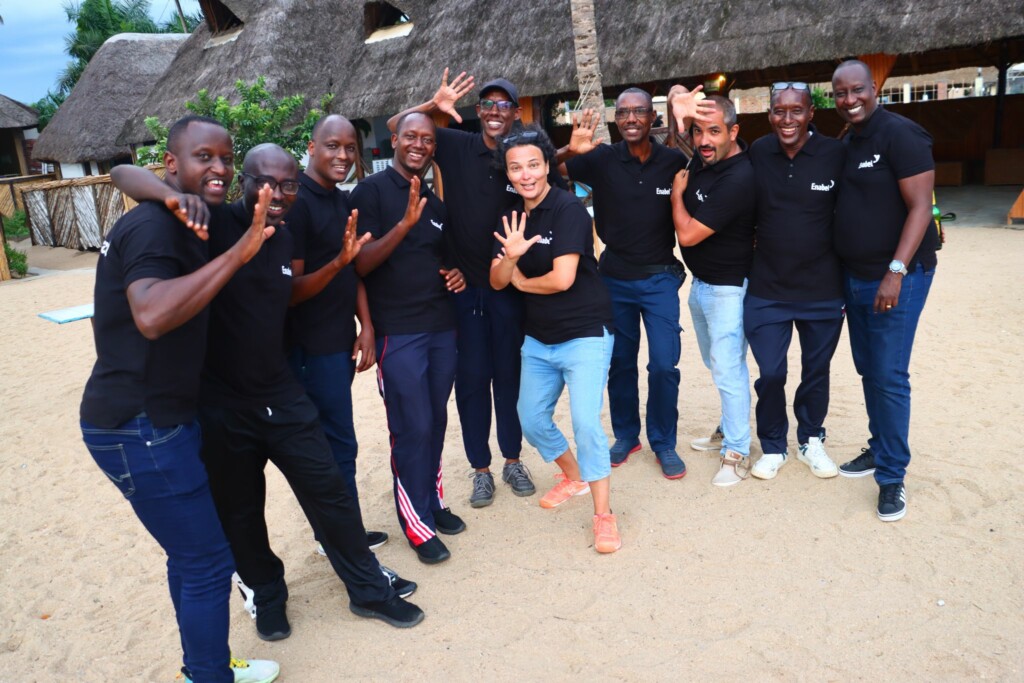
At the end of her junior programme, she stayed in Niger for a while before joining Engineers Without Borders in Rwanda in 2009. Although she is no longer a junior expert, she maintains close ties with the programme. Her organisation was one of the first NGOs to host junior experts, and she became a mentor herself.
Infrastructure expert in Burundi
In 2013, Farah joined Enabel in Burundi as an infrastructure expert. She then moved into project management and worked for nearly ten years on programmes related to infrastructure, equipment and maintenance in the health sector.
Although her career has taken many different directions since she started out, Farah sees a direct link between her current career path and the opportunities offered by the Junior Programme. “I probably wouldn’t be where I am today without that experience. It was a real springboard.”
She recalls in particular that, as soon as her Junior Programme placement ended, doors opened more readily at NGOs and with employers in the sector. “The Junior Programme gave me my first few years’ experience in international cooperation. That’s what enabled the rest of my career to take off.”
Twenty years after the programme’s launch, Farah remains convinced of its value. “Giving young people their first taste of professional experience remains essential. It benefits them, but also the teams and projects that benefit from their energy, enthusiasm and fresh perspective.”
When she looks back on this adventure, which began as part of the very first intake, it is above all the people she met who spring to mind. Among them is Sidibé, her former colleague in Mali, whom she recently bumped into quite unexpectedly at an airport in Addis Ababa, more than fifteen years after they worked together.
Proof, perhaps, that some of the connections made through the Junior Programme stand the test of time just as enduringly as the careers it helps to build.