News
18 August 2026
Science serving practice
Interview with Jens Van Hee – Junior Expert with VSF in Benin
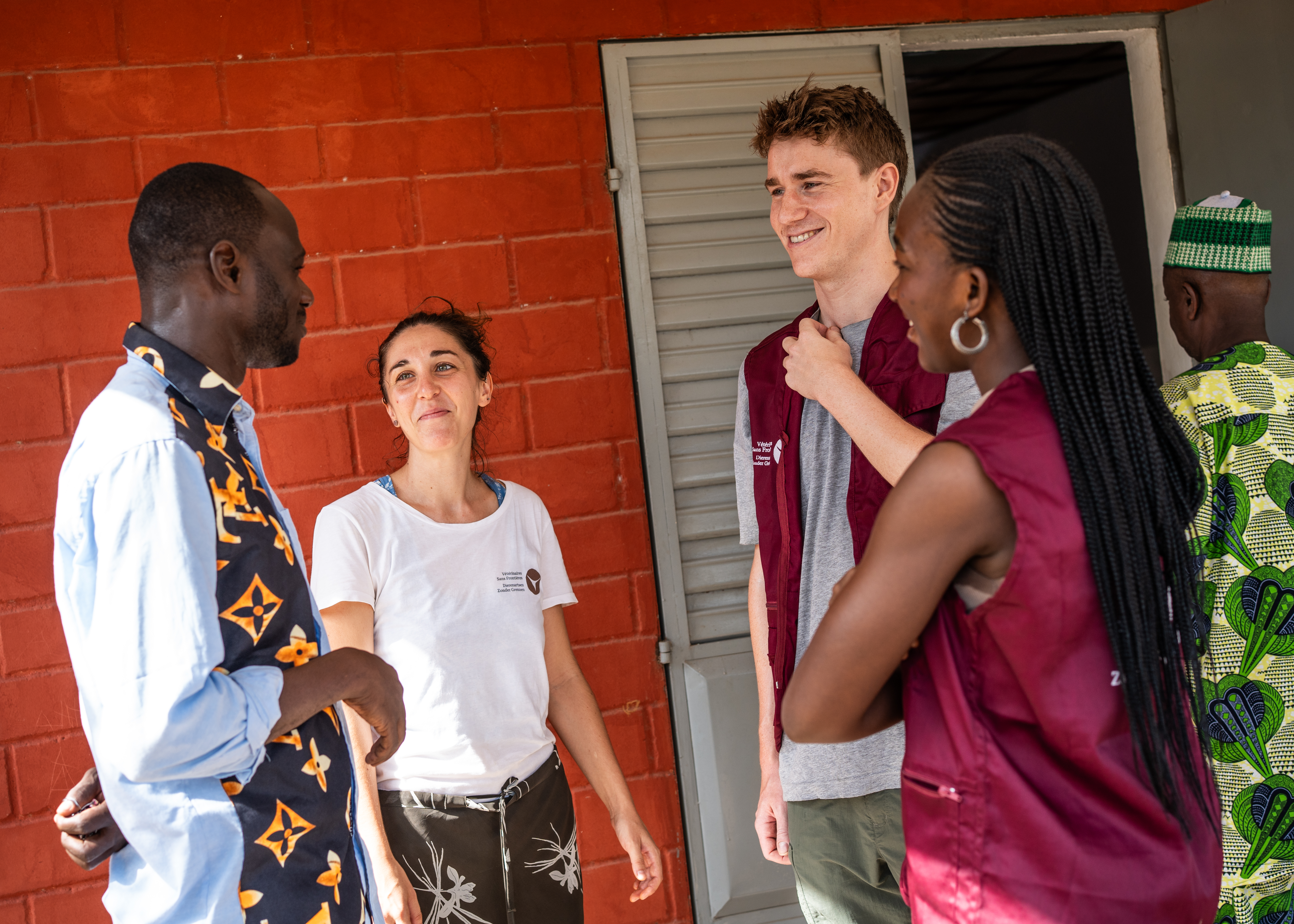
When Jens (27) left for Benin as a Junior Expert, he did not just leave Belgium behind. After completing his thesis and gaining his first research experience, the agricultural scientist specialised in tropical agriculture decided to explore a different path. He wanted to work more directly on agricultural projects. “I had spent enough time at university for a while,” he says. “I wanted to gain new perspectives and practical field experience.”
Jens graduated as a Bioscience Engineer with a specialisation in Tropical Agriculture, a programme that no longer exists today. “It was a specialisation within a specialisation,” he laughs. “I was the only student. Sometimes it was just me and the professor in class.”
For Jens, agriculture has never been solely about production. What attracted him to the field was the combination of natural systems and social impact. “At its core, agriculture is about soil science, plant science and animal science: the natural systems,” he explains. “But for me, it is also highly relevant from a societal perspective because of its impact on nature, economies and people’s lives.”
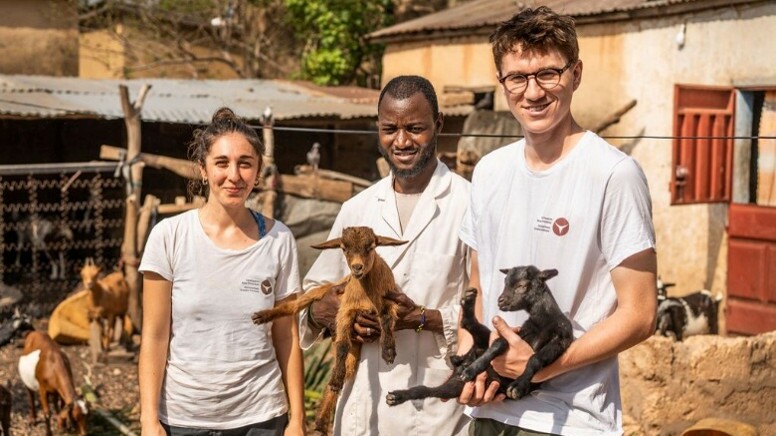
Exceptional cocoa farmers
Following graduation, Jens expanded his thesis through a research contract focusing on sustainable production practices in the cocoa sector. Rather than studying averages, he was particularly interested in exceptions.
His research started with a simple question: why do some cocoa farmers achieve better results than others while working under similar conditions? “I looked for producers who performed better than average,” Jens explains. “I then spoke with them to understand which factors contributed to their success.”
The answer turned out to be less straightforward than expected.
“The main conclusion after my fieldwork was that there is no silver bullet,” he says. “There is no magical practice that can simply be transferred to another context. What makes a difference for one household may not work for another. Development projects should take local needs and capacities into account rather than treating all farmers the same.”
Alongside his thesis, Jens also worked as a visiting scientist at the European Commission’s Joint Research Centre in Seville, where he continued his research on sustainable cocoa production.
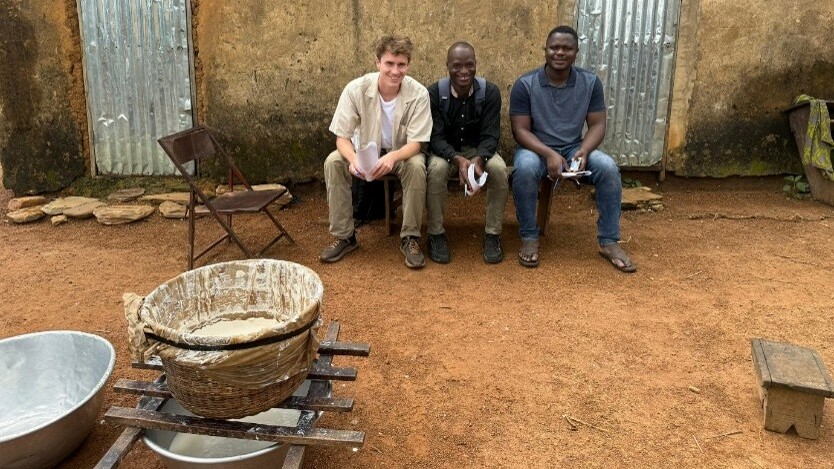
Beyond research institutions
Gradually, however, Jens felt the need to explore more than research institutions alone. He had first learned about Enabel’s Junior Programme during his studies when a former Junior Expert gave a guest lecture and shared his experiences. “He talked about his work and showed photos of what he had done through the programme,” Jens recalls. “That idea stayed with me.”
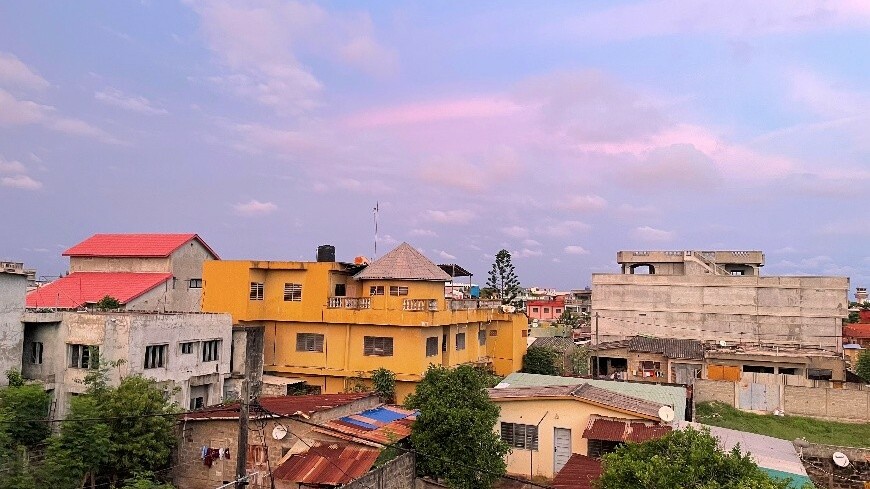
When he later reviewed job opportunities, he saw a chance to turn that ambition into reality. He was ultimately selected for a position in Cotonou, Benin’s economic capital, with Vétérinaires Sans Frontières (VSF).
The first days were not easy. “You say goodbye to everyone back home, and suddenly you’re sitting alone in your office thinking: okay, this is it for the next two years,” he says. “That definitely hit me.”
Fortunately, the feeling did not last long. Other Junior Experts helped him settle into his new environment. “Within a week, I had met the other juniors and they showed me around Cotonou,” he explains. “All those worries disappeared immediately.”
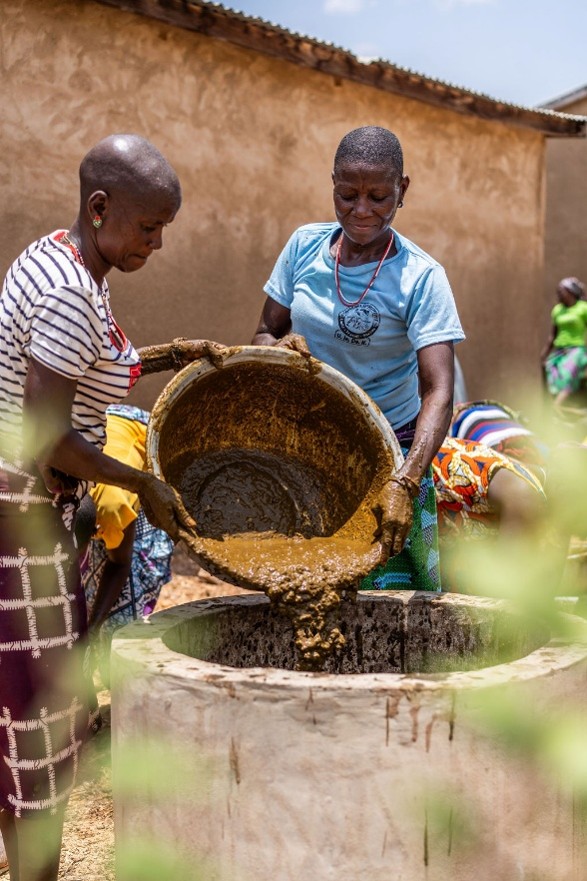
Bridging the distance with the team
Most of Jens’ team is based in Natitingou, in northern Benin. Due to security restrictions, he cannot work there permanently. “Of course that creates some distance,” he explains, “but I try to bridge it as much as possible by travelling there regularly.”
A significant part of his work focuses on analysis, monitoring and knowledge development. One of his main assignments is to develop a tool for mapping agroecological practices among farmers. The objective is not to assess individual farmers, but to better understand where communities are already strong and where additional support may be needed.
“We want to understand where farmers stand in their transition towards more sustainable practices,” he says. As in his thesis work, context remains central. Models developed elsewhere cannot simply be copied and pasted. “You always have to adapt to what is realistically achievable in a given context,” Jens explains. “Not everything developed internationally is automatically relevant here.”
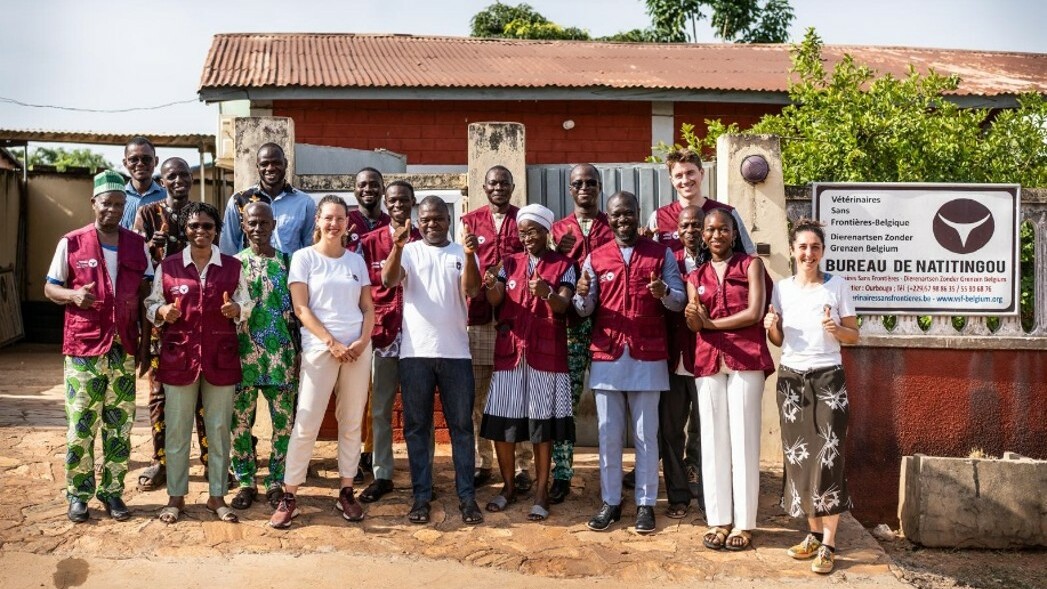
The added value of biodigesters
Jens is also involved in monitoring biodigesters. Biodigesters transform organic material and manure into biogas, providing an alternative to firewood as an energy source.
“When methane is burned, it produces a flame,” he explains. “This gas can be used for cooking or for processing agricultural products. Through VSF, we support cooperatives that produce shea butter or soybean-based products.”
The impact goes beyond energy production alone. In regions affected by deforestation, biodigesters can help promote a more sustainable use of natural resources. “If you cut down all your trees, you ultimately disrupt the system that helps maintain soil health,” Jens says.
Yet technology alone is not enough. As he observed in his cocoa research, sustainable change also depends on local habits, knowledge and motivation. “People need to be willing to adopt new routines,” he explains. “Where wood used to be collected or purchased, a new system now has to be put in place in which organic material, such as animal manure, is collected consistently and fed into the biodigester. Cooperatives also need to adapt organisationally.”
For Jens, one of the strongest aspects of the project is the support provided to local professionals.
“We trained two plumbers and eight masons to build biodigesters,” he says. “These are ten people from the region who are already known in their communities and who can later carry out repairs as well. Knowledge transfer is essential for ensuring sustainable operations in the future.”
What interests him today is not only the construction of the infrastructure, but also understanding what happens afterwards. Do the systems actually work? How much gas do they produce? Are they still being used months after installation? “It is not always easy to objectively measure what is happening,” he says. “A survey only tells you so much. I still need to find a better way to assess that.”
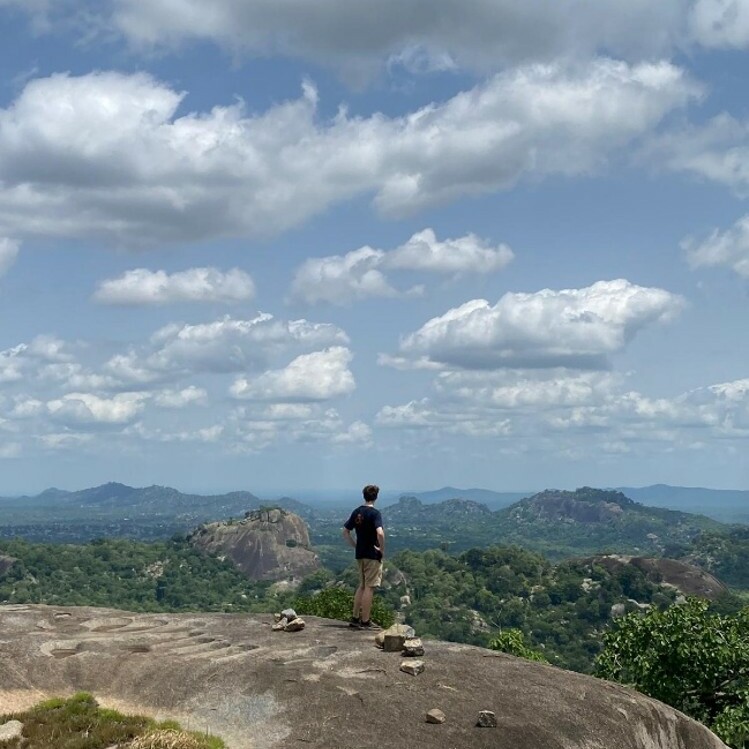
© Jens Van Hee – Jens on the rocks in Dassa, whilst travelling through Benin.
Feeling at home in Benin
Outside work, Jens now feels very much at home in Benin. “I really enjoy living here,” he says without hesitation. His weekends look quite different from those in Belgium. He spends a lot of time exercising and regularly explores new places. “I actually have a very active social life here,” he says. “Cotonou is not very large, so you often run into the same people.”
“Sometimes I regret not spending more time with colleagues or in the field,” he admits. “But at the same time, I am very happy in Cotonou.”
As for what comes after Benin, he has not yet made up his mind. Another international assignment may follow, or perhaps research will attract him again. “I still haven’t decided,” he says. What he does know is that he will miss the spontaneous way people interact in Benin once his assignment comes to an end.
“In Benin, you can strike up a conversation with anyone, joke around, or simply share a laugh,” Jens says. “Those small everyday interactions that can happen anywhere are truly wonderful.”