Benin: women growing pineapples improve their business skills and household incomes
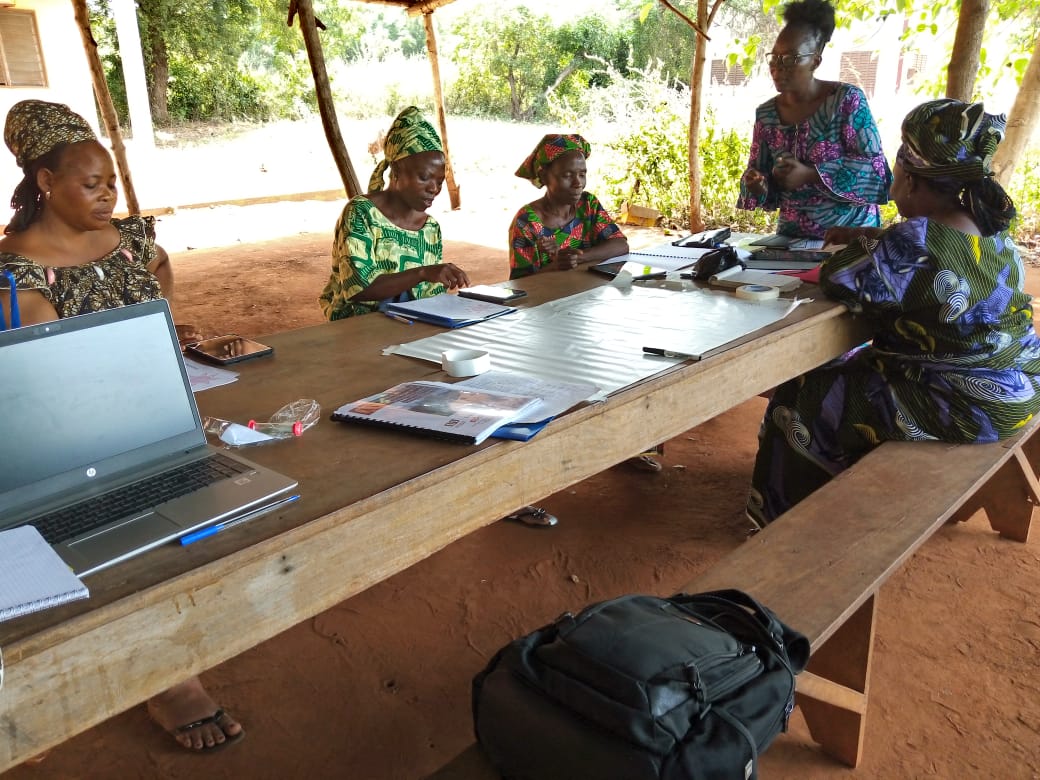
Christiane Gbedji now knows how to keep a cash book, manage her pineapple farm budget and obtain microfinance to expand her business. Together with her husband, she now sees a brighter future for their farm. More than 650 women have already followed the same path.
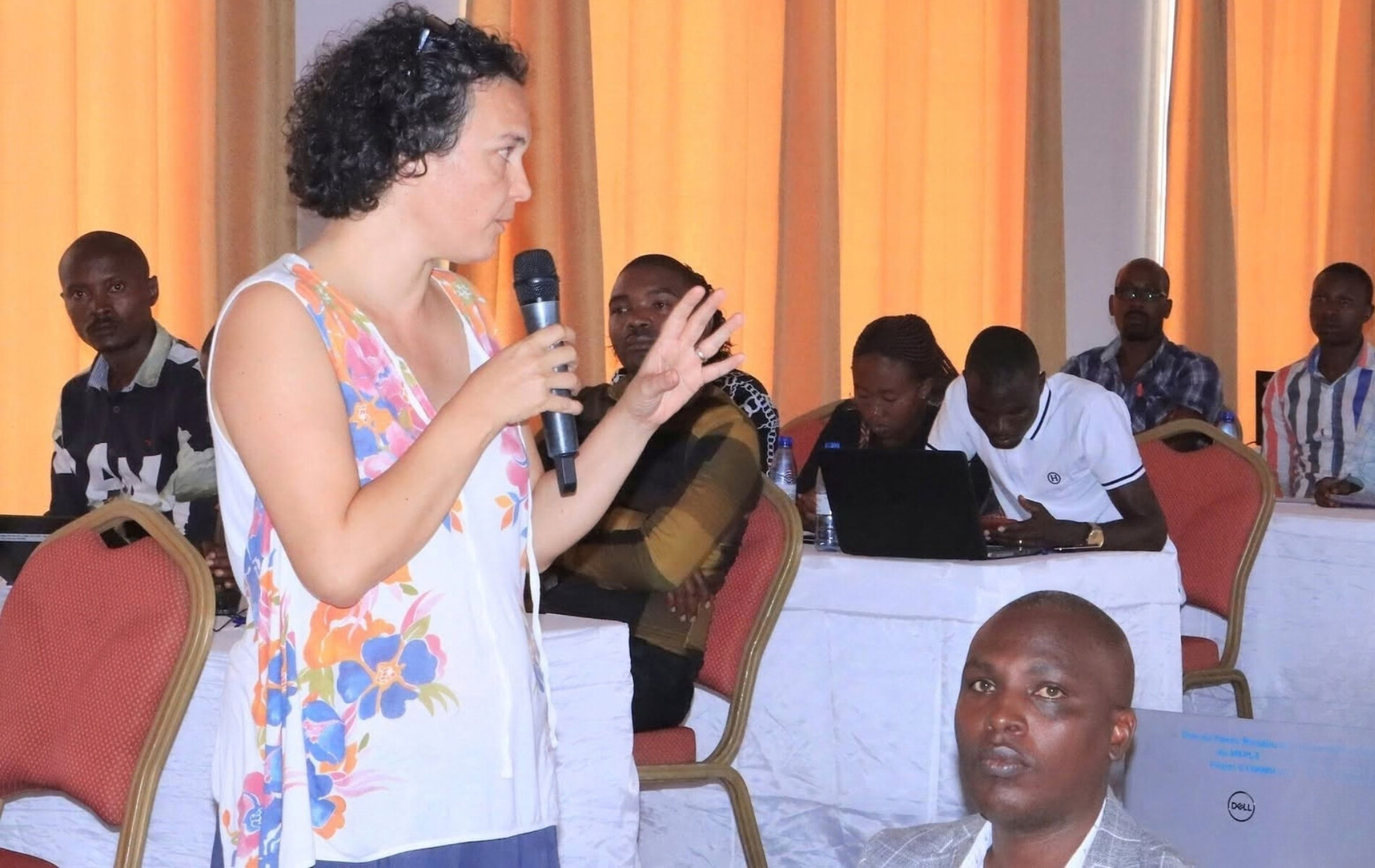
“My joy is great, I am so happy! I can write and keep my cash book without the help of a relative; it is more than a dream that has just come true,” says a beaming Christiane, who has just completed the training cycle organised by Enabel and the University of Namur, in partnership with the Beninese local authorities.
“My husband and I are very excited. We are sure that the turnover of our pineapple growing business will increase considerably, as we will be able to organise our planning and financial management better. ”
Many challenges
Christiane’s pathway is pleasing in more ways than one. It is the result of a women’s empowerment initiative set up by Enabel in the framework of the Entrepreneurship Development Programme in the pineapple value chain (DEFIA). This initiative aims to help women pineapple producers in Benin to overcome the difficulties surrounding their business, which is key to their families’ well-being:
- because of their low level of education bookkeeping and financial planning is difficult for them;
- traditions require them to help their husbands before dedicating themselves to their own farms, which limits their possibilities to develop new sources of income for their families;
- the lack of identity documents prevents them, among other things, from registering a SIM card, which is essential to secure money transfers by mobile phone, from accessing certain public services such as land registration, from applying for microcredit and from moving freely to find new outlets for their products.
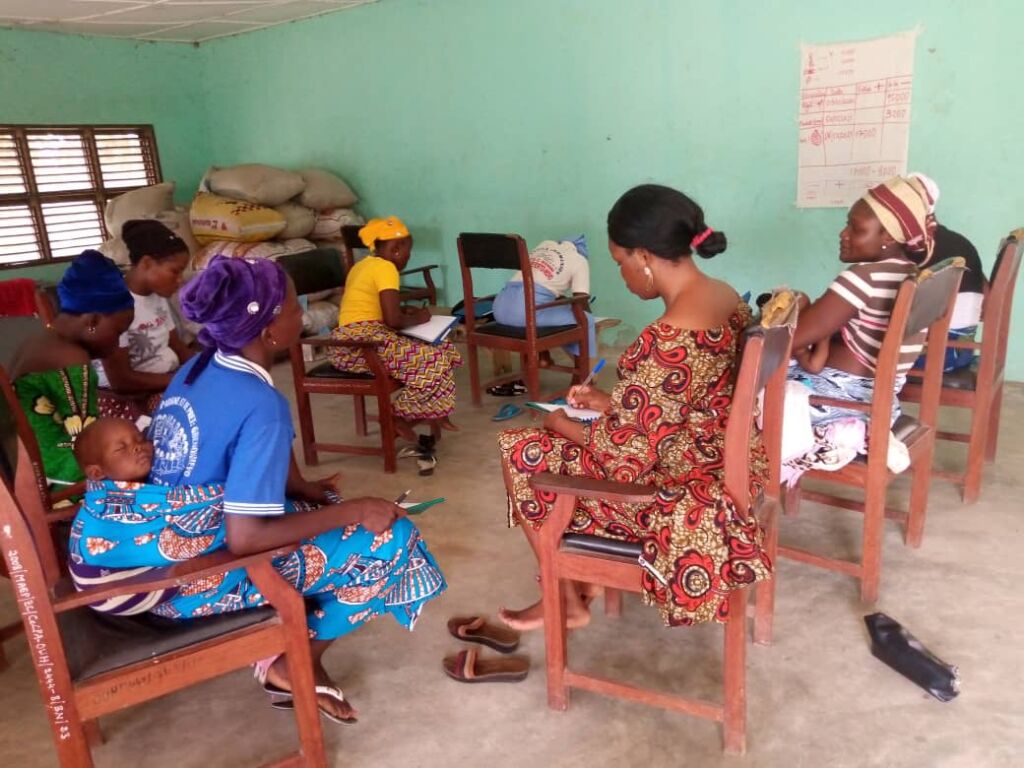
In Toffo, the commune where Christiane lives, of the 103 women who benefit from Enabel’s work, only two have an identity card. A survey conducted by the NGO IPAD at the request of DEFIA revealed that more than 95% of the programme’s beneficiaries had no identification documents, not even a birth certificate. This state of affairs limits them greatly and keeps them in a precarious position.
The situation is therefore inhibiting the empowerment of women in the pineapple sector and does not allow them to access the support measures put in place by Enabel through the DEFIA programme, in particular subsidies for the extension of plantations and the clearing of stumps, ploughing and planting of shoots. Less than 7% of women pineapple growers have benefited.
The role of women is nevertheless crucial in Benin’s economy. Indeed, 70% of them live in rural areas, where they do 60-80% of the agricultural work and provide up to 44% of the services needed to feed their families. In the production link of the pineapple value chain women represent about 15% of the total number of pineapple farms with an area of less than 0.5 hectares.
Targeted actions
To address these challenges, Enabel and the University of Namur have designed a series of actions to support women’s entrepreneurship and empowerment in the pineapple sector:
- a training course tailored to the needs of women producers, coupled with a special subsidy for clearing stumps, ploughing, supply and planting of seedlings, and the provision of biodegradable mulch film;
- advocacy for women’s access to land and linking women with owners of unused and viable land for pineapple production with the support of the authorities;
- assisting women with the formalities of obtaining the necessary administrative documents, in particular the identity card;
- support for women to access appropriate facilities.
These actions reached approximately 674 women, starting with training courses and support in obtaining subsidies for the exploitation of new land. Eventually, more than 300 hectares of new agricultural land will be made available to them. Coverage by biodegradable mulch film is also provided for. In addition to better water and weed management, these films reduce the need for specialised labour, which is too often inaccessible to women.
Getting support from husbands
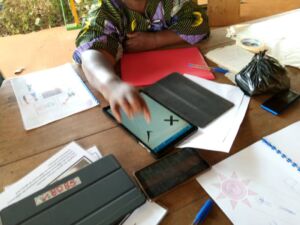
The success of the programme owes much to the efforts made to get the husbands on board and actively supporting it. DEFIA involved them from the outset in the training sessions organised in order to increase their understanding of their wives’ need for empowerment and independence. Most of them appreciated this approach, as it raises their awareness and makes them more supportive of their wives’ work in the fields.
”We sometimes think of ourselves as ‘God’: We decide whether or not our wives can take part in an activity,” says Gérard Kougnitode, the husband of one of the trainees. “DEFIA understood this by involving us in training and allowing us to attend. We are happy with this attention and above all we are more inclined to allow our women to attend these education and coaching sessions because we know what is being said to our women and we totally adhere to it.
Gérard is not only happy to have enabled his wife to benefit from the training, but he is also very enthusiastic as the coaching has enabled him to improve his own operations.
Concrete results
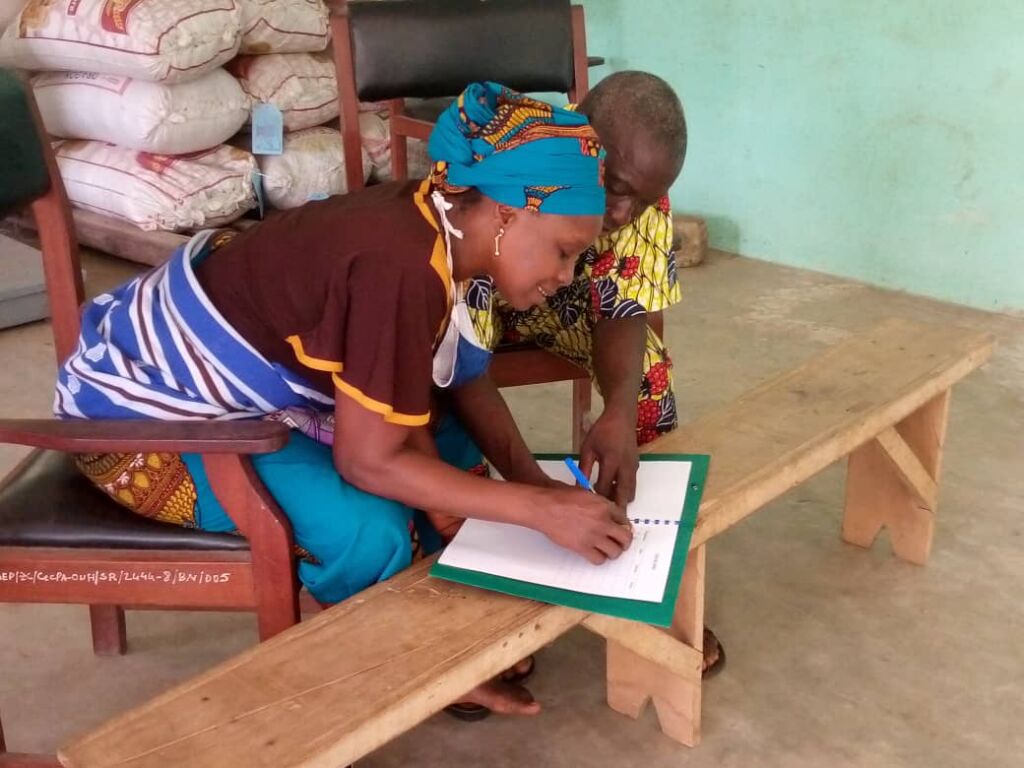
Christiane, a 45-year-old mother of six, successfully completed the training cycle. She now uses symbols to describe her needs and keep her cash book. She can plan, organise and manage her budget and she is even able to develop a business plan and submit it to a microfinance institution. “Our facilitator was able to make easy what I thought was difficult, even impossible, because I couldn’t read or write,” she says proudly. “I also thank my husband for allowing me to attend the training sessions organised by DEFIA and for accompanying me throughout the process.”
Delphine KINDJIHOUANDE, a pineapple grower, lives in the same commune of Toffo. She was able to obtain her biometric identity card.
“I am very happy. If I had to go through all the steps to get my identity card on my own, I would have been discouraged. Our trainer not only gave us new management skills, but also helped us with the process. With this card, I will immediately go to a microcredit institution to apply for a loan and invest the funds in my field to expand it. I will also go into business to take better care of my family.”